

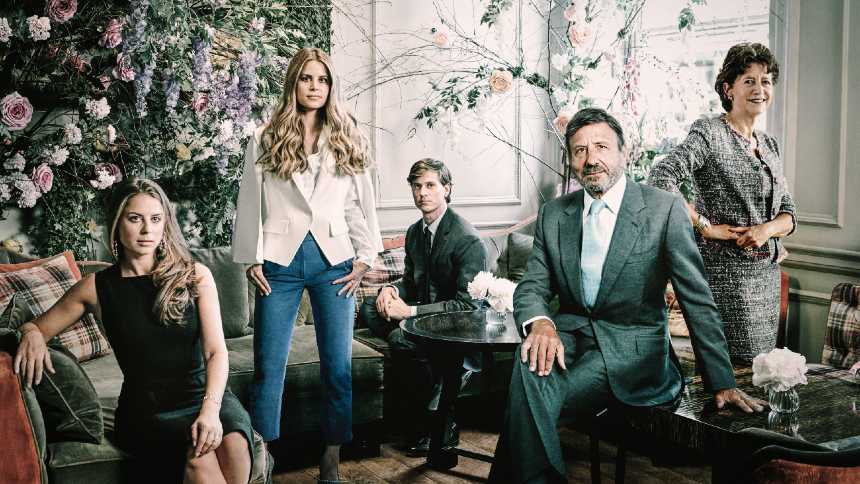

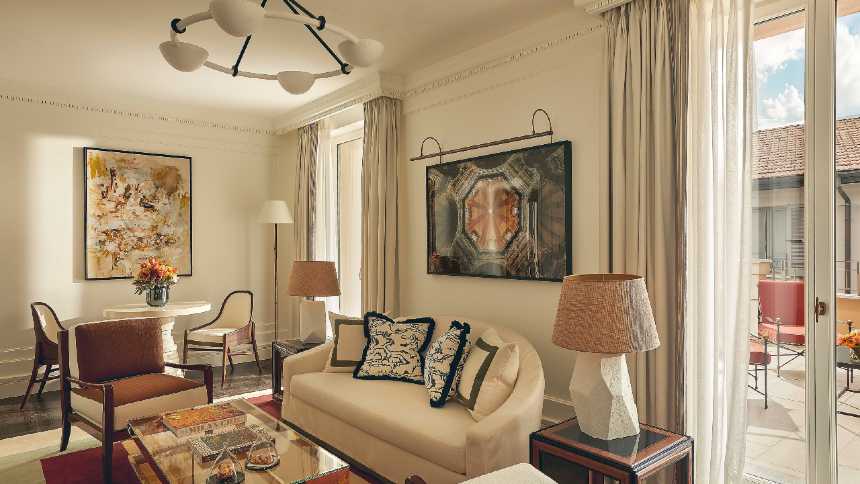
Milan — The impeccable service leaves no room for doubt. Each of the 71 suites at the Hotel Carlton in Milan is decorated with a different color palette, in true Italian style, with designer furniture, sophisticated fabrics, a coffee bar, and soft cotton bathrobes. Inside the wardrobe, hangers covered in black satin and wooden utensils for cleaning and putting on shoes reveal the essence of attention to detail. The service team strives to listen attentively without intruding on the guests' personal space.
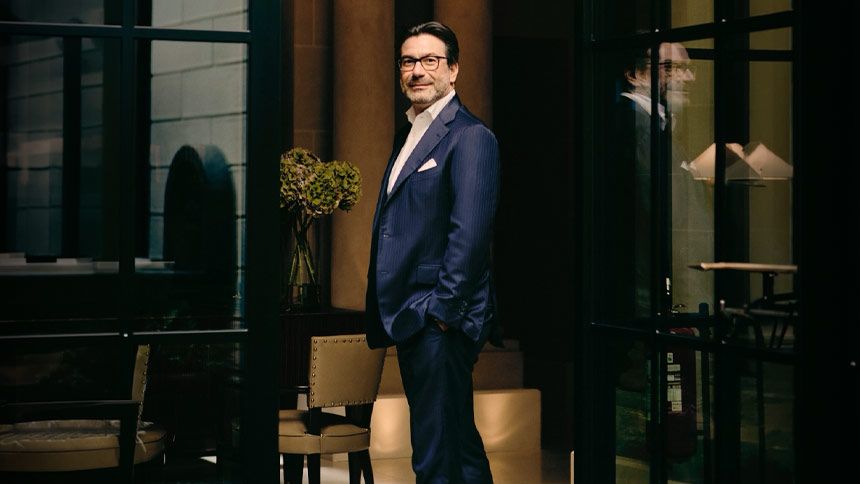
“We have a history, probably dating back to the Renaissance, we are avant-garde. Our design is very original, we don't copy,” Francesco Roccato, head of the Rocco Forte group's hotels in northern Italy, told NeoFeed . Born in Turin and a chef trained in the United States , he is one of the trusted men of the Forte family , the owners of the business, to oversee the launch of the hotel in the fashion capital a few months ago.
But the company's success in the luxury sector has followed an impressive path: tears, downfall, and rise—a drama that could become a Netflix series. The family's journey in hospitality began in the early 20th century when patriarch Carmine Forte left the town of Frosinone in southern Lazio and settled in Scotland, opening a small café called The Savoy.
The business grew with restaurants and cafes, until the son Charles moved to London in the 1930s, opening a Milk Bar on Regent Street, a simple café with milk drinks, snacks and desserts , which expanded rapidly. Decades later, Trusthouse Forte would become a global conglomerate of hotels and restaurants, consolidating the family name in the high-end international market .
In 1996, the group was taken over through a hostile takeover by the British company Granada plc, ending the Forte family's control over the company and leaving only a fraction of the original capital in the hands of the clan — a turnaround considered one of the most dramatic in the hotel business world.
Determined to start over, the patriarch's grandchildren, Rocco Forte and his sister Olga Polizzi, founded Rocco Forte Hotels in the same year, rebuilding a network of five-star hotels that today extends throughout Italy and plans new properties in the south of the country, in the cities of Noto and Naples, and in the regions of Sardinia and Puglia.
The market in which the family operates is part of a larger sector that drives the so-called "beauty economy ," responsible for fashion, design, art, tourism, and culture. According to a report by Banco Ifis, these sectors reached approximately €626 billion, roughly R$3.75 trillion in 2024—equivalent to about 29% of Italy's GDP. Looking towards growth, the Forte family has continued investing in expanding their business in recent years.
In Milan, The Carlton occupies a prime location in the bustling Quadrilatero della Moda (Fashion District). Renovated for €60 million (approximately R$362 million) under the creative direction of Olga, the hotel blends tradition and modernity.
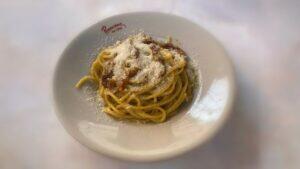
The cuisine is overseen by award-winning chef Fulvio Pierangelini, known for using simple ingredients and bringing out the integrity of the food's flavor rather than relying on technical tricks. At La Spiga, the on-site restaurant, the pasta with caviar exemplifies respect for local culture with a refined touch.
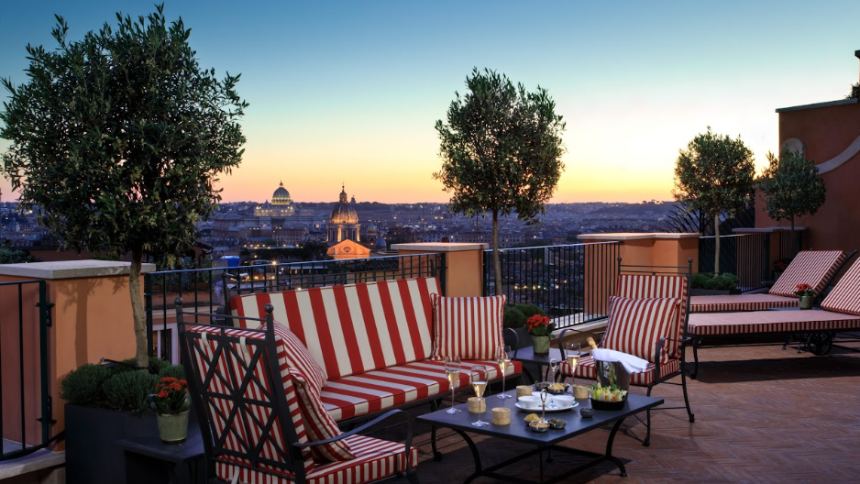
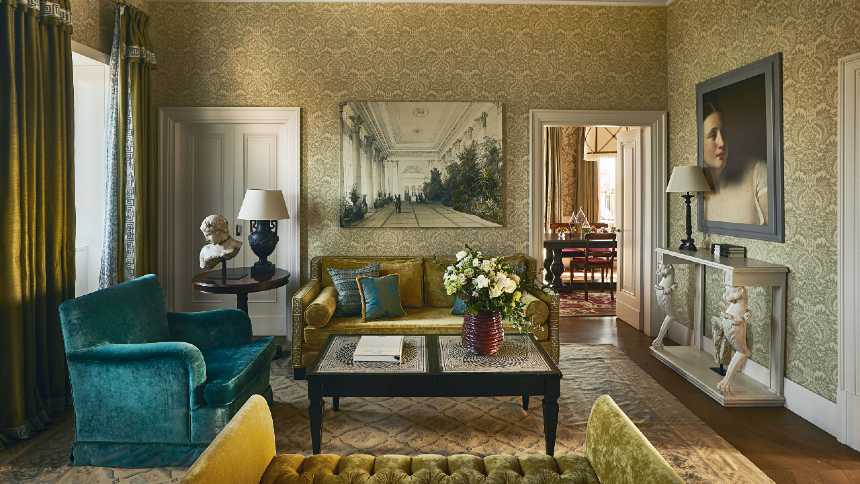

But it's in the wellness area that The Carlton truly stands out. Rocco's daughter, Irene, created a spa with treatment rooms, a sauna, steam rooms, sensory showers, and sound beds. All services utilize products formulated with premium ingredients, such as Sicilian pistachios, olive oils, and hibiscus, reflecting a beauty philosophy that begins from within. Guests also have access to these same products in their rooms.
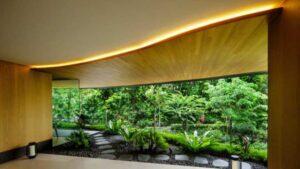
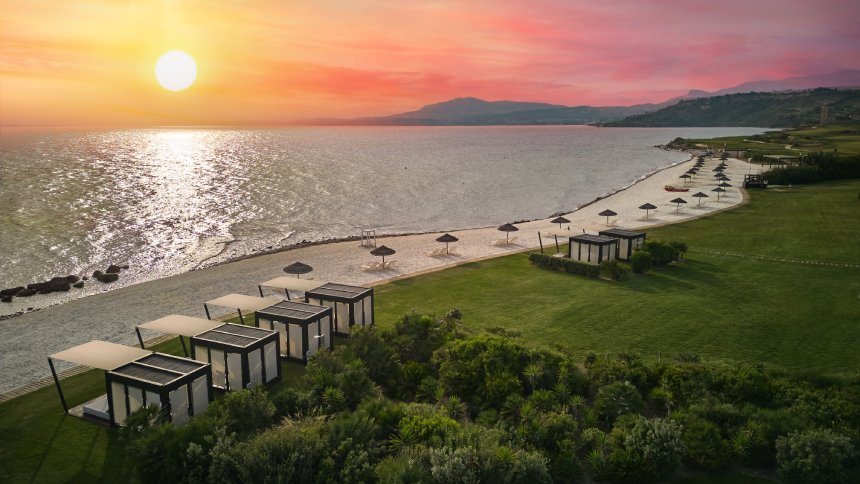
In contrast to the urban pace of Milan and Rome, Rocco Forte Hotels also focuses on an experience connected to nature and deep well-being at the Verdura Resort, on the southern coast of Sicily.
Located on a property spanning over 230 hectares amidst olive groves, citrus orchards, and nearly two kilometers of Mediterranean coastline, the resort combines beaches, golf courses, and a health-focused approach aligned with the local philosophy of a long and healthy life.
Nearby in the mountains, the small community of Caltabellotta is considered a candidate for Blue Zone status— regions of the world where the proportion of people living to 90 or older is significantly above average, a phenomenon linked to environmental factors, traditional diet, and deep social ties.
These areas have attracted international attention for exhibiting habits and environments conducive to healthy longevity, as is already the case in parts of Sardinia (Italy), Okinawa (Japan), Ikaria (Greece), and Nicoya (Costa Rica).
All of the Forte family's properties strive to offer a memorable stay, while also catering to diverse generations. Sophistication is evident in the spaces and the discreet service.
"The luxury guest already lives in wonderful homes, with every comfort imaginable, but they need to feel at home with us: we are an extension of their life," says Roccato, who knows his clientele well, which ranges from traditional people to young millionaires seeking authentic and personalized experiences.
"They appreciate classic settings and history, but they want originality in every detail," he explains.
This combination of discretion, attention to detail, and respect for tradition defines Italian luxury. It caters to those seeking originality and valuing sophistication without ostentation. In this context, Rocco Forte Hotels remains the most distinctive hotel chain in the country, a symbol of the best the world has to offer when it comes to fine accommodations.