


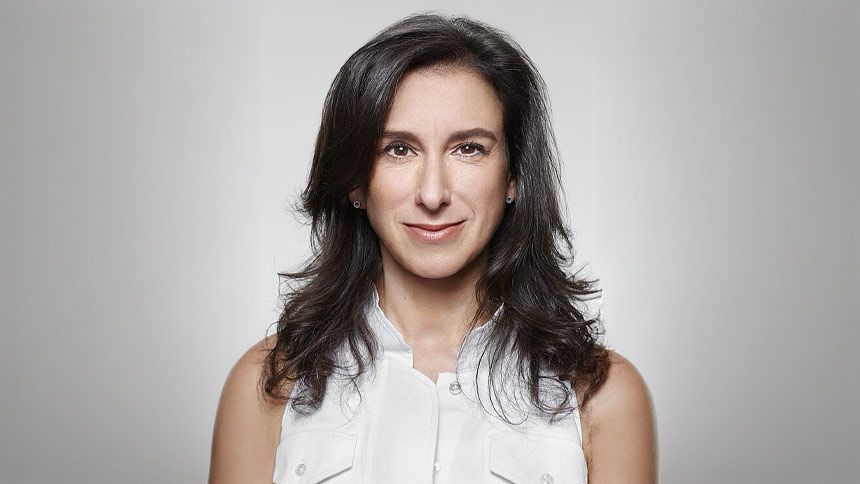
New York - A year ago, New York journalist Jodi Kantor was invited by students at Columbia University in Manhattan, her alma mater, to be the valedictorian at their graduation ceremony.
An investigative reporter for the New York Times since 2003, in 2018 she was awarded the Pulitzer Prize, alongside her colleague Megan Twohey, for exposing the sexual abuses of Hollywood mogul Harvey Weinstein — which culminated in the global #MeToo movement and the book She Said , which was made into a film four years later.
On Sunday, April 19, in a lecture in Brooklyn, where she lives, Jodi explained that she had good reasons for declining the invitation from the Columbia graduates: 2025 had been a turbulent year at the university, marked by protests against the conflicts between Israel and Gaza, scandalous leadership changes, and cuts in research funding by the American government.
However, she accepted. But first, she wanted to know what the students' questions were. The answers were surprising: the chaotic environment they were in was the least of their concerns.
“They chose me because of my career. And everyone, regardless of their political opinions, was united by one anxiety: in such an uncertain time, how to find work and start a professional life?”
As she recounted, the question deeply affected her. "I love good, difficult questions. And I realized this was a generational issue," she said.
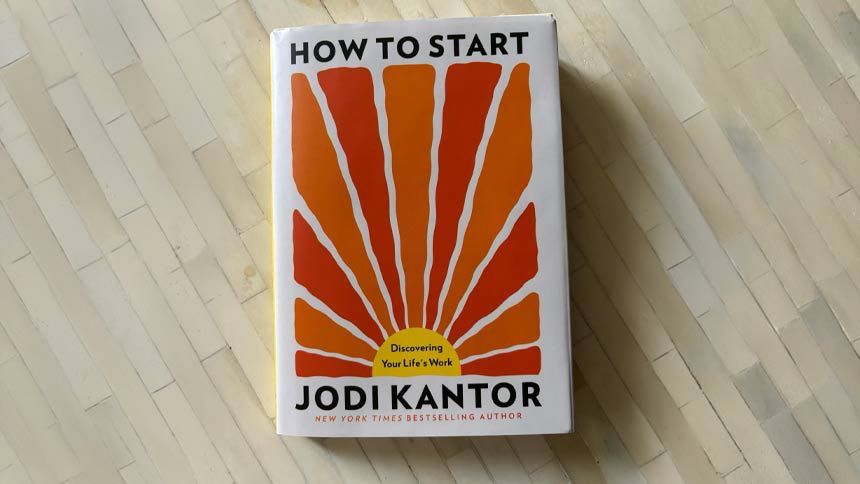
From these conversations came the book How to Start — Discovering Your Life's Work, released on Wednesday, April 22nd, in the United States. It is not yet translated into Portuguese, but is available on Kindle.
“We still don’t know what artificial intelligence will do to entry-level jobs. But we already know that the job search process has become cold, digital, and lonely,” said Jodi, noting that even job interviews are now conducted by AI. Besides being rejected hundreds of times, students don’t meet a single human being during the selection process.
“After hearing all that, I gave the speech. And I kept writing. I would wake up at six in the morning and spend hours on the computer. I didn’t even know if I was writing a book. I’m an investigative journalist, not a career advisor, but I had a lot to say. Maybe because I spent years covering the world of work. Maybe because I have a 20-year-old daughter. Maybe because I see young people needing support,” she recalled.
At just 98 pages, this quick read serves as a mentor for young people, presenting real-life stories that demonstrate how career paths are not linear, while also highlighting the importance of professional relationships in decision-making and the significance of mastering a skill that the market demands.
Married to fellow journalist and author Ron Lieber, with whom she has two daughters, she recounts in her book that Ron became a personal finance columnist for the Wall Street Journal and then the New York Times because he grew up in a family of divorced parents, where money was a source of conflict. Journalism taught him to unravel the forces behind the world of finance, a skill he uses today to "protect the wallets" of his readers. A clear example of skill and demand.
Jodi dropped out of law school because she didn't see herself in the profession. She then tells the story of Arjav Ezequiel, owner of Birdie's restaurant in Austin, Texas. He and his wife, Tracy, provide a festive atmosphere while also offering generous benefits to their staff. Twice a year, the couple closes Birdie's doors to everyone who needs to recharge their personal lives.
The beginning of this journey wasn't obvious. Back in college, Arjav wanted to study Law or Politics. But, as the son of Indian immigrants, he lacked the legal documentation for formal employment. He had arrived in the United States at age 12 on a tourist visa.
This reality led him to become a waiter at a restaurant in Washington, D.C., serving lawyers and officials—a professional class he once dreamed of belonging to. Over the years, he accepted that his service training, wine lists, and the demands of a selective clientele solidified his profession. Today, Birdie's boasts James Beard Award accolades (the Oscars of gastronomy in the United States), a 2025 Michelin star, and a Wine Spectator Award for Excellence.
In the book, Jodi also offers precise tips for newcomers. Among them, "get out of the library," because careers are built on stimuli. "Don't let your parents decide your profession," a trend that college career consultants have seen growing. And "observe the obvious": back in college, Jodi was the one who corrected her classmates' grammar and writing, something that gave her satisfaction.
On the other hand, what can employers expect from recent graduates immersed in social media and, now, artificial intelligence? “It’s a generation that grew up with more anguish, anxiety, less social skills, and difficulty managing emotions,” Silvina Spiegel, a consultant for the International Coaching Federation (ICF) in Rio de Janeiro, tells NeoFeed . Her clients are leaders of large companies from various Latin American countries.
“Careers are no longer linear. And, for that reason, it’s important that these young people know that they will need other people,” she says. “The crucial skills continue to be communication, relationship building, strategic thinking, and emotional intelligence. Those who develop these skills will be able to reinvent themselves throughout their lives, regardless of technology,” Silvina teaches.
The world of work demands interpersonal skills, the ability to deal with rejection, tolerance for frustration, and knowing how to listen to feedback, she emphasizes.
“The constant use of AI worsens this aspect, as platforms agree with all of its ideas instead of challenging them. This exacerbates the idea of the “Crystal Generation,” a term referring to Generations Z and Alpha, because they cannot tolerate criticism,” he notes.
To them, Silvina would say: "Learning to use AI tools still brings distinction, but invest in human skills, as that will be the lasting differentiator. You need to know how to drive a car, but you can't forget how to walk."