

The entry into force of the free trade agreement between the four permanent members of Mercosur (Brazil, Argentina, Paraguay and Uruguay) and the 27 countries of the European Union , which takes effect on Friday, May 1st, represents a long-awaited opportunity for Brazilian companies focused on exporting.
In addition to consolidating a market with approximately 718 million consumers from both blocs, representing a Gross Domestic Product (GDP) of over US$22 trillion – equivalent to R$110.5 trillion – companies from the four South American and European countries will now be able to export products with reduced or zero tariffs, which is the main attraction of the free trade agreement.
Another anticipated effect is an increase in Brazil's commercial reach. Currently, the country accounts for about 9% of global imports. With the agreement, this number could jump to over 37%.
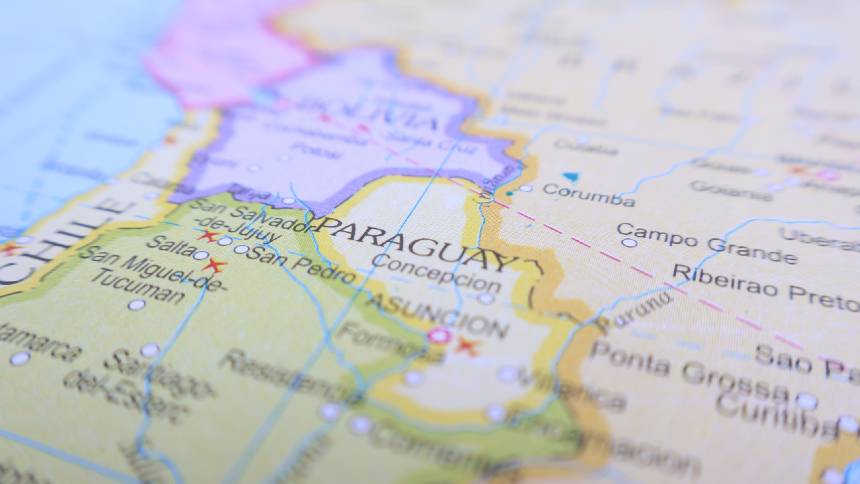
In this respect, however, a group made up of more than 200 Brazilian companies has more advantages than other national companies in the competition for this rich European market. These are the companies that, in recent years, have transferred production lines to Paraguay, attracted by the Maquila Law – a package of tax benefits offered by the Paraguayan government.
Among the advantages are a single export tax of 1% on added value, total tax exemption for imported inputs, operating costs up to 40% lower, exchange rate stability, and cheaper labor due to lower labor charges, forming an irresistible package for companies to escape the so-called "Brazil Cost."
“In practice, Paraguay has become a tax haven for Brazilian industry,” summarizes João Eloi Olenike, executive president of the Brazilian Institute of Planning and Taxation (IBPT). According to him, in addition to the special export regime, Paraguay adopts the so-called "triple 10" model: 10% VAT, 10% corporate income tax, and 10% personal income tax.
"Even outside the Maquila Law, the maximum rate does not exceed 30% in the sum of these taxes," says Olenike. "In Brazil, corporate income tax alone can reach 34%, not considering consumption taxes."
If the migration of these companies already brought advantages in the competition for the Brazilian market, the gains are even greater with the free trade agreement with the European Union.
The sectors that benefit most from the agreement are precisely those whose Brazilian companies have opened the most factories in Paraguay: textiles ( Lupo and Lunelli), footwear (Kidy Calçados), lighting (Koumei), light manufacturing (Buddermeyer), as well as chemicals and metallurgy.
These sectors are among those that will have immediate zero tariffs in the EU. This means greater scale, higher margins, and the ability to compete globally in the European market, not only with domestic industries but also potentially with Chinese industries that export to the bloc.
For established companies, such as Be8 – a Brazilian company specializing in advanced biofuels, with one of the largest biorefineries in Latin America located in Paraguay, Omega Green – the EU-Mercosur agreement merely consolidates its entry into the European market.
The plant, currently under construction in Villeta, Paraguay, will produce HVO, the so-called green diesel, and SAF (sustainable aviation fuel) primarily for Europe.
This month, the company presented its new Be8 BeVant biofuel at the Hannover Fair in Germany. Tests conducted with a Mercedes-Benz Actros truck in Germany showed a reduction of approximately 99% in CO2 equivalent compared to fossil-based diesel – which caught the attention of the European truck industry.
EU still far away
However, the advantages that many of these companies that migrated to Paraguay have compared to the European market will take some time to realize.
Most of them settled in the neighboring country targeting the Brazilian market, the largest in Mercosur. And, strictly speaking, they did not plan for eventual expansion into the European market, perhaps believing that the EU-Mercosur free trade agreement – whose negotiations dragged on for 27 years, with many obstacles – would paradoxically not be concluded in the short term.
Lupo, a textile group from Araraquara, in the interior of São Paulo, and one of the largest clothing brands in Brazil, is an example. The company invested R$ 30 million in the construction of a plant in Ciudad del Este, on the border with the country, which is already in operation. The unit has the capacity to produce up to 20 million pairs of socks per year – much less than the 70 million produced by the other units, distributed across three Brazilian states.
Carlos Mazzeu, managing director of Lupo, confirms that Lupo's industrial unit in Paraguay was designed for the production of basic products, focusing on cost reduction and efficiency, aiming to maintain competitiveness against imported products.
“The project was fully designed to meet the demands of Mercosur, with absolute priority given to the Brazilian market, which remains the company's main strategic focus,” Mazzeu tells NeoFeed , adding that the use of the benefits of the Maquila Law, including the 1% tax on exports, strengthens the competitiveness of the operation and complements the existing industrial structure in Brazil.
In this context, according to him, there are no immediate plans to use the Paraguayan unit as an export platform for the European market, since it was designed to strengthen Lupo's position in Brazil and Mercosur.
Mazzeu states that exports still represent a small portion of Lupo's revenue, but expanding this area is part of the company's strategy, and the opening of the European market could help this movement. In addition to exports, Lupo has a presence in the European market with its own store in Portugal, which opened in 2024.
“Each new market opened reinforces the leverage for export growth, contributing to economies of scale and brand recognition abroad,” says the executive. “This progress is planned, maintaining the Brazilian market as a priority, but with a progressively more relevant international presence.”
Other important Brazilian industries established in Paraguay with the potential to target the European market include Buddemeyer, a major producer of textiles (bed, table and bath linens), Koumei, a manufacturer of lamps and lighting products, Fiasul - a textile industry from Rio Grande do Sul that arrived in Paraguay with an initial investment of US$ 3 million, potentially reaching US$ 30 million - and Efisa, a producer of packaging and pallets with an investment of US$ 9 million in a plant.
Obstacles
Despite the large number of Brazilian companies relocating to the neighboring country in search of tax benefits, the successful formula created by the Maquila Law may not fit the business model of some industries, even those focused on exporting.
Estrela, a toy manufacturer, is one example. The company even set up a factory in Hernandarias in 2014, under the maquila regime, producing plastic toys for export to Brazil. But the operation did not become viable.
Gabriel Burd, director of Condor — a Brazilian manufacturer of brooms, brushes, mops, sponges, and cleaning utensils, based in Santa Catarina — states that the company studied the possibility of installing a plant in Paraguay, but concluded that, for now, the investment would not be worthwhile, even to direct production towards the domestic market.
"The advantages of the Maquila Law, which can be very significant for some industrial sectors, with savings on taxation and operating costs, among others, are not as obvious as they seem at first glance," he warns.
Burd cites logistics as an example. "In our case, for broom production, even with the higher import tax on raw materials in Brazil, the logistics cost would be higher in Paraguay, since the raw materials arrive through ports here in Santa Catarina, located close to our plants," he says.
With an annual production of 205 million products and revenue of R$ 1 billion, Condor employs 1,700 people across its seven plants. Burd acknowledges that exports are small, mostly focused on Mercosur countries.
The executive says that targeting the European market requires careful, medium-term planning to analyze costs and build a client network. Furthermore, he says, competing with Asian industries to operate in Europe is a complex challenge.
“Chinese and Vietnamese companies have created an export-oriented ecosystem, and it’s worth remembering that Europe is halfway between Brazil and Asia,” says Burd. “They always manage to create products at a lower cost.”