

Amid the stalemate in the Iran war, which keeps the Strait of Hormuz closed – through which about 20% of the world's oil passes – the United Arab Emirates (UAE) surprised the already shaken global energy markets by announcing on Tuesday, April 28, its withdrawal from the Organization of the Petroleum Exporting Countries ( OPEC ), a group made up of some of the world's largest oil producers.
The emirate's exit from the cartel, effective May 1st, represents a major blow to OPEC, which loses its third-largest producer and sees its main objective weakened since its creation in 1960 – to control the supply of oil in the global market to influence the price of the commodity.
The decision, however, is not expected to impact the market in the short term because of the blockade of the Strait of Hormuz, with the price of a barrel trading at US$105 on Tuesday, the 28th, 30% higher than at the start of the war.
“The expectation is that the UAE's exit from OPEC could lead to lower oil prices, but also to greater market volatility in the coming decades,” warns David Oxley, chief climate and commodities economist at Capital Economics.
Without the United Arab Emirates, OPEC now has 11 member countries, and OPEC+ brings together another 12 allied countries, totaling 23 countries. Together, these two structures account for about 40% of world oil production, with OPEC accounting for the majority (30%).
In making the announcement, the emirate's government stated that its decision would help the country meet growing global energy demand in the long term. The United Arab Emirates produced approximately 3 million barrels of oil per day before the start of the war. The country had invested heavily in increasing its production capacity and had long desired to pump more oil.
With the departure of the United Arab Emirates, OPEC loses about 15% of its production capacity and one of its most important members. Therefore, analysts define the UAE's announcement as the beginning of the end for the cartel.
The Abu Dhabi government's decision also represented a blow to the de facto leader of OPEC, Saudi Arabia – which depends on the cartel's production control to maintain the profitability of its daily production of 9 million barrels of oil, and now needs to absorb the biggest defection in OPEC's history.
The Saudis and the United Arab Emirates had already been at odds even before the current war, with disputes over production targets, regional policy, and strategic direction dragging on for years.
Geopolitical shift
Other effects are expected, including on the emirate's relationship with neighboring Persian Gulf monarchies, which had been acting as a bloc, and on the correlation of political forces in the Middle East, with a possible impact on global geopolitics.
It was noteworthy that the emirate's announcement was made on the same day that Saudi Arabia was to host an extraordinary meeting of the Gulf Cooperation Council (GCC).
Composed of six Arab countries located on the Arabian Peninsula (Saudi Arabia, United Arab Emirates, Kuwait, Qatar, Bahrain, and Oman), the bloc shares important strategic characteristics: large oil and gas reserves, similar political systems (monarchies), geographical proximity, and common interests in regional security.
This was the first GCC meeting since the start of the war in Iran, and the Council's actions throughout the conflict have been criticized by the United Arab Emirates, which considers the group's response insufficient.
The response from the United States government has been different. Secretary of State Marco Rubio has held direct security talks with the government of the emirate, rapidly expanding its military presence at Al Dhafra Air Base in Abu Dhabi.
This UAE-US military rapprochement occurred alongside the American gesture of offering $20 billion in currency swap lines to the emirate's government, similar aid recently provided to Argentina.
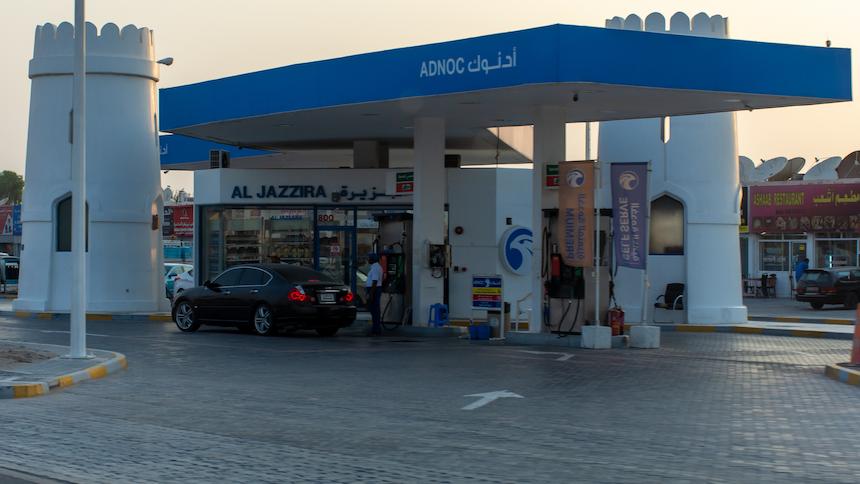
The help would be invaluable: Adnoc, the emirate's oil giant, has expanded its production capacity to reach 5 million barrels per day by 2027, well above the quota that OPEC had allocated to the country.
Researchers at the Baker Institute estimated in 2023 that unrestricted production could generate more than $50 billion in additional annual revenue for the United Arab Emirates. President Trump, who has long accused OPEC of "exploiting the rest of the world" and explicitly links American military protection of the Gulf states to oil pricing policy, has now achieved his most concrete victory against the cartel.
In practice, the United Arab Emirates is going beyond breaking with OPEC. From foreign policy to military strategy and energy planning, the country where almost 90% of the population is made up of expatriates has distinguished itself with a model based on speed and results, prioritizing quick and tangible gains over traditional bureaucracy.
The emirate has aligned itself with global markets and emerging trends, focusing on initiatives driven by artificial intelligence and cutting-edge technology to accelerate this trajectory.
In January 2022, the United Arab Emirates changed its weekend from Friday and Saturday to Saturday and Sunday, aligning itself with the rhythms of London, New York, and Hong Kong, and orienting itself towards global trade rather than regional conventions.
The emirate's economy is one of the most diversified in the Middle East. Beyond oil and gas, the city of Dubai has become one of the most visited tourist destinations in the world. Emirates and Etihad have transformed the country into a global air hub.
Dubai and Abu Dhabi have international financial zones with their own regulatory regimes, attracting global banks and asset managers. All of this justifies the country having one of the highest per capita incomes in the world, at US$54,214 in 2026, according to the IMF.
Now, by leaving OPEC, the government of the emirate also hopes to gain a significant geopolitical influence in the region, signaling that it expects any peace agreement between the US and Iran to explicitly guarantee freedom of navigation through the Strait of Hormuz, effectively positioning itself as an actor with veto power in ceasefire negotiations.
In other words, the United Arab Emirates is no longer just an OPEC member or a Gulf ally. It is an integral partner in Washington's regional strategy, with all the influence that entails.