

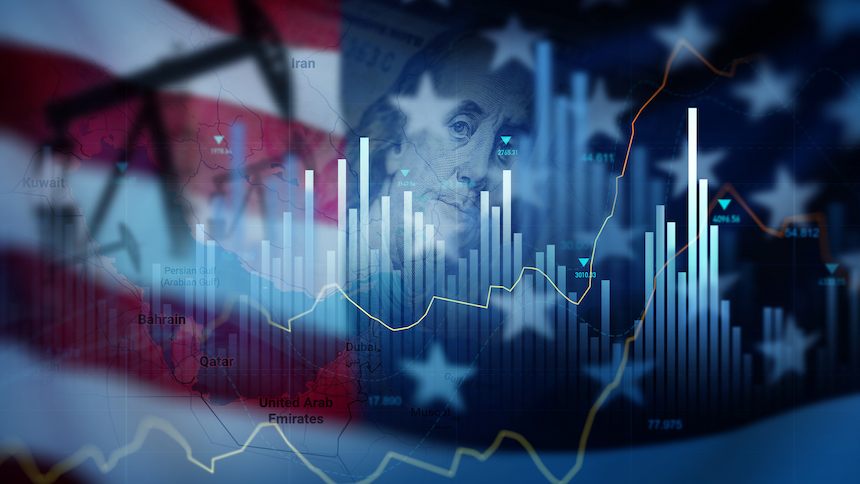

The conflict in Iran is causing a serious – but not systemic – shock to the markets, far from generating the impactful effects on oil prices seen in the First Gulf War (1990-91) and the invasion of Ukraine (2022).
The trend points to a de-escalation in the short term. Even in a worsening scenario, with the price of oil at $115 a barrel for six months, for example, the trend would be a slight increase in inflation and a moderate effect on stocks.
The above diagnosis is part of a study by Lombard Odier , a Swiss private bank, which NeoFeed had first-hand access to. The optimistic tone of the paper seems to confirm the perception of the American stock market , which has experienced few significant fluctuations since the beginning of the war, despite increasing geopolitical tension.
On Wednesday, April 15, for example, the S&P 500 index rose 0.8% and closed above 7,000 points, surpassing its high of January 27. The Nasdaq index, with a strong presence of technology companies, rose 1.59% and surpassed 24,000 points — its highest level since last October and the 11th consecutive day of gains.
Authored by Luca Bindelli, head of investment strategy at the institution, the Lombard Odier study notes that, on the first day of the bombings in Iran in early March, the global economy was already registering resilient growth and slowing inflation.
For this reason, the impact caused by the increase in the price of a barrel of oil on markets and on countries' macroeconomic indicators was less than the last two major energy shocks, the first Gulf War (90-91) and the invasion of Ukraine (2022).
“The conflict in Iran is causing a serious – but not systemic – shock to the markets,” Bindelli writes in the study, adding that the baseline scenario assumes a de-escalation that avoids more disruptive consequences. According to him, the expectation is that Brent crude oil prices will remain around US$90 per barrel over the next six months, but with still limited effects on the global economy.
"Even considering a delay in price normalization after the end of hostilities, this would imply a slight drop in inflation and slower growth, rather than new inflationary pressures or a recession," the study says.
Bindelli presents other arguments that explain the discrepancy between the geopolitical tension caused by the conflict and its less evident impact on the global economy.
One of them is the fact that financial markets have already absorbed part of the energy shock, with global stocks falling by up to 5%, driven by deteriorating price/earnings ratios and reflecting higher energy prices and uncertainties.
“This is visible in the volatility of interest rates on bonds with different maturities, or discount rates,” notes the Lobard Odier executive, adding that recent ceasefire news contributed to the recovery of the markets.
"Earnings growth revisions have continued to increase since the start of the conflict, and corporate bond spreads – or the difference in yields relative to sovereign bonds – remain stable, suggesting little concern about growth so far," it notes.
This could change if the conflict resumes after the ceasefire, but so far, in the Swiss bank's view, resilient growth appears consistent with recent market developments.
“Despite some additional volatility, we do not expect a materially deeper pullback in the stock market,” the study says. “At this stage, U.S. government bonds are unlikely to provide strong portfolio diversification.”
In this baseline scenario, therefore, the Swiss bank predicts that upward pressures on global inflation will remain under control. US growth is expected to cool rather than contract, and inflation will rise modestly.
"Our expectations for the Federal Reserve's terminal rate remain virtually unchanged, despite the delayed interest rate cuts," the study says.
Negative scenarios
Despite the positive outlook, the Lombard Odier study contemplates the possibility of two pessimistic scenarios in the short term: should the ceasefire fail and the conflict escalate again, in addition to the continued blockade of the Strait of Hormuz .
“Although it is not our primary scenario, a prolonged disruption in oil supply could push prices to around $115 per barrel over six months,” the study warns. Inflation would rise more significantly, while higher energy costs would impact consumption and corporate margins.
In this scenario, stock market performance would be moderate. US government bonds would struggle to offset the weakness in the stock market, as inflation concerns would limit the possibility of yield declines and central banks might consider raising interest rates even further.
"Such a scenario would be similar to that of 2022, when inflation was above central bank targets, leading policymakers to rapidly tighten monetary policy to contain rising prices and inflation expectations," the study points out.
In a more extreme scenario of escalating conflict, involving lasting damage to infrastructure or broader regional repercussions, the Swiss bank projects that oil prices could approach $150 per barrel, on average, over nine months. This would likely trigger another surge in inflation, leading to widespread demand destruction and risks of recession.
According to the study, such a “stagflationary” outcome would be reminiscent of past oil shocks, such as the First Gulf War. In this case, stock markets would suffer significant pressure. “However, the search for safety would largely favor high-quality fixed income, as risks to economic growth would reduce yields and also support gold prices.”
Aligned optimism
The study's optimistic outlook, aligned with the recent bullish behavior of the American financial market, is noteworthy at a time when there is no expectation of a resolution to the conflict in the very short term.
This week, for example, stocks are rising due to hopes that the war with Iran will subside and signs that Americans are continuing to spend, despite rising gasoline prices and deteriorating market sentiment. A US government survey released on Wednesday, the 15th, showed that wholesale prices rose less than expected in March.
The main factor sustaining optimism in the American market, however, goes by the name of Donald Trump.
Investors continue to bet that the stock market is the most important electorate for the American president – and the segment believes that Trump tends to always reverse controversial decisions when they seem to bring down stocks, a behavior that earned the American president the nickname TACO (initials of the English expression "Trump always chickens out").
"There was a lot of money to be made if you were willing to bet that Trump wouldn't tolerate pain in the market," says Hardika Singh, economic strategist at Fundstrat.
“Investors shouldn’t go against the White House, because they won’t win,” she observes, after the American president told Fox Business that when the war is over, “the stock market will soar; in fact, it’s already soaring.”