

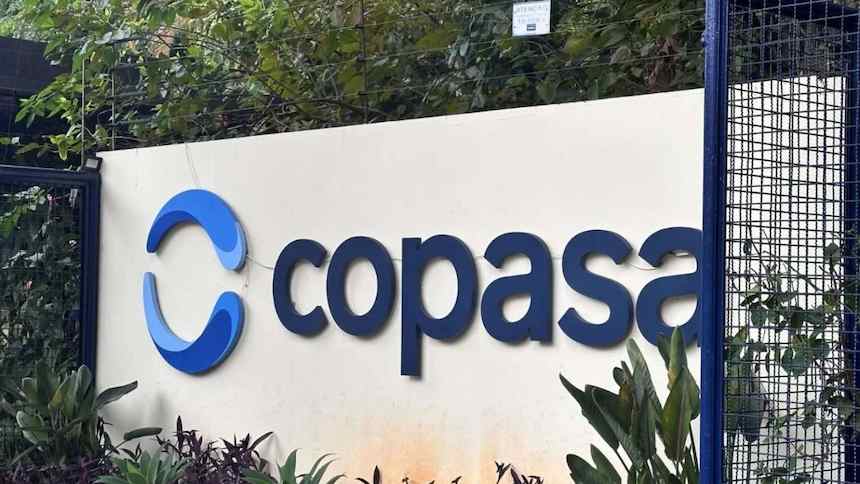
The privatization of Copasa , the Minas Gerais state-owned sanitation company, could generate more than R$ 13 billion. Experts and fund managers interviewed by NeoFeed acknowledge the favoritism in the auction of two giants in the sector – Sabesp and Aegea –, the result of which should ultimately create the biggest sanitation champion in the country, which will then lead the market by a wide margin.
However, some factors that could change this situation are noteworthy. One of them is the complexity involved in Copasa's sanitation operation. It covers approximately 830 municipalities, implying dealing with hundreds of scattered stakeholders.
This is a significant challenge for any new controller, including Sabesp, the largest sanitation company in the country, which deals with more concentrated municipalities in São Paulo.
Therefore, the market is considering the possibility of a surprise in the bidding process. This other option would be a "purebred" third way, that is, a consortium formed by a large financial player (bank or investment fund) and a construction company with high execution capacity, resulting in a competitive cost of capital.
"The sector is awaiting the next steps in the privatization of Copasa, and we expect there to be strong competition," says Christianne Dias, president of the Brazilian Association of Sanitation Companies (Abcon).
"It's the biggest privatization process of the year in the sector," she added, who was also the CEO of Brazil's National Water and Sanitation Agency (ANA).
The auction anticipates the entry of at least one strategic investor, who could acquire up to 30% of the company. Sabesp and Aegea have already confirmed their participation in this stage. Another 15% of the shares will be offered to the market, with the government of Minas Gerais potentially reducing its stake from 50.3% to 5%.
Adding the minimum grant set by the Minas Gerais government for the Copasa privatization auction, of R$ 3.1 billion, to the secondary offering, which could yield between R$ 8.8 billion and R$ 10 billion, the privatization of Copasa could generate more than R$ 13 billion.
Winning the auction, therefore, is only the first challenge for whoever takes over Copasa. The Minas Gerais state-owned company has become more expensive after the recent appreciation of its shares – accumulating a 20.15% increase this year – and will require significant investments to meet universal service goals.
In the case of the two frontrunners, as one manager who wished to remain anonymous observed, each potential bidder has a weakness to address. "Sabesp needs to explain its expansion and governance strategy outside of São Paulo, and Aegea must address issues related to its capital structure, internal controls, and absorption capacity," he warned.
In this sense, two possibilities are part of this scenario. For example, the formation of a consortium including one of the two winning sanitation giants with a bank or management company to provide financial muscle to the operation is not ruled out.
Among the potential partnerships are those between Sabesp and Equatorial (a reference shareholder of the São Paulo-based company) and between Aegea and Kinea or Perfin , management companies with which the sanitation company allied itself to win the privatization of Corsan.
New entrants
The wide range of possibilities for the Copasa auction is seen by experts as a reflection of the current state of the sanitation market.
Since the implementation of the Sanitation Legal Framework in 2020, 64 auctions have already been held. The large volume of capital required to meet the framework's goals – 99% of the population with access to drinking water and 90% of the population with sewage collection and treatment, both by 2033 – facilitates the entry of new players into the sector.
Roberto Marinho, founding partner of Yards Estruturados – an investment banking company operating in the infrastructure sector – states that the sector experienced great euphoria about three years ago, with overpriced assets, such as in Rio de Janeiro, where the state-owned company Cedae divided the concession into four blocks.
The executive points out that Aegea won bids for two blocks from Cedae and is participating in a third through a consortium with GIC, Singapore's sovereign wealth fund, which holds a stake in the sanitation giant, as do Itaúsa and the Equipav Group.
Marinho attributes Aegea's recent problems – it had to republish its latest financial statement due to alleged accounting inconsistencies – to the high default rate in Rio, which was underestimated at the time of the auction. He cites other cases of mispricing, such as in Ceará and, more recently, in Paraíba (Cagepa), where the Spanish company Acciona won by a minimal margin.
Although he cites Sabesp as the favorite in the Copasa auction, he considers that Aegea, despite its pressured balance sheet, remains in the game. "The resilience of Itaúsa, its main shareholder, will be decisive: with continued support, Aegea remains strong," he says.
Marinho sees no room in the auction for an asset manager with a key stake in Copasa – Perfin, which holds 15% of the shares of the Minas Gerais state-owned company. “Perfin would need an experienced controlling shareholder to support the volume of investments; the winner is not defined solely by the size of the check, but by the quality of execution,” he warns.
Financial market sources predict that Perfin will seek, at most, an increase in its stake in Copasa to 20% through the purchase of shares on the secondary market, which would give it more weight in the company.
Therefore, Marinho is betting on the so-called third way, with the potential return of large construction companies, such as Andrade Gutierrez and Odebrecht.
“These companies have in-depth knowledge and execution capabilities that foreign players lack,” he says. “They could partner with financial funds, forming competitive consortia and surprising the market.”
An executive in the construction industry, who spoke to NeoFeed on condition of anonymity, ruled out the possibility of the two construction companies participating in the auction.
According to him, Odebrecht never expressed interest. And Andrade Gutierrez is desperately seeking an out-of-court settlement with creditors to restructure debts that could exceed R$ 5 billion.
"Furthermore, Andrade Gutierrez is facing a significant administrative process within Copasa itself, due to irregularities in the bidding process for the main sewage treatment plant planned in the state-owned company's current investment cycle," says this source.
When contacted, both companies issued statements. Andrade Gutierrez, through a press release, stated that it had no comment on the matter. Odebrecht echoed this sentiment, stating that the company preferred not to comment on the Copasa auction.
Other managers and consultants, however, cite Acciona as a company with this type of contractor profile as a new entrant in the sanitation sector. The Spanish giant has become a relevant player in heavy infrastructure in the country, with a presence in three main areas - it is part of the consortium that manages Congonhas Airport and is responsible for the construction and operation of Line 6-Orange of the São Paulo Metro, the largest PPP mobility project in Latin America, in addition to sanitation.
Last week, Acciona signed a contract with Cagepa, under a Public-Private Partnership (PPP) model, to provide water and basic sanitation services in 85 municipalities in Paraíba, with an investment of R$ 4.2 billion. The Spanish company, in consortium with BRK Ambiental , also manages concessions for basic sanitation services (treated water and sewage) in 151 municipalities in Pernambuco and in Fernando de Noronha.
When contacted, Acciona denied any intention to participate in the privatization of Copasa, either alone or through a consortium.
It's not just about checks.
According to Diego Fernandes, partner at the law firm Roenick Fernandes Advogados and specialist in infrastructure contracts, potential partnerships between Aegea and Sabesp with management companies are more likely to occur than a purely third option.
"The most prudent interpretation is that asset managers and infrastructure funds may play a significant role in capital composition and governance after the operation, but the formal competition remains concentrated among the operators who have been accredited," he says.
According to Fernandes, Copasa will not be won solely by whoever offers the highest bid. "The market will look at who can sustain the operation after the purchase, with capital, operator, governance, relationship with municipalities, and the capacity to deliver universal service without turning privatization into a permanent regulatory dispute," he states.
Pedro Abrão Jr., a lawyer specializing in business law, sees the dispute over Copasa on three levels: financial, operational, and legal-regulatory. According to him, this is not an operation where the market will only look at who offers the highest price.
“The market also tends to look at capital structure, financing costs, covenant slack, quality of financial information, and robust governance, especially after the recent moves by rating agencies involving Aegea,” says Abrão. “The question, therefore, is not only who has the appetite, but who can absorb this asset with financial discipline, governance, and effective execution capacity.”
Contacted for comment, Sabesp and Aegea issued statements regarding the Copasa auction.
The São Paulo-based company stated, through a press release, that the asset's value depends on visibility regarding the conversion and contractual design of the other municipalities, including the expansion of sanitation services where there are currently coverage gaps.
“Furthermore, it is essential that the process clearly and transparently outlines the objective criteria for selecting the reference investor: financial capacity, proven execution experience, commitment to universalization goals, governance standards, integrity, and quality of disclosure to the market,” says the Sabesp statement.
Aegea, for its part, admitted that it evaluates new opportunities based on technical, regulatory, and economic-financial criteria, respecting capital discipline and required return.
"The financial adjustments made in 2024 were exclusively accounting in nature, with no impact on the company's operations, cash flow, liquidity, or compliance with financial covenants ," the company statement said.
"Aegea maintains solid operational fundamentals, with revenue growth of 21%, EBITDA growth of 24%, and cash generation of 45% in the last year, as disclosed in its 2025 results."
Green light
The privatization process of Copasa has entered its final stretch with the decision of the Court of Auditors of the State of Minas Gerais (TCE-MG) to authorize the transaction, removing the main obstacle to the process.
Hours after the announcement, on Monday, May 18th, Copasa avoided setting any date for the auction offering of company shares, claiming that the operation still depends on a series of steps and approvals before it can be implemented.
The cautious stance taken by the Minas Gerais state-owned company in response to the announcement from the TCE-MG (Court of Accounts of Minas Gerais) was contrasted with the reaction of the financial market, with Copasa's shares leading the day's gains on the Ibovespa, rising 3.5%.
CSMG3 stock has appreciated by 127.9% in the 12 months leading up to May 18th. The sanitation company's market capitalization is R$ 20.2 billion.
This report was contributed by Cristiano Zaia, from Brasília.