


In addition to the losses caused by the oversupply of renewable energy, which has led the National System Operator (ONS) to discard about 20% of the production from centralized solar and wind power plants in order not to overload the system, a legal offensive involving the Federal Court of Accounts (TCU) and the Federation of Industries of the State of São Paulo (Fiesp) is opening a new crisis in the sector.
These and other bodies and entities are requesting the suspension of the approval of the results of the Capacity Reserve Auction in the Form of Power ( LRCAP ), held between March 18 and 20 – precisely the solution to avoid the collapse of the electrical system.
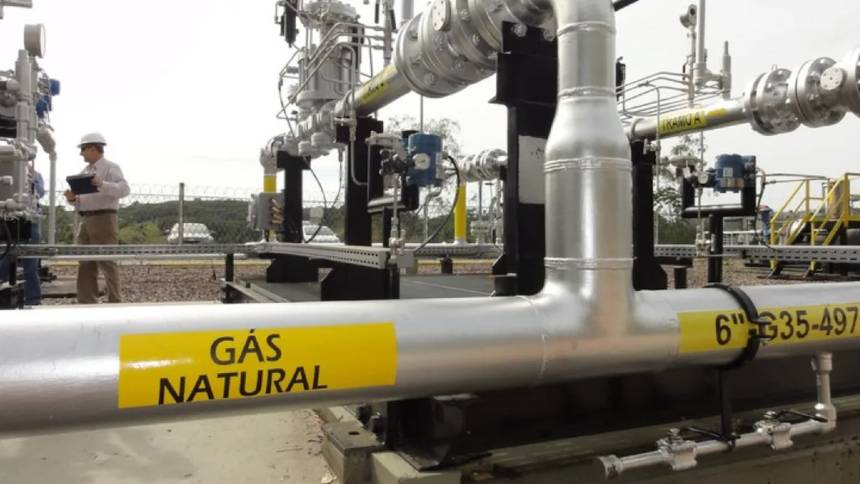
Organized by Aneel - the regulatory agency for the electricity sector - the objective of LRCAP was to contract thermal power plants using natural gas, coal, fuel oil, and biodiesel, in addition to hydroelectric plants, to be activated during peak hours, between 6 pm and 7 pm, when solar generation drops, public lighting is activated, and the use of household appliances skyrockets, demanding firm and immediate power from the system, mainly from thermal plants.
Marked by a low premium (5.5%), the auction generated more than 100 contracts in 20 states, totaling R$ 515.7 billion, with the contracting of 18,977 MW of power. The winners would be entitled to a fixed annual revenue of R$ 38.9 billion, in exchange for the availability of power to the system. According to calculations by TR Soluções, the contracting will generate an annual cost of R$ 48 billion in charges starting at the beginning of the next decade.
Brazilian Federal Court of Accounts (TCU) technicians filed an opinion on Tuesday, May 19th, recommending the suspension of the awarding and partial approval of the 2026 LRCAP (License for the Acquisition of Energy in Public Works). The precautionary measure refers to thermal power plants – with entry into operation in 2026, 2027, 2028, 2029, and 2031. If accepted, only hydroelectric power plants will be free for approval.
This measure adds to a series of other questions, which had already led Aneel to postpone the approval of the results, scheduled for Thursday, May 21.
The Union for Energy movement – which brings together 70 sectors of Brazilian industry – classified the increase in energy costs caused by the bidding process as unsustainable, in addition to the excessive volume of contracts without technical verification, requesting the suspension of the LRCAP approval until all clarifications are made.
In a demonstration of the seriousness caused by the LRCAP, the Union for Energy nevertheless argued that the auction should be maintained with a review of its results, excluding any possibility of a complete annulment of the bidding process, which would cause institutional insecurity and aggravate the instability of the electricity sector.
Last week, Fiesp had already filed a Public Civil Action in the Federal Court of São Paulo to suspend the effects of the auction, questioning the same points criticized by experts on the day the auction was held: the definition of contracted demand, the methodology for setting ceiling prices, the low competitiveness, and the economic impacts of the contracts.
The organization also advocates for a new auction, "later this year, with technically appropriate parameters, greater competition, and more advantageous prices for the consumer."
Previously, the Arayara Institute had already filed a formal request with the TCU (Federal Court of Accounts) asking for the exclusion of coal-fired power plants from the results, while the Administrative Council for Economic Defense (Cade) opened an administrative inquiry.
Poor governance
The process that led to the 2026 LRCAP had already been marked by two years of waiting, with legal challenges, a postponement, questions about the rules, and harsh criticism from the TCU (Brazilian Federal Court of Accounts) in a session held two days before the auction, in which it decided to maintain the bidding process due to the limited time available to investigate the irregularities.
Experts criticized the governance structure involving multiple bodies (MME, Aneel, ONS, etc.) for errors in the auction's design. However, the Brazilian Association of Thermal Power Generators (Abraget) defended the auction, stating that the biggest criticism – the price ceiling increase of over 100%, determined 72 hours before the auction by the Ministry of Mines and Energy – was justified.
According to Xisto Vieira, president of Abraget, after the projects were approved for the auction, there was a global race for gas-fired thermal power generation turbines, driven by demand from data centers and artificial intelligence.
“This surge in demand, which was not foreseen in the initial methodology, significantly increased the prices of equipment and retrofit projects, impacting the auction's ceiling price,” Xisto told NeoFeed , noting that Minister Alexandre Silveira, of Mines and Energy, acknowledged that it was a mistake not to anticipate and adjust prices considering the rise in equipment prices on the international market.
Despite controversies, such as last-minute price adjustments, Xisto asserts that LRCAP was technically successful and essential for ensuring the reliability of the Brazilian electrical system.
"The cost of the auction, estimated at R$ 92.7 billion until 2032, is justified by the benefits, such as avoiding blackouts and rationing, which could cost almost R$ 1 trillion," he warns.
According to him, the contracting of coal-fired thermal power plants is supported by studies that demonstrate their crucial role in preventing blackouts, the social cost of which would be much higher: “The thermal plants in the Pecém Complex , in Ceará, could have prevented the blackout of August 2023; they provide security and stability, especially in the Northeast, with high penetration of intermittent generation.”
Donato Filho, CEO of the consulting firm Volt Robotics , acknowledges that the capacity auction was necessary to meet the afternoon ramp-up and the end-of-day peak, especially with the penetration of solar and distributed generation (DG), which reduces the morning load. However, he notes that the auction was poorly designed and marked by last-minute improvisations that increased costs.
“The auction was excessively segmented by source and year, which diluted competition and resulted in low discounts and higher prices,” says Donato, who doesn't forgive the belated justification of external market pressures for the rush for data center equipment in the US. “This signals a disconnect with market reality; serious people don't expect improvisation in processes of this magnitude.”
The expert makes practical short- and medium-term recommendations for electricity sector auctions, with adjusted temporal and contractual scope. As an example, he suggests auctions to contract capacity for 2026–2028, taking advantage of power plants with expiring contracts, with shorter terms of five to ten years, instead of long-term commitments.
"This acknowledges rapid technological evolution, reduces bottlenecks, and improves the alignment with the demand profile of the afternoon ramp," he says.
Regarding the LRCAP model being under scrutiny, the Volt executive proposes an audit of the model, preserving what is correct and avoiding "throwing everything away" so as not to send a bad signal to the market. According to him, it is necessary to maintain what is technically adequate, such as fast thermal and hydroelectric plants.
Finally, Donato Filho warns about the technological transition and the risk of consumers "fleeing" the electricity grid.
“With cheaper solar energy and batteries, in three to five years it may become cheaper for some consumers to disconnect,” he says. “This would reduce the cost base – without paying for transmission, generation, charges, taxes – stagnating the market and worsening the cost spiral, with social and macroeconomic impacts for the sector.”