

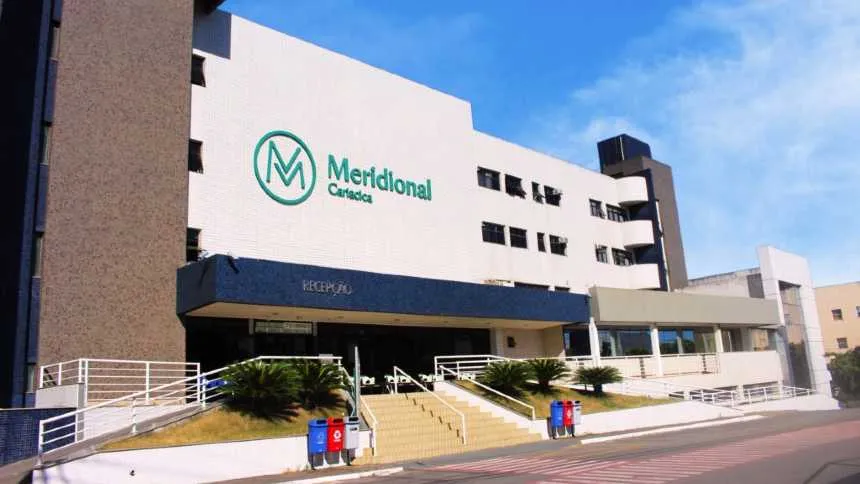
Kora Saúde is yet another company that has had to resort to out-of-court restructuring due to its difficult financial situation, leading the auditor to point out "significant uncertainty" regarding its operational continuity.
The hospital group, controlled by the private equity fund HIG Capital , announced on Wednesday evening, April 29, that it had reached an agreement with its main non-operating creditors to implement an out-of-court restructuring plan involving debt restructuring.
The statement, which does not detail the terms of the negotiations, informs that Kora is also in talks with creditors of obligations not covered by the plan, which does not include operational creditors. "The combination of these initiatives aims to enable a comprehensive restructuring of non-operational liabilities," says part of the statement.
The talks are not recent. According to Bloomberg , Kora Saúde had been discussing the possibility of filing for out-of-court restructuring with creditors for months.
Kora is yet another healthcare company that has gone from being a major consolidator to a company with serious financial problems, a situation also experienced by Oncoclínicas and Hapvida . With ten checks signed, Kora was one of the most active names in the wave of healthcare acquisitions between 2020 and the beginning of 2022.
The result was the creation of a network of approximately 2,100 beds, 11,000 employees, and a clinical staff of 10,000 doctors in Espírito Santo, Ceará, Tocantins, Mato Grosso, the Federal District, and Goiás, with revenues of R$ 2.4 billion in 2025, a 5.1% increase compared to 2024.
The bill for the dozen M&As, however, came in the form of net debt, which closed 2025 at R$ 2.5 billion. Calculations by the Fitch Ratings risk rating agency indicate that the ratio between gross debt and pre-IFRS EBITDA was approximately 8 times in 2025 and, in 2026, will be around 7.5 times – indicators that differ from those used in the calculation of the company's covenants .
In its financial report for last year, which was released late, Kora Saúde highlighted that it has been presenting "repeated losses" – in 2025, the adjusted loss totaled R$ 183.5 million, a sharp increase compared to the loss of R$ 2.7 million in 2024.
Furthermore, at the end of last year, the company recorded short-term liabilities, including loans, debentures, and tax installments, totaling R$ 260.5 million, which "result in pressure on liquidity and increase the risk of a mismatch between operating cash flow and debt service, with the main constraint related to its capital structure and the maturity profile of its financial obligations."
While exploring an out-of-court restructuring, the company had been negotiating with creditors to mitigate risks to its cash flow and significant maturities scheduled for 2026, obtaining a standstill to defer the portion of debt remuneration due in March of this year and a second temporary standstill for the payment of debenture remuneration.
The company has been in adjustment mode for years. At the end of 2023, Kora Saúde's CEO, Antonio Benjamim, told NeoFeed that the company was working to improve its financial situation. Among the measures were the internalization of services from acquired hospitals and the sale of real estate. The expectation was that these measures would inject R$ 700 million into the company's cash flow.
Due to these problems, HIG Capital submitted a proposal for a public offering to acquire shares (OPA) in early 2025, in order to convert the company's registration to a publicly traded company.
With its request for extrajudicial reorganization, Kora joins names like GPA and Raízen , which have resorted to this mechanism to gain financial breathing room and renegotiate their high liabilities, hampered by the high interest rate environment.
NeoFeed reached out to Kora Saúde for comment on the request for extrajudicial reorganization, but received no response.