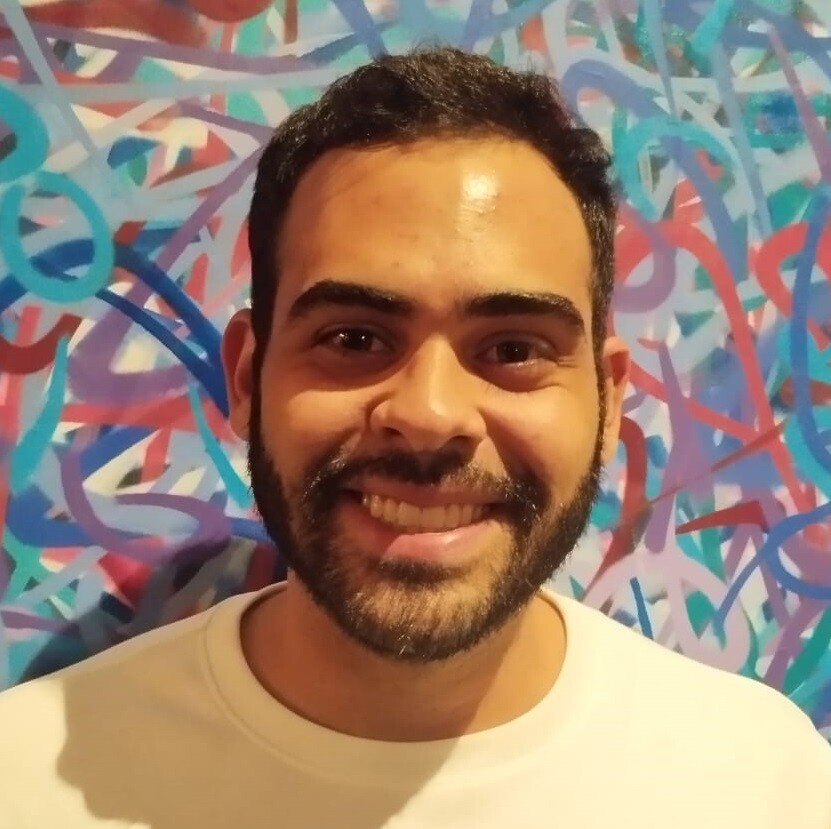



Thousands of creditors, dozens of empty companies, and R$ 4.3 billion in debt. The judicial reorganization (RJ) of Fictor , approved about ten days ago by the 3rd Bankruptcy Court of the State of São Paulo, begins surrounded by suspicions of fraud, asset commingling, creation of fictitious credits, and asset stripping, in addition to accusations against its main partners and distrust regarding its integrity, according to creditors, court documents, and reports from the judicial administrator Laspro.
NeoFeed had exclusive access to more than 50 documents involving lawsuits that Fictor, which attempted to buy Master last November, is facing in court.
The set of documents indicates that funds raised from investors were redistributed among group companies and partners through mutual loans and advances without clear accounting records, including operations that would directly benefit CEO Rafael Góis, whose net worth grew abruptly while his personal debts exploded.
According to the judicial administrator, the company's debt to related parties jumped from near zero in 2024 to R$ 1.8 billion in 2025. This is the holding company's liability to related parties, and other companies in the group had a similar structure, which may indicate that the total volume of debt is greater. The conglomerate's debt to group companies was R$ 1.13 billion in January of this year.
“This indicates the creation of 'fictitious' (intercompany) credits so that the Group itself can dominate the General Meeting of Creditors and approve a judicial reorganization plan that is detrimental to the real creditors (investors),” says lawyer Felipe Gousen da Silveira, who represents more than 200 creditors of the company, in a petition against the partners of Fictor, in which he points to “serious indications of fraud, asset commingling, asset stripping and corporate shielding.”
At the CVM (Brazilian Securities and Exchange Commission), an investor harmed by the company filed a complaint through lawyer Carlos Ayalla, pointing to "strong evidence of fraud, reckless management, misleading investors, and irregular fundraising of public savings."
A significant portion of the accusations stems from information contained in the technical reports prepared by the judicial administrator Laspro, appointed by the Bankruptcy Court.
According to Laspro, the financial statements of companies linked to Fictor present a series of inconsistencies, indications of asset commingling, and even evidence of the company's partners emptying its assets.
According to the report, the funds raised by Fictor Invest through Special Purpose Entities (SPEs) were directed towards financing the group's activities. However, Fictor's figures show a series of loans made between its own companies, advances and payments, and unexplained loans in the names of its partners.
Transactions with partners
The CEO and founder of Fictor, Rafael Góis, is at the center of suspicions for moving extremely high amounts of money, incompatible with the company's financial situation.
According to Fictor's financial statement presented by Laspro, Góis allegedly owes R$ 173.1 million. Fictor, in turn, allegedly owes Góis R$ 373,000, stemming from a mutual loan.
The creditors' defense, which had access to Rafael Góis's income tax return, points to a substantial increase in the CEO's assets. According to Silveira's petition submitted to the Bankruptcy Court, Góis's total assets would have increased from R$ 27.16 million in 2023 to R$ 161 million in 2024, with declared income of R$ 4.3 million and R$ 400,000 tax-exempt.
Góis' personal debts, on the other hand, would have increased from R$ 17.3 million to R$ 294.8 million, which, according to Silveira, "characterizes the creation of apparent personal insolvency (fictitious liability) to avoid seizures and executions." According to the defense, Góis would have declared a debt of R$ 134.7 million with Fictor Holding in 2024.
The petition also points out that Góis allegedly declared R$ 109 million in the Fictor Agro FIM fund and an acquisition of Luiz Phillippe Gomes Rubini's stake in Fictor Invest for R$ 161.7 million. "This simulates a billion-dollar purchase in his personal name to justify the transfer of wealth or money laundering," the petition states.
According to Fictor's January 2026 financial statement, presented by Laspro, Fictor's debt from mutual loans would be R$ 478.6 million, with a significant portion owed to related parties.
In his personal capacity, Luiz Phillippe Gomes Rubini, former partner of Fictor, has the largest outstanding balance to receive from mutual loans made with the company: R$ 34.4 million. Another partner, Rafael Paixão Ferreira Giuseppe, is reportedly owed R$ 373,000 in mutual loans (yes, an amount equal to that of CEO Rafael Góis).
Laspro, however, points out, based on bank statements, that Fictor allegedly received R$ 20 million in October 2025 from an account belonging to Giuseppe, but that this was not recorded.
"The comparison of the bank statement with the 2025 trial balance demonstrated that the item 'loan and mutual loan' in the name of Rafael Paixão showed inconsistent activity with the amounts received by Fictor Holding and requires clarification."
According to Laspro, the cross-referencing of bank transfers made in October 2025 by Fictor Holding to other companies in the group totaled R$ 131.6 million. However, when comparing these figures with the 2025 balance sheet, the administrator stated that "the corresponding accounting records for these amounts were not identified."
"The accounting inconsistency may compromise the reliability of the balance of the respective account, as well as the adequate representation of the group's equity and financial position, and requires clarification from the applicant, indicating the accounting entry for this transaction," Laspro stated.
Asset depletion
In some of these companies within the group, Laspro identified evidence of asset stripping. One of them is Vensa Alimentos Ltda., which, according to the report, has suffered "recurring withdrawals by the managing partner" over the past few years.
"The 'Advance Payment – Luis Carlos de Mattos Urnikes' account shows continuous growth throughout the analyzed period, increasing from R$ 446,312 in 2023 to R$ 1,045,937 in 2024, and reaching R$ 1,232,546 in 2025, an approximate increase of R$ 786,233 in withdrawals over the period. This situation occurs in parallel with the generation of successive operating losses, a circumstance that may negatively impact the preservation of the company's assets in relation to creditors," Laspro points out.
Another indication of asset stripping pointed out by the judicial administrator involves Dynamis Beleza, a company that generated no revenue and received an advance of R$ 30.6 million in 2025. The amount, almost five times the volume of assets reported by the company in the previous year, caught the attention of the judicial administrators.
From a technical-accounting perspective, the granting of large advances by a company that does not have operating revenue constitutes an atypical element and potentially indicates a transfer of resources without a clear operational counterpart, which may characterize an intra-group financial transaction or possible asset depletion.
Regarding liabilities, Dynamis Beleza reported R$ 6.19 million in "debts to related parties" and a debt of R$ 23.47 million linked to the "Credit Card – Fictor Pay".
The pattern was also repeated in some of the companies linked to the group. According to the court-appointed administrator, some of these companies showed low or no revenue generation, even in the face of significant financial transactions.
In its preliminary assessment report, Laspro also states that, in certain cases, it did not have access to the premises of these companies, which limited the verification of their activities and deepened doubts about the effective operation of part of the structure.
"Pay by card"
The documents also indicate that this structure of loans between companies and partners involved the use of credit cards. According to a balance sheet analyzed by the judicial administrator, in January, Fictor Holding had R$ 506.9 million to receive linked to B2B card transactions with American Express.
A significant portion of this amount—approximately 40%—was associated with Est3lar 01 Tecnologia e Processamento de Dados Ltda., a company that appears in accounting records under intercompany transactions. American Express is owed R$ 800 million by Fictor, making it the company's largest creditor. However, American Express has always denied being a creditor of Fictor.
In March, Rafael Góis and other partners at Fictor were the target of a search and seizure operation by the Federal Police, due to suspicions of the company's involvement with Comando Vermelho. According to documents obtained by NeoFeed , the Federal Police has been investigating Fictor since at least 2023, when it opened formal talks with the CVM (Brazilian Securities and Exchange Commission).
With the judicial reorganization approved, Laspro will now internally monitor the company's operations, oversee its activities, and report the progress of the process to the judge and creditors.
In granting the judicial reorganization, the court also ordered the hiring of a watchdog to analyze the company's data, given the inconsistencies pointed out by the judicial administrator.
The decision stipulated that PwC would be appointed for this task. However, according to NeoFeed 's investigation, the company has stated that it no longer provides this type of service. Creditors expect a new independent auditor to be appointed soon.
Meanwhile, investors who put money into the company with promises of a 2% monthly return have been unable to withdraw their funds since December of last year.
According to Fictor, redemption requests accelerated following the failed attempt to buy Banco Master the day before the institution was liquidated by the Central Bank. Between November and February, the company states that redemption requests exceeded R$ 3 billion.
At its peak, the company invested tens of millions in advertising and went public through a reverse IPO of Fictor Alimentos, made possible by the purchase of the already listed Atom. However, what went on behind the scenes at the company remained a mystery. At least, until then.
When contacted, Fictor and American Express did not respond to the reporter's questions.