


There has never been, nor will there ever be, a rock band like The Rolling Stones . For a multitude of reasons. First, because they are the oldest active band in the history of pop culture, having celebrated 64 years on the road this year. Second, they have been at the top since their first album and rivaled The Beatles for as long as they existed.
Even with the death of two of its founders, Brian Jones and Charlie Watts, its creative force continues to defy time and the brevity of life: Mick Jagger and Keith Richards, who are now 83 years old, retain a unique artistic youthfulness.
Amid a sea of rumors over the decades about the band's breakup, the Stones managed to build a career anchored in irreverence and a lack of commitment to rules and moral rigor. Richards, for example, loves to say that it's a miracle of nature that he's alive after consuming truckloads of hard drugs.
They also had the agility to outmaneuver the purists and state without shame that they transformed their art into a product, without, however, losing originality and quality. Unlike many artists who try to separate "artistic purity" from commercial success, the Stones embrace this fusion naturally.
On the 50th anniversary of their first album, in 2015, for example, they released a series of products — a book, a documentary ( Crossfire Hurricane), and a compilation ( GRRR!) — without bothering to admit that they continue to be a cultural and financial powerhouse.
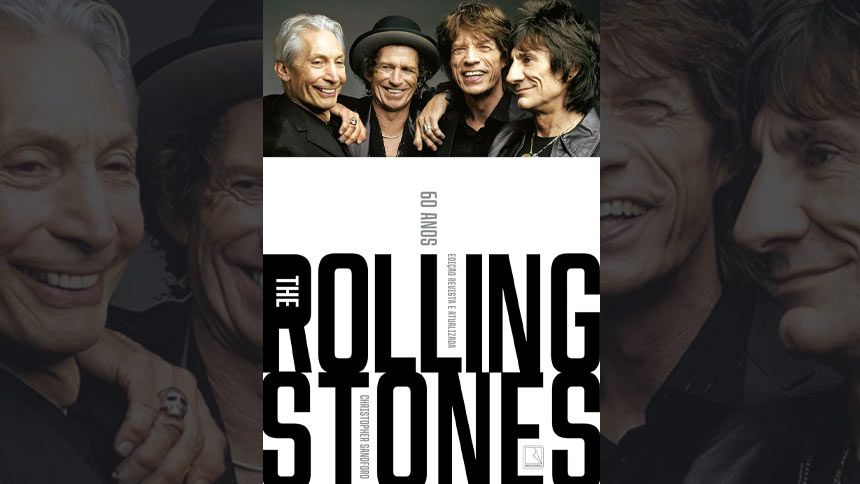
It is from this point of view that Christopher Sandford rewrote, last year, what many define as the best biography of the group — a 737-page tome that arrives in Brazil in the first week of May to mark the 61st anniversary of their first album.
Sandford is the author of acclaimed biographies of Kurt Cobain, Steve McQueen, Eric Clapton, Mick Jagger, David Bowie, Paul McCartney , Keith Richards, Bruce Springsteen, and Roman Polanski.
In The Rolling Stones: Sixty Years, the journalist reinforces the idea of the commercial side of music with a quote from William Shakespeare: "I sold cheaply what is most expensive." In this way, he suggests that the tension between art and money is old, but, in the case of the Stones, resolved with pragmatism.
Even with changes in its lineup, and two deaths along the way, the group continues to draw huge crowds to its shows. What's most impressive is that many of its fans were born decades after the songs they sing.
Since the 1970s, the Stones' performances have evolved into highly produced mega-events, featuring technology, massive lighting, and monumental sets. "The band emerges on stage as if part of a theatrical narrative, reinforcing the character of total spectacle," writes Sandford.
Sloppiness that became a style
However, the author observes a fundamental contradiction: rock, which was born as an expression of freedom and transgression, now occurs in highly controlled environments, with regulatory rules for the public and the omnipresence of sponsors. This transformation creates a paradox—the music of the Stones, which symbolizes rebellion, is consumed in an almost corporate context.
Even as rock giants, they are not presented in the book as technically perfect musicians. On the contrary, mistakes like Keith Richards's while playing Start Me Upreinforce the idea that the band always operated with a certain carelessness that became stylized.
But that's part of the charm, suggests Sandford: the audience isn't looking for precision, but intensity. Classic songs can sound heavier or simpler live, which doesn't diminish the emotional impact. The real value lies in the collective experience—a "breathtaking" spectacle that depends more on shared energy for a flawless performance.
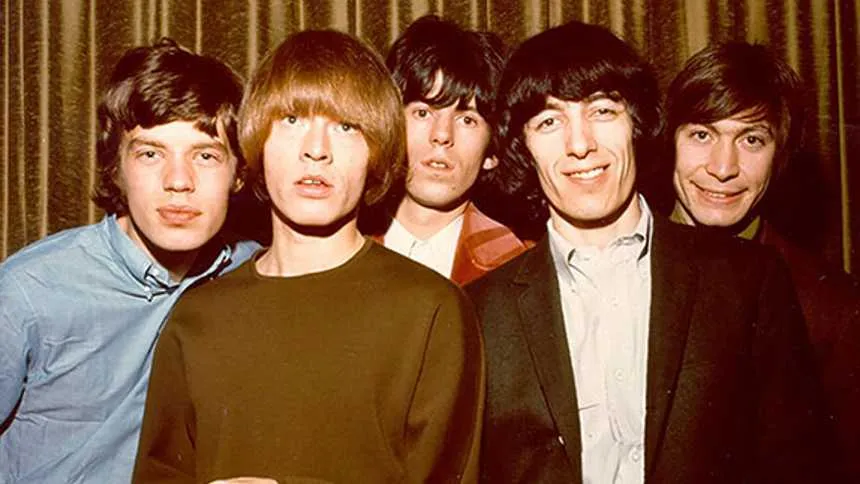



The Rolling Stones' journey is marked by an impressive capacity for survival in the face of personal crises and tragic events. The book highlights the suicide of L'Wren Scott, Jagger's partner, as a particularly devastating moment. The artist's public statement, "I will never forget her," revealed a more human side of the artist, often seen as a symbol of excess.
The release of the album Blue & Lonesomein 2016 was a return to the roots of the blues, but it also highlighted the limitations of the band at an advanced age, according to Sandford. While critics praised the album, voices like Greil Marcus considered it weak and stated that "everyone (the musicians) is bored."
According to the author, this division of opinions reveals a central point: the Stones' value is no longer just in their musical innovation, but in their legacy: "Nostalgia becomes an essential part of the experience — listening to the Stones is, to a large extent, reliving an era."
The book focuses on the personal lives of the band members and shows how they have aged in different ways. Jagger remains active and even became a father at 73, while Keith Richards has adopted a quieter, more reclusive lifestyle, reflecting on mortality.
Watts emerges as the more stable figure, with an intimate marriage and discreet habits, summarized in his phrase: "The secret to a successful relationship is separate bathrooms." These differences reinforce the idea that, despite the collective image, each has followed a unique path.
Watts' death in 2021 was a blow to the band's history. He wasn't just the drummer, but a symbol of stability within the chaos of the Stones. Even so, they continue, replacing him with Steve Jordan.
The band's continued existence after this loss reinforces its central logic: nothing can completely interrupt its trajectory. In parallel, in recent years, the Stones have faced new challenges, such as cultural changes that have affected their repertoire, like the removal of " Brown Sugar"from live shows due to its controversial content.
It's a significant change: a band known for pushing boundaries now has to grapple with contemporary sensibilities. Still, their impact remains immense, notes Sandford. Critic Rich Cohen, quoted by the author, summarized this trajectory by stating that they “lived, died, and were reborn several times.”
The book's implicit conclusion is: more than a band, the Stones are a historical phenomenon that defies time—and perhaps even the very idea of an end.