

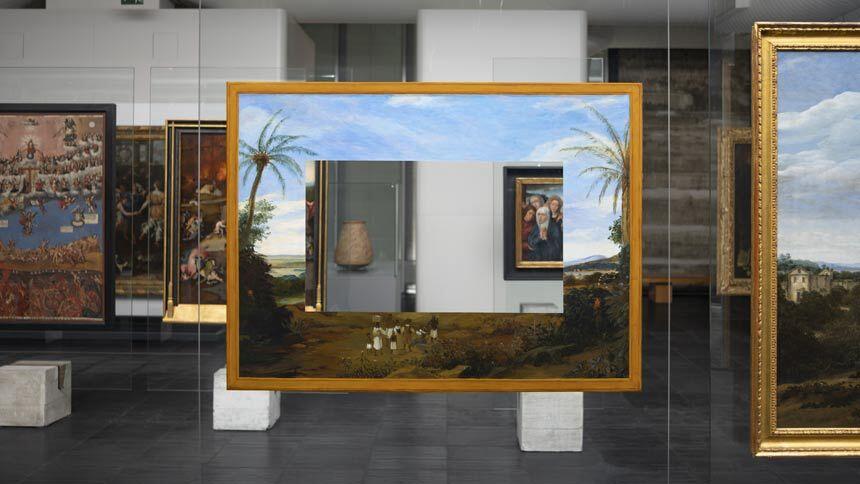
At first glance, the painting appears as a classic landscape: blue sky, palm trees framing the scene, and small human figures walking. Until, in the center, the image breaks apart. A rectangle emerges, revealing the exhibition space of the São Paulo Museum of Art (MASP).
Through the glass of the easel created by Lina Bo Bardi , one can see people in transit and two works on display: a ceramic piece on the left and a figurative painting on the right. The painting on the easel was created during the installation of Réplica , an exhibition by the Peruvian artist Sandra Gamarra Heshiki currently on display at the institution.
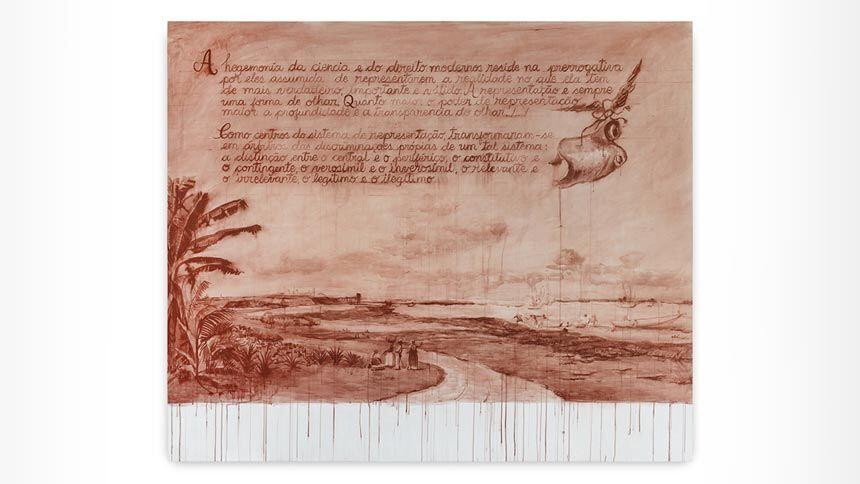
Over ten days, she divided her time between overseeing the installation of her first retrospective, on the first floor of the building, and working in the storage area. It was there that she produced her reinterpretation of Landscape with Anteater (c. 1660), by the Dutch painter Frans Post, which belongs to the institution's collection.
“What interests me about landscapes is the fragmented view of nature. I'm very interested in how the logic of the European landscape fits (almost forcibly) into the tropical landscape. I'm interested in what it shows, but above all, what it conceals,” the artist explains to NeoFeed .
By opening this gap in Post's painting, Sandra makes visible a Marajoara ceramic funerary urn, dated between 400 and 1400, belonging to the museum's collection. A testament to peoples and cultures absent from the representations constructed by European artists who passed through the country.
And by placing the museum space at the center of the colonial landscape, the artist questions the very idea of representation and suggests that what we call "history" may only be the best-lit version of a shop window—or a fiction.
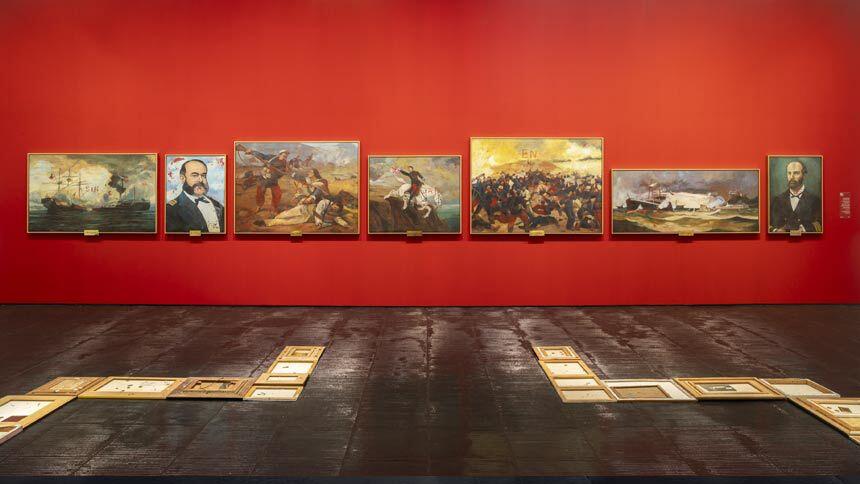
The exhibition design follows the chronological logic of encyclopedic museums, organizing its collection into sections such as "pre-colonial," "colonial," "post-independence," "modern," and "contemporary." Although the MASP collection does not follow this structure—displayed on glass easels that suggest a "tangle of time," as Lina Bo Bardi described it—curator Guilherme Giufrida observes that the museum engages with this model.
“It’s very powerful to present Replica at an institution with a collection like MASP’s, because some of the artists Sandra reacts to are present there. It’s the museum itself opening itself up to institutional criticism—not of MASP itself, but of the idea of a museum, its colonial roots, and its forms of classification,” says the curator, in an interview with NeoFeed .
For the artist, presenting her exhibition at one of the leading institutions in Latin America functions as an infiltration, "which can challenge our memory and what we consider fixed."
The replica exhibition takes place in the year that MASP's programming is dedicated to Latin American histories. Although the institution strives to decolonize its content, Sandra understands that decolonizing a museum may be an "impossible" task.
“I understand it more as a state of alertness, of being sensitive to practices and logics that we normalize as true and natural and that structure the world into hierarchies in which our society, by virtue of what it is, dominates and benefits from others,” she emphasizes. “As institutions and individuals become aware of these tendencies, they can propose to modify them.”
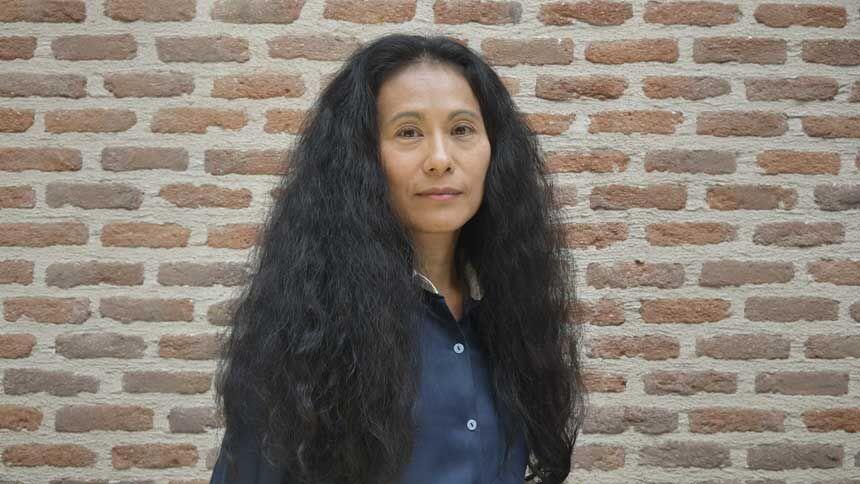
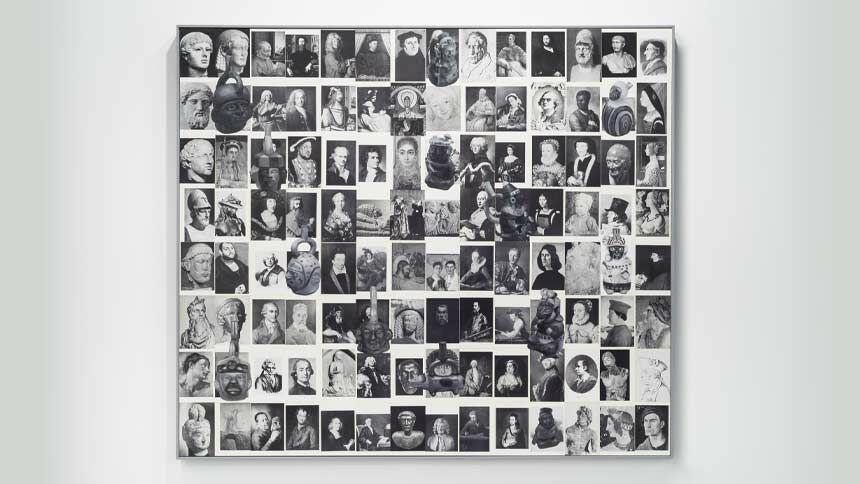
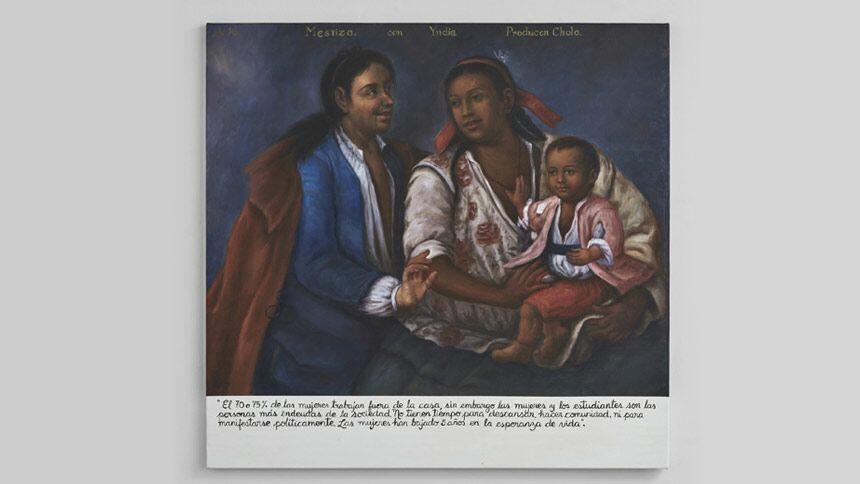
Born in Lima, Peru , in the 1970s, amidst a military dictatorship and a closed economy, Sandra grew up surrounded by copies of imported products—a logic also present in the art world.
Without access to original works by central artists of the European tradition, his education largely came through reproductions.
When she moved to Spain in 2002, she began to question how European museums classify their collections and the space given to Latin American art. At the same time, she turned her attention to the precarious state of contemporary art institutions in her country of origin, which did not have, for example, a Museum of Contemporary Art. She then decided to create one.
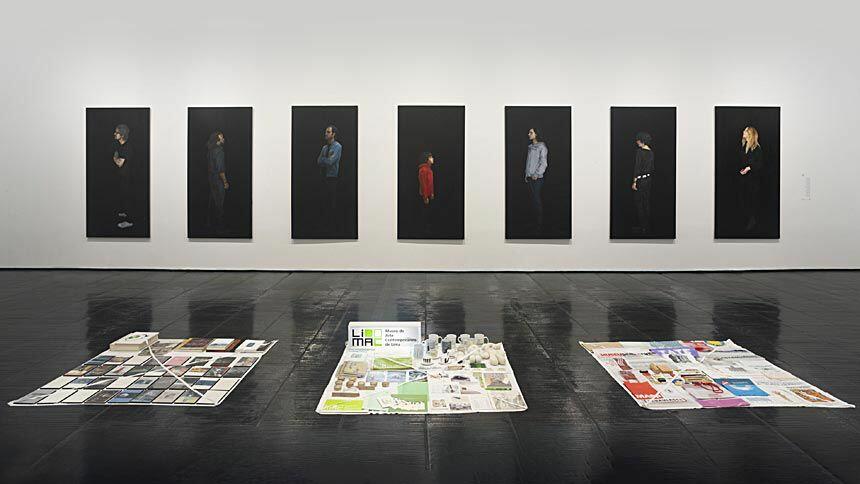
Thus LiMac was born, a fictional institution that took shape through copies made by the artist herself and a collection organized on a website.
In the exhibit, the LiMac gains walls, a door with a sensor opening, and even a small shop that replicates the commerce of street vendors, with merchandise displayed on plastic tarps ready to be quickly collected.
Inside the space, there are copies of works by renowned artists that were not circulating in Peru, as well as a large-scale painting depicting a corporate environment full of photocopiers, created from a photograph by the German artist Thomas Demand.
“Today, this painting can be read as a kind of key to Sandra’s practice, as if she were a photocopier artist, someone who appropriates, copies and devours these images,” explains Giufrida. It is no coincidence that the exhibition is titled Replica .
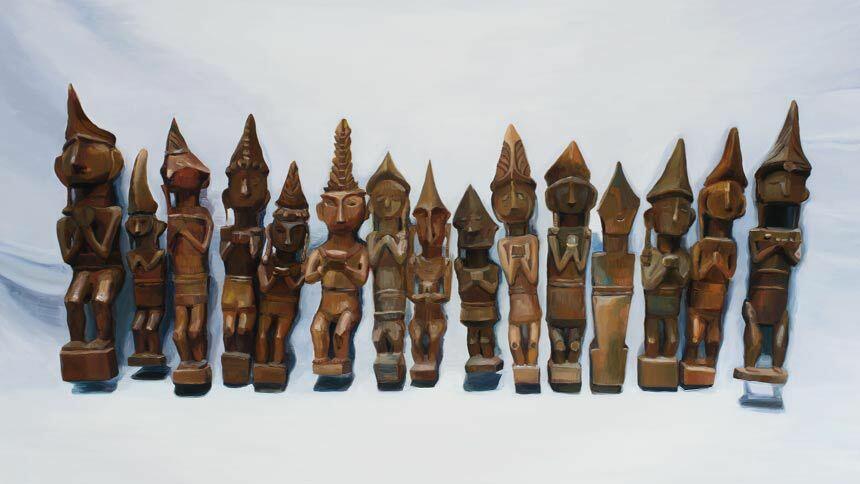
Sandra's work impresses with the virtuosity of her painting. Right at the entrance, a display case with images of vases from the Andes and the Amazon —now in collections in Spain—might deceive an inattentive eye. What appear to be three-dimensional objects are, in fact, paint on acrylic plates.
“I think virtuosity gives me time,” the artist explains. “Seduction, in turn, demands time—time to get closer, to see. In times when everything is done in a rush, painting (and not just realistic painting) is still a territory that requires restraint.”
The work demands time from the viewer. It's necessary to stop, adjust one's gaze, sometimes go back. Besides destabilizing what we understand as true—can a Rothko by Sandra really be a Rothko?—not everything is in the center. The artist draws attention to the edges, the corners, and the reverse sides of the images.
As one progresses through the exhibition, the visitor becomes integrated into the artwork. If, at the beginning, they appear only as a partial reflection, by the end they emerge in life-size paintings of people in front of works of art. Although one cannot see what they are observing, it is possible to recognize oneself there, in the same posture. They are what Sandra calls "new pilgrims."
“People travel the world to attend the openings of biennials and exhibitions, as if on a religious pilgrimage,” observes the curator. “It’s a new form of devotion to images.” Not so different from other paintings that also demanded faith in past centuries.