

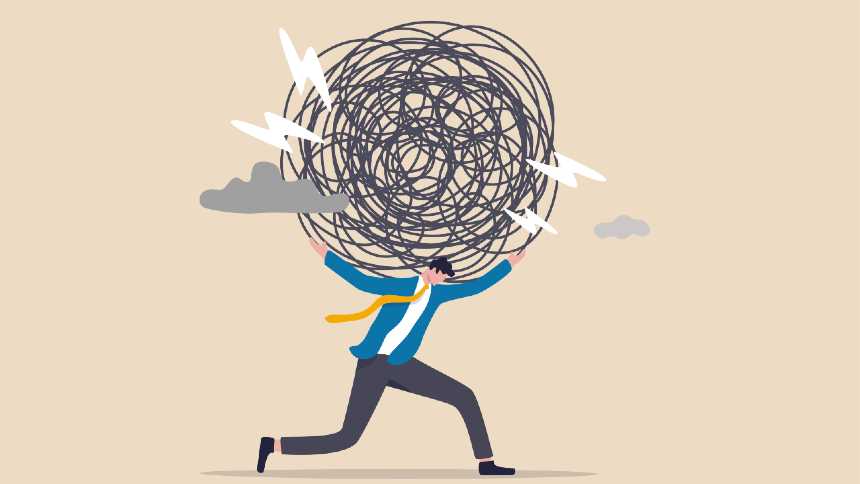
Amidst economic crisis , wars , political instability , inequalities , work pressure , and hyper-connected lives , the incidence of anxiety has increased significantly—across all age groups and social contexts. But that's not the worst part. The most terrifying aspect is that we may be dependent on this state of hypervigilance.
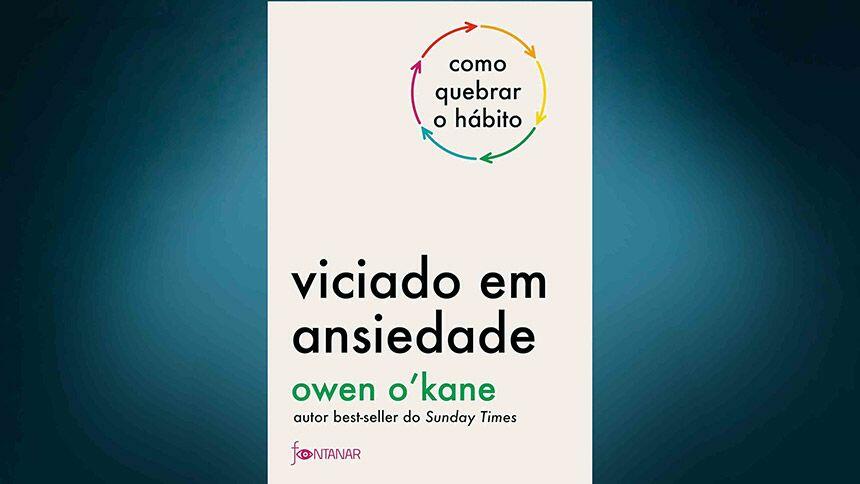
This is the thesis defended by British psychotherapist Owen O'Kane in his new book, Addicted to Anxiety: How to Break the Habit . In the book, he argues that external factors certainly influence the development of the disorder, but how we deal with the uncertainties of contemporary life also plays a significant role.
This is where O'Kane's study becomes provocative: everyone is responsible for their own anxiety. And failing to acknowledge it leads to passivity—which tends to further aggravate the anxiety, in a perpetual cycle of suffering.
"This hypothesis challenges the traditional view and invites the reader to reflect on their own relationship with this emotional state," writes one of the leading experts in mental health today.
It's not about blame, but about responsibility. By recognizing oneself as part of the mechanism, it's possible to identify and abandon the mechanisms that sustain anxiety. Change, according to the author, offers a real possibility for transformation.
With three decades of experience and renowned as a resident therapist on BBC Radio 5 Live, where he helps listeners understand and cope with everyday mental health issues, O'Kane says that we "learn" to be anxious and that these habits, left unchecked, become ingrained over time.
"This approach broadens the understanding of anxiety, shifting it from a purely reactive phenomenon to a process that can be perpetuated by internal patterns," she notes.
He draws on clinical experience to illustrate his point. It's not uncommon for patients to show discomfort when they realize they are improving: "This moment highlights how the disorder can function as a kind of safety mechanism."
Paradoxical as it may seem, anxiety offers immediate benefits, such as an illusory sense of control.
This false "shielding" impacts brain chemistry. And, in a state of hyper-attention, the body increases the synthesis of a series of substances related to stress. The brain, however, was not designed to live in a constant state of alert.

In the pathophysiology of anxiety, when the levels of these excitatory hormones drop, the body begins to demand more stress to feel functional. "This helps to understand why the disorder can become addictive: the body associates this state with protection and vigilance," explains O'Kane.
In one of the most interesting moments of the book, the psychotherapist shares his personal story. He spent his childhood in Belfast during the worst years of the conflicts in Northern Ireland. In this context of violence, he was deeply marked by fear—making anxiety a constant in his life.
But control came when O'Kane realized he could influence her. If emotional habits can be learned and reinforced over time, they can also be changed.
The specialist, however, did not completely rid himself of anxiety. In fact, no one ever will. Anxiety is inherent to the human condition—an ancestral survival tool that puts us on high alert in threatening situations.
The problem arises when an event that should be a one-off occurrence becomes routine.
A staunch critic of the "quick fixes" often offered by the wellness industry, O'Kane argues that the path to a freer and more balanced life is based on effort, awareness, and gradual transformation.
His intention, he notes, is for the patient to break free from the "addiction" to anxiety, take responsibility, and rebuild their relationship with themselves. It may be painful at first, but only then will it cease to be an "uncontrollable" state.
Known for his accessible and humorous approach, concerned with translating complex concepts for the lay reader, the psychotherapist once again resorts to self-disclosure to illustrate "how anxiety gradually sets in, involving both body and mind."
It happened in a library, when he started studying for the book. At a certain point, O'Kane found himself distracted.
Soon after, he was overcome by physical tension and chest pain. Meanwhile, racing, self-critical thoughts arose, and the psychotherapist began to doubt his abilities and anticipate negative scenarios.
O'Kane knew what was happening, for he had walked this path before. Through breathing techniques and mindfulness, he gradually regained his emotional balance. Upon reflecting more clearly, he understood: the anxiety was triggered by a new and potentially frightening situation—writing Addicted to Anxiety .