

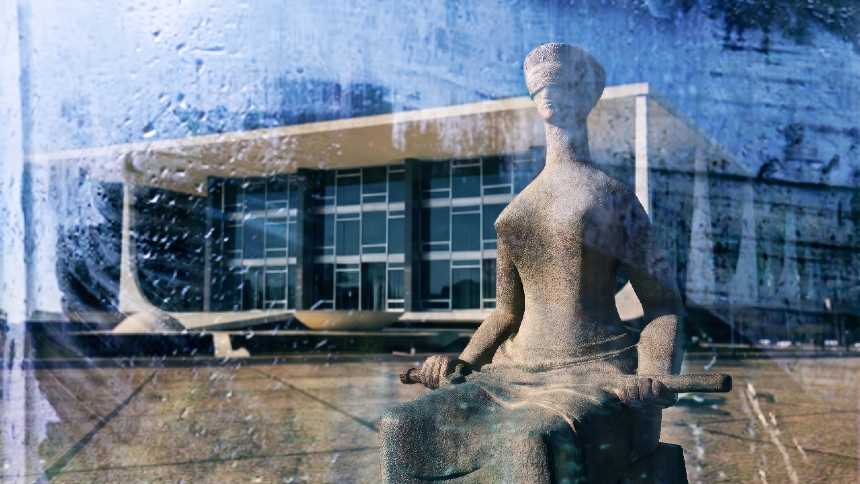
The politicization of the Brazilian justice system, initiated with the media overexposure of the Supreme Court and consolidated by Operation Lava Jato , has triggered a profound crisis of credibility that has reached a new level with the involvement of relatives of Supreme Court justices with Banco Master , owned by Daniel Vorcaro , at the epicenter of the country's biggest financial scandal.
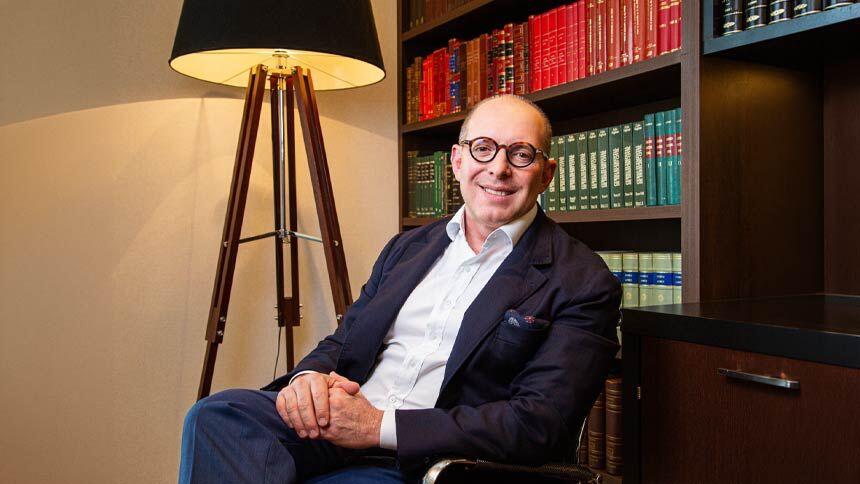
“It’s the price the Judiciary pays for its politicization,” says lawyer and jurist Antonio Pitombo, one of the most renowned criminal lawyers in the country, in this interview with NeoFeed .
With extensive experience in complex cases of Economic Criminal Law, such as the Mensalão and Lava Jato cases, Pitombo has just released a book, Penumbra sobre a Liberdade (Singular Publishing House), a compilation of articles published over the last five years that address dissatisfaction with judicial decisions, high-profile cases, draft laws, and contemporary society's views on problems within the justice system.
In the interview, Pitombo cites Operation Lava Jato and the harsh sentences handed down to defendants in the invasion and vandalism of the Three Powers buildings during the attacks of January 8, 2023, as examples of this politicization of the Brazilian justice system.
"Operation Lava Jato contained the greatest number of injustices that the country has ever seen collectively - the arrests, the lack of a second level of jurisdiction, and the way the Superior Court of Justice (STJ) handled the matter," he says, emphasizing that the Supreme Federal Court (STF), which remained silent during the offensive led by then-judge Sergio Moro, only participated later, in dismantling the operation.
“The imposition of the high sentences on January 8th was one of the biggest scandals of violation of criminal procedure in Brazilian history,” states the criminal lawyer, directly blaming the Supreme Federal Court for the abuses. “They didn’t respect any individual rights; it’s on par with Lava Jato.”
As a specialist in Economic Law, Pitombo offers a broad reflection on the Master Case, marked by the omission of financial regulatory bodies. "What happened before with the factories is now happening with the funds: an economic mechanism is needed, but those who finance them act with impunity," he says. According to him, the Master fraud "has no ingenuity whatsoever," and its methodology is reminiscent of that of Banco Santos.
This situation, coupled with political negligence regarding public safety and an outdated financial crimes law, created an environment conducive to the infiltration of organized crime into the economy and institutions, even reaching the Judiciary.
Below are the main excerpts from Antonio Pitombo's interview:
Your book brings to light a trend of the Justice system acting in accordance with the political climate, interfering in the legal process and criminal law, to the detriment of individual rights and guarantees in Brazil. When did this trend begin?
Among the factors consolidating this trend are changes in the Supreme Federal Court (STF), especially the creation of TV Justiça in 2002, which led to an overexposure of the Court. This trend began to grow during the Mensalão scandal in 2005 and expanded during Operation Lava Jato in 2014.
What explains this politicization?
In Brazil, there's a prevailing idea that a moderating power is necessary. The Supreme Court felt it should position itself as a center of equilibrium within the Republic, guiding the country's progress. Since the Mensalão scandal, this trend of politicizing the court and all other courts has been advancing and has become a vertical phenomenon in Operation Lava Jato, extending to include first-instance judges with political involvement.
"The Supreme Court felt it should position itself as a center of balance, a kind of Moderating Power."
Is this the case with the now former judge Sergio Moro?
Moro is the most important example, but others have emerged, such as Marcelo Bretas in Rio de Janeiro. This trend has also advanced in state courts, the Superior Court of Justice (STJ), and in clearly political decisions on various matters in the Supreme Federal Court (STF).
The articles in the book address reflections on the role of the Justice system between the dismantling of Operation Lava Jato and the trial of the invaders of the Praça dos Três Poderes (Three Powers Square) on January 8, 2023. Were the excessive convictions in that trial a repetition of the mistakes of Lava Jato?
These are different things. Operation Lava Jato contained the greatest number of injustices the country has ever collectively witnessed—the arrests, the lack of a second level of jurisdiction, and the way the Superior Court of Justice (STJ) handled the matter. The Supreme Court, however, did not participate in Lava Jato; it merely dismantled the operation afterward. There are some figures in the Supreme Court who are like actors in a theater: one moment they play one character, and then another. Some of them were extremely liberal during Lava Jato, but now, in judging the acts of January 8th, they have committed atrocities.
What type?
The sentencing on January 8th was one of the biggest scandals of procedural misconduct in the country's history. They disregarded all individual rights. It's on par with Lava Jato. 'We need to save democracy' and similar slogans are comparable to justifications used by authoritarian regimes. In other words, the defense of democracy became a banner to justify everything they did. It was a clear case where the Court lacked jurisdiction to judge. Nothing justifies the disregard of the law.
Recent research showed that 60% of Brazilians do not trust the Supreme Federal Court (STF). Why are the STF justices as unpopular as politicians?
The political actions of the Supreme Federal Court (STF) have undermined its credibility within the judicial system itself. The politicization of the court has caused judges, prosecutors, and lawyers to lose respect for the STF's decisions. This behavior generates distrust in the legitimacy of the court's orders. This may even bring a positive aspect, which is the dialectical side of discussing the object of the decision, of not automatically complying. But there is a systemic side that is affected.
Could you provide more details?
The actions of the Supreme Federal Court (STF), especially those of Justice Alexandre de Moraes, in the interminable fake news inquiry, are a prime example. The instrumentalization of the inquiry serves to persecute enemies. Anything goes within its walls. It is extremely serious that the justices feel protected by the existence of this procedure. It is proof that we are not as stable a democracy as we imagine.

Isn't it time to discuss a new code of ethics for the Supreme Court?
A code of ethics? I think that's not enough. That would only be the beginning. We need to create a new organic law for the judiciary.
Your book addresses texts on economic law and financial crimes. Are there repetitions of errors from Operation Lava Jato, including abuses in evidence gathering and restriction of the right to defense, in the investigations of the current Master Case?
It's too early to say. But the first bad thing about the Master Case is the fact that it's also under the responsibility of the Supreme Federal Court. For a Supreme Court Justice's office, there's nothing worse than a case like this, since the Justice's role is focused on reviewing appeals and original actions before the Supreme Court, not police investigations, especially not ones of this magnitude. But, despite the criticism, Lava Jato has brought progress in the fight against financial crimes.
What kind of progress?
It institutionalized plea bargains as a right of defense – something important in Brazilian law – and forced criminal defense lawyers to expand their knowledge to areas such as administrative law and economic analysis of law. Lawyers needed to understand economic phenomena, such as how Petrobras functioned, in order to understand contracts from a financial perspective.
Does legislation to combat crimes against the financial system need to be revised to keep pace with advances in digital technology, especially regarding money laundering?
The law on financial crimes ( Law 7.492 ) was created in 1986 and became known as the White-Collar Crime Law. The explanatory memorandum states something like this: this law is very bad, we will have to reform it quickly. It has been in place for 40 years...
But it took Operation Hidden Carbon, last year, to dismantle a billion-dollar scheme of tax evasion, fraud, and money laundering in the fuel sector linked to the PCC (First Command of the Capital, a Brazilian criminal organization), to discover that fintech legislation was flawed...
But an explanation is needed here. The financial system initially operates through self-regulation, that is, the private sector itself overseeing its activities, something historically based on the principle of trust. This model was reinforced when Western legislation began to allow and regulate private individuals to report information about other private individuals to combat money laundering. In addition to self-regulation, there is state regulation, exercised by autonomous bodies such as the CVM (Brazilian Securities and Exchange Commission), the Central Bank, and SUSEP (Superintendence of Private Insurance), responsible for overseeing their specific areas.
And where does the justice system fit into this structure?
At the highest level of control, when there are indications of illicit conduct, the Federal Police, the Federal Public Prosecutor's Office, and the Judiciary become involved, completing the institutional structure for supervising and suppressing financial crimes. But the technological advancement you mentioned, with fintechs, has exposed another problem.
Which?
The decline of institutions like the Central Bank and the CVM ( Securities and Exchange Commission ) in combating economic and financial crimes. The Central Bank emerged tarnished from the Master episode. The situation of the CVM, in turn, is getting worse and worse. I don't know if it's an economic, financial, or structural problem, or if the phenomenon of clientelism and corruption in the country has reached it; it's not my area of expertise, but the CVM's behavior is unbelievable. It simply doesn't fulfill its role.
Where is it failing?
What happened before with the factories is now happening with the funds: an economic mechanism is needed, but those who finance them are left unchecked. The factories were left in a legal limbo, without regulation, the same thing that is happening with the funds. The CVM (Brazilian Securities and Exchange Commission) has come to believe that the important thing is to reach an agreement or condemn the value, and not to do the educational side of the market, the prior intervention. The Master fraud is extremely poor, it has no ingenuity whatsoever, the methodology is reminiscent of that of Banco Santos.
"The Master fraud has no ingenuity whatsoever; the methodology is reminiscent of that of Banco Santos."
What needs to be done?
Create control mechanisms. The Central Bank could take the list of banks that pay the highest rates and try to understand the reasons. If it's a large bank that can absorb a six-month reduction in profits to attract customers, like Itaú and Bradesco, that makes sense. But how can we not be interested in investigating if the one doing this is a small bank, which is paying a much higher rate than the market average? It's obvious. There was also a failure in the control of the funds.
What type of failure?
Analysis of the bank's financial statements raised suspicions about the existence and purpose of several funds, many of which lacked a valid audit—some auditors even refused to issue an opinion, which already indicated irregularities. The initial attribution of responsibility to only two Central Bank employees is unjustified, since other bank professionals should have noticed obvious inconsistencies.
Were there any other problems?
It was also noteworthy that the bank withdrew its own funds to invest them in funds without any apparent economic logic. According to experts, this lack of rationality in financial decisions is a classic sign of fraud. The Master case should not have reached such proportions if the control mechanisms had functioned properly.
Previously, however, fraud was perpetrated by white-collar economic agents who always operated within the financial system. Now we are witnessing the invasion of organized crime in Faria Lima. What does this mean?
It's impossible to understand this phenomenon without analyzing the economic issues. First, there are few banks in the country. With very high interest rates, there's a lack of money on both sides – from the client and the base, without resources to finance loans and projects. We were already paying the price for the pandemic and now we are living through two wars. The country is experiencing an extremely complicated economic moment, and in these situations, whoever arrives with money – as is the case with the criminal organization – penetrates the environments and does business.
Simple as that?
These are generations of organized crime, and it's constantly refining itself. And there's a phenomenon: organized crime can't operate legally. It never stops, in the sense that after becoming wealthy, it starts acting within the law. Those who start in crime don't leave it. In other words, there's a lack of interest in studying and staying informed here. The PCC is dominating gas stations in the interior of São Paulo, using credit card machines and funds to launder money; this has been in the newspapers for months. There's also the permissiveness inherent in the fact that we are Latin Americans. Vorcaro did the obvious to rise in the structure of Brazilian society. Our problem is also the lack of quality in our elite.
In what sense?
Anyone well-off and wealthy, even those from organized crime, becomes a patron of the arts here. Before you know it, they're at parties in major museums, and when they make philanthropic donations, they're fawned over by the media and seen as a good person, frequenting all the political and business circles. Many even own two private jets. Why two? One for their privacy and the other just for favors. Just look at countries where organized crime has established itself – like Japan, Italy, and the United States – to understand what's happening in Brazil. Organized crime thrives in the economy during difficult times for the country.
How do we attack this?
The problem in Brazil is that economists are far ahead of us, criminal defense lawyers, because what they say is taken seriously. In a presidential campaign, it's essential to know who the president's economist will be and what economic policy will be adopted. The problem is that Brazil's biggest issue is public safety – and there's no one, for example, assigned to plan public safety for the next four years. Legal experts are detached from this.
What lessons can the Master scandal, involving an unprecedented connection between members of the three branches of government and banker Daniel Vorcaro, teach the Brazilian justice system?
What is worrying is that this has reached the Judiciary, especially since we already had examples in Brazilian history of situations in the federal administration and Congress where these two sides were involved in financial crimes. It is the price paid by the Judiciary for its politicization.