

It was 2016, and BTG Pactual was taking its first steps in its digital transformation. Soon, the bank's leadership found itself facing a challenge that, years later, still haunts many Brazilian companies: the difficulty of finding talent in technology. Not just professionals with technical expertise, but people capable of thinking about innovation as a business tool and a means of real impact.
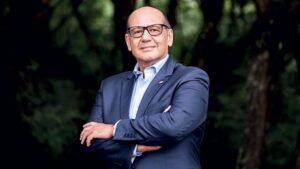
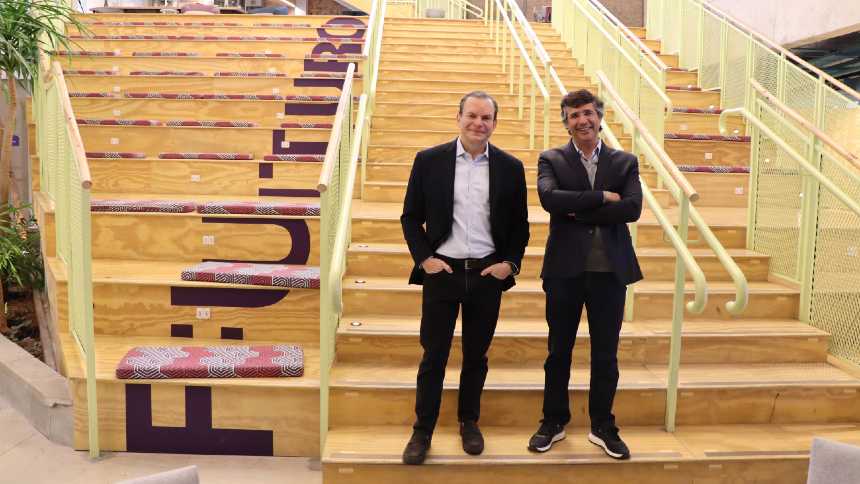
During a trip to Silicon Valley , California, chairman André Esteves and CEO Roberto Sallouti wanted to understand why Brazil wasn't appearing more consistently on the radar of global investors. A venture capitalist echoed what the two were experiencing at the bank—a bottleneck of technology talent.
If the greatest challenge to Brazilian technological advancement lay in training people, then investment in cutting-edge education was necessary. But Esteves and Sallouti didn't create a fund to finance laboratories or sponsor a corporate training program. They decided to create a college. From scratch.
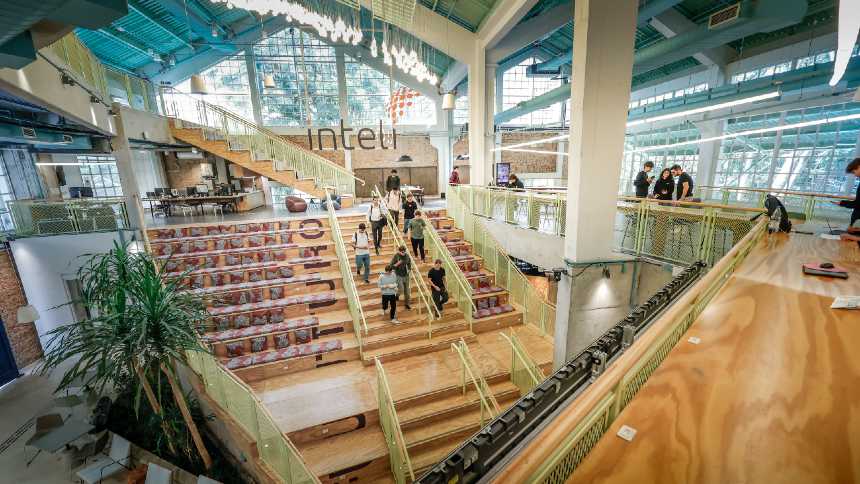
Thus, in 2022, classes began at the Institute of Technology and Leadership in São Paulo. A non-profit organization made possible by an initial donation of R$ 200 million from the Esteves family, Inteli has just received an important endorsement: it has been elected one of the most innovative higher education institutions in the world.
For the first time, Brazil appears in the World University Rankings for Innovation. Among the 500 institutions analyzed by Wuri, Inteli occupies the 100th position — ahead of all other Latin American institutions.
Developed by South Korean researchers, instead of prioritizing academic reputation or volume of scientific output, as traditional systems do, the ranking analyzes the institutions' ability to convert knowledge into concrete solutions for the market.
Not surprisingly, the 24 categories in the ranking are divided into three axes: For whom to innovate , What to innovate , and How to innovate . In industrial application , Inteli is in 10th place.
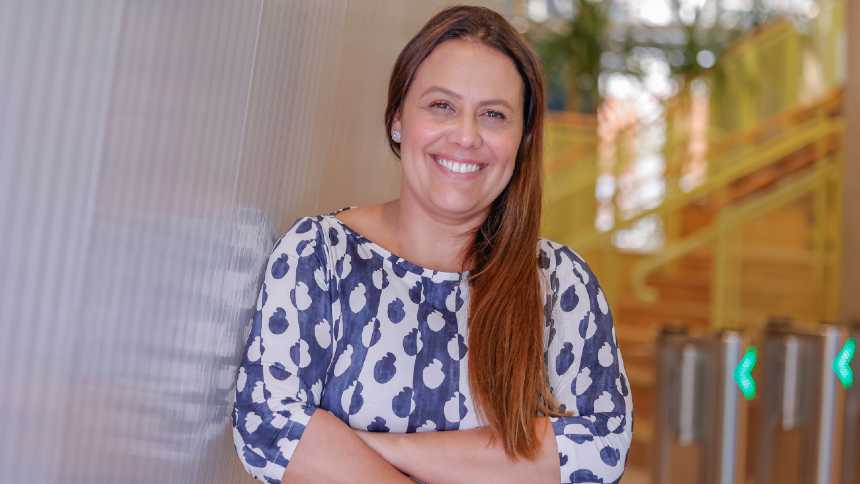
"Our presence at Wuri positions Brazil on a new level within global discussions about the future of education and work," says Maira Habimorad, CEO of the institute, in an interview with NeoFeed . "More than producing knowledge, we are training citizens capable of acting effectively wherever they are."
Inteli's methodology is 100% project-based. In what's called PBL, or project-based learning , the student moves away from a passive mode and becomes the protagonist of their own learning. Instead of being subjected to teaching structured around the predictability of what is already known or can be proven, they "learn by doing".
In just over four years, the institute's students have developed nearly 800 prototypes in partnership with 115 organizations. These include companies such as Uber , Gerdau ,Ambev , Bank of America , Dell , Google , Oracle , Natura , Meta , and Volkswagen ; NGOs such as AACD and Gerando Falcões ; and 32 public bodies, including the São Paulo state Department of Education and the Guarujá city hall, on the coast of São Paulo state. The satisfaction rate with these collaborations is around 94%.
Developed, confident and mature
“Inteli students have a very sophisticated foundation in technology and data,” says Laura Bueno Lindenberg, chief human resources officer (CHRO) at Eletromidia , in a conversation with NeoFeed . “But they actually get their hands dirty and, with that, understand the reality and challenges of companies.”
Divided into groups, around 40 third-year Computer Engineering students developed a project focused on the company's smart cities area. The proposal was to map the profile of the public that circulates through different regions of the city of São Paulo, identifying characteristics such as gender, age group, and social class.
In the end, Eletromidia adopted some of the codes created by the students. "It was exceptional," says Lindenberg. "It elevated our internal sophistication."
Project-based learning not only transforms students' academic training—it also shapes their attitude and behavior in the corporate world. The executive recalls the students' ease, confidence, and maturity in meetings with Multimidia's management. "They arrive better prepared for the job market," she says.
In today's constantly changing world, curiosity, lifelong learning , and a willingness to adapt to new situations are essential to keep up with increasingly shorter innovation cycles, argues Lindenberg.
Open innovation
In an environment where knowledge is rapidly becoming outdated, it is unfeasible to keep universities isolated from the market, as happened in Brazil for much of the 20th century.
The country's academic elite often proudly maintained a distance from the "real world." This detachment was seen as a symbol of intellectual sophistication and autonomy—a legacy of European tradition and the historical concentration of higher education in public institutions.
The United States followed the opposite path. The most influential universities on the planet were born private and were funded by tuition fees, donations, and corporate partnerships. Thus, they remained in tune with the demands of the productive sector and established themselves as engines of innovation and development. It was this paradigm that inspired Esteves and Sallouti.
A non-profit organization, Inteli offers the largest scholarship program of any private institution in Brazil. Between companies, foundations, and individuals, approximately 60 donors fund the studies of half of its 706 students.
The space in which the college is located also helps to enhance the connection between academic training, applied research, and real market needs. The college building is located on the grounds of the Institute for Technological Research, on the University of São Paulo campus.
The IPT Open project is transforming the place into a vibrant open innovation ecosystem. In June, for example, Google is expected to open an engineering center there.
Frictionless with the market
It's no coincidence that 93% of the 136 students from Inteli's first class, which graduated in 2025, are employed. Another 6% have launched their own businesses. Among them is Raduan Muarrek, a 25-year-old from São Paulo.
Last year, he chose the institution's entrepreneurial track — one of three possible tracks, in addition to the academic and corporate ones.
While still an undergraduate, he co-founded the artificial intelligence startup Hakutaku with two college classmates. "We started raising money by winning hackathons , a practice ingrained in Inteli's culture," Muarrek tells NeoFeed .
The methodology adopted by the institution helped improve the ability to quickly learn new technologies, says the young man. Today, the startup has five employees, two of whom are also linked to Inteli, and has already raised capital in two venture capital rounds.
The three partners developed a SaaS that transforms scattered data into a kind of "second brain" for corporations. "Inteli's methodology is very similar to what we use in the company today. There was no friction between the university and the market," he says. "We want to help leaders make the best decisions."
In the end, as André Esteves summarizes the purpose of Inteli in the institute's presentation video: "We want to train leaders who have knowledge in technology and who, from there, can enrich society with their knowledge, their values, and their transformative ambition."
Less than a decade after that trip to Silicon Valley, the answer to Brazil's technological bottleneck is taking shape — and gaining global prestige.