

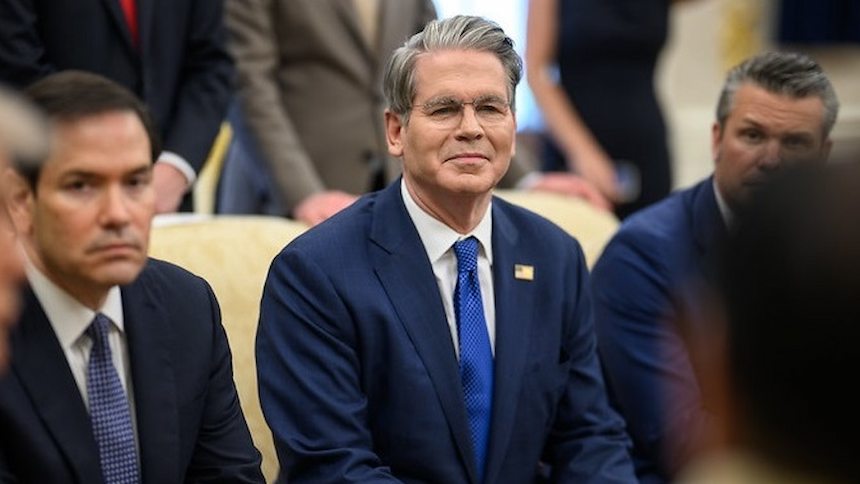
U.S. Treasury Secretary Scott Bessent stated on Tuesday, February 10th, that the American economy could register nominal growth of 6% in 2026, as part of the Trump administration's strategy to reduce fiscal deficits through economic growth and deregulation.
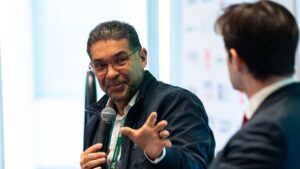
The prediction was made during Bessent's participation in the CEO Conference, an event organized by BTG Pactual , in which the American secretary interacted with André Esteves , chairman of the bank, via videoconference.
Throughout his presentation, Bessent detailed the US strategy for reducing fiscal deficits through economic growth and deregulation, emphasizing a strong dollar and attracting foreign direct investment as tools for reindustrialization.
The US Secretary also cited Latin America as a crucial strategic partner, highlighting support for Argentina and intervention in Venezuela. He stated he was optimistic about productivity gains driven by AI and the leadership of the new Fed chairman, Kevin Walsh, recently nominated by Trump for the post.
The forecast of 6% nominal growth for the American economy in 2026, a figure never before mentioned, was made while explaining a "growth solution" from the Trump administration that, according to him, envisions non-inflationary growth.
Bessent said the strategy is centered on three pillars focusing on energy independence and cost reduction: 3% real GDP growth, a 3% fiscal deficit by the end of Trump's term via an ambitious reduction target (in 2025, the deficit was 5.4%), and the sale of nearly 3 million extra barrels of oil per day.
“Instead of raising taxes, the U.S. should focus on growth to reduce the government deficit,” Bessent said. “By restraining spending and leveraging indicators through deregulation and supply-side stimulus, I wouldn’t be surprised if the United States posted nominal growth above 6% this year, and that would solve many problems.”
When asked by Esteves how he sees the balance between the dollar's role as a global reserve currency and opposing forces, such as increased gold reserves by central banks and the rise of stablecoins, Bessent said that a strong dollar requires fundamentals to attract investment, such as regulatory certainty and energy dominance.
“The supposed 'weakness of the dollar' reflects other previously 'dormant' economies, now more active, altering exchange rate dynamics,” he stated, adding that the Trump administration's tariff policy aims at reindustrialization. “Although tariff revenue tends to fall, the objective is to attract foreign direct investment and build new factories, raising the tax base and rebalancing the economy.”
Bessent also discussed the productivity gains that will come from AI and what the effect will be on the economy and the labor market. According to him, the opportunity is comparable to past technological revolutions.
“Instead of eliminating jobs, we will reallocate workers to higher-value roles, such as customer service, travel, etc.,” he said. “It is crucial to train an AI-native generation,” he added, highlighting the importance of the “open-mindedness” of the new Federal Reserve (the US central bank) leader, Kevin Walsh, to handle AI productivity gains and ensure a “smooth transition.”
Historic opportunity
The Treasury Secretary said that resuming a close relationship with Latin America is "a once-in-a-generation opportunity" for the U.S., with potential for partnerships in natural resources and economic integration.
“The economic support given to Argentina in the legislative election, which favored President Javier Milei, and the military pressure on Venezuela demonstrate our commitment to stability,” he stated. “Countries like Chile and Bolivia are seeking reintegration, and we are ready to support this positive trend.”
He also cited Trump's rapprochement with President Luiz Inácio Lula da Silva. According to him, "after a rocky start," the two leaders established a "good personal relationship."
Bessent criticized the bureaucracy of the European Union, stating that "today it is easier to do business in China than in Europe."
He emphasized that the relationship with the Chinese government is one of rivalry, but without rupture: "With China, we seek fair competition in the semiconductor and pharmaceutical sectors, while ensuring US sovereignty," he warned. "The goal is to reduce dependence in strategic sectors."