

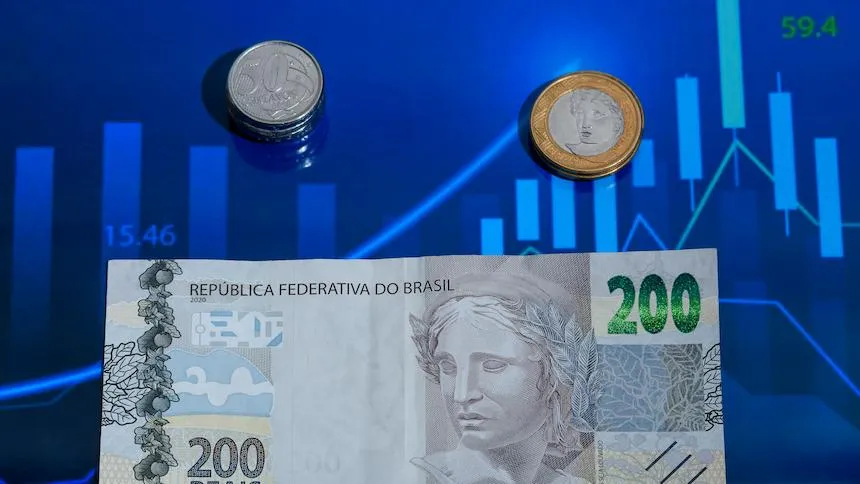
The complexity of the electoral scenario in the country for 2026 does not prevent Bank of America (BofA) from predicting the start of the interest rate cutting cycle by the Central Bank as early as January and in the range of 0.5 percentage points (pp), despite the Copom statement the day before recommending "caution" in the face of a scenario of "high uncertainty".
This optimistic projection regarding interest rate cuts, expressed on Thursday, December 11th, by David Beker , head of economics in Brazil and strategy for Latin America at BofA, is reinforced by other controversial issues surrounding the outlook for next year, including a polarized presidential election, conflict between Congress and the Executive branch, uncertainty regarding the trajectory of fiscal policy, and the volatility of the global economy with a weak dollar.
In a conversation with journalists, Beker admitted that he expected the Central Bank to soften its language somewhat in the statement released after the Copom meeting on Wednesday, December 10th. According to him, this confirms the Central Bank's strategy of remaining hawkish "until the last minute"—which would justify BofA's bet on a possible interest rate cut as early as January.
“If the Central Bank starts easing too early, the market prices it in and there is a loss of credibility,” he said, recalling that the bet on starting the cuts at 0.5 pp is due to the high level of the Selic rate . “It doesn’t make sense, after a long period with interest rates at 15%, to start the cuts at 0.25 pp.” With this, BofA predicts reductions at all Copom meetings, bringing the Selic rate to 11.25% at the end of the cycle – against market forecasts of 12%.
Beker admitted that optimism regarding interest rate cuts is linked to other bank forecasts for the Brazilian economy in 2026, including inflation, which is expected to fall from 4.5% this year to 4% in 2026. "The inflation projection for 2026, even above the target, indicates a trajectory of deceleration, with the main risk being the global dollar, followed by the strength of the domestic labor market," he stated.
Regarding Gross Domestic Product (GDP), the bank expects this year's growth of 2.5% to slow to 2% in 2025. "The second half of this year was weak, and this weakness is being carried over into next year," it added.
BofA also forecasts a downward trajectory for the exchange rate, with the dollar closing next year in the range of R$ 5.25, supported by a globally weak dollar: "The current level is explained by the external scenario and high interest rates, since the balance of payments has worsened."
Electoral scenario
The predictable volatility caused by the election scenario, which will dictate market sentiment throughout the next year, does not frighten Beker. According to him, the fact that President Luiz Inácio Lula da Silva is doing well in the polls reduces the fiscal risk for 2026.
"In a scenario where Lula is comfortable with reelection, it is questionable whether the government will increase fiscal spending in the same proportion as if it were doing worse in the polls," he said.
According to the BofA economist, the president's recent televised address showed that Lula has already outlined the issues he will explore in the campaign, such as income tax exemption for those earning up to R$ 1,500, gas vouchers, etc. – in other words, the government is not expected to increase fiscal spending uncontrollably.
"The free bus fares, which has been discussed by members of the government over the past few months, should be left for the next administration, if the current government wins," he emphasized.
Not even Flavio Bolsonaro's entry into the presidential race is expected to cause a major shift in expectations. "You introduced an element that wasn't in the scenario, and then the market priced in this increased uncertainty," he said, referring to the impact on the Bovespa index and the dollar exchange rate.
Beker predicts that the repercussions of the election race should guide the market further down the line, between April and May. "The debt-to-GDP trajectory will be crucial in the election debate," he stated. "Brazil needs to signal some adjustment action, even a small one, to differentiate itself positively."
Global scenario
Beker points to a weak dollar as a driver of the global economy in 2026. "A weaker dollar and a better-than-expected China should sustain capital flows to emerging countries," he stated, citing BofA's projection of 5% Chinese GDP growth – above the 4.7% projected by the Chinese government itself – "supported by optimism in metals linked to AI, infrastructure, and clean energy."
According to him, the flow of capital to China should continue, indirectly benefiting Brazil. For Latin America, BofA believes that the presidential election calendar in four countries – Chile, Colombia, Peru, and Brazil – suggests a shift to the right in the region.
According to Beker, there is a possibility of further interest rate cuts than the market is pricing in Mexico, Colombia, and Brazil. "Mexico faces risks related to the renegotiation of the USMCA, especially with possible pressure from Trump, while in Argentina the scenario is optimistic after the congressional elections, which allow the government to move forward with structural reforms," he stated.
Regarding the United States, BofA also maintains a more optimistic forecast than the market. According to Beker, the US economy should continue growing in 2026, which limits the scope of action of the Federal Reserve, the US central bank.
“The current view is that there will be no further rate cuts at the next Fed meeting, with possible cuts only in the second half of the year, depending on the data,” he said. “There is limited room for interest rate cuts.”
The Fed's dilemma, however, reflects a trend among central banks worldwide. "The disinflation process may be settling down, and the main interest rate cutting cycle may have already occurred," he warned.