

The Brazilian government will need to adjust the price of diesel by between R$0.22 and R$0.38 per liter sold to distributors if the war between Iran and the United States continues to escalate until the Easter holiday. And the electoral calendar cannot be an impediment to this decision.
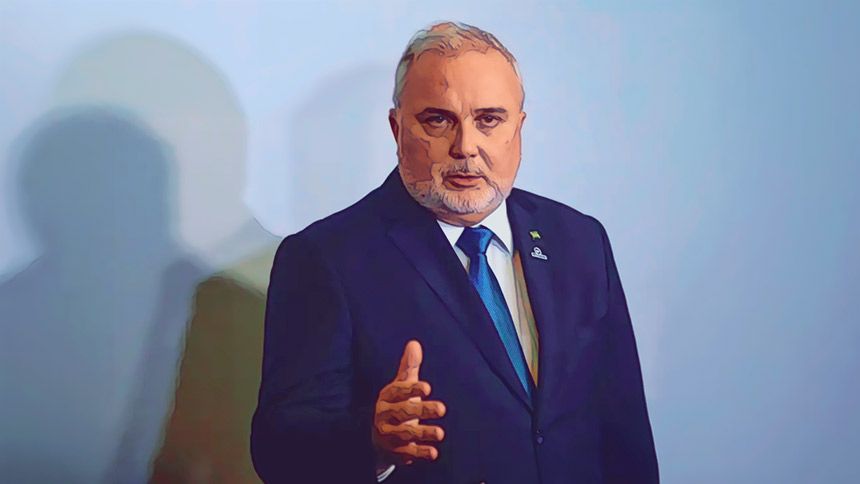
This assessment comes from Jean Paul Prates, president of Petrobras between January 2023 and May 2024, and responsible for Luiz Inácio Lula da Silva's government program in the oil and gas sector during the 2022 campaign.
“Petrobras cannot harm the shareholder by assuming this entire burden alone. It made an increase and, if it has to make another, it will. And the president has to understand. If it will hinder the election, sorry,” says Prates, in an interview with NeoFeed .
In any case, he acknowledges that, with the government as the majority shareholder, the company needs to contribute a portion of its resources to alleviate the impact of the war on drivers' wallets.
“It has the burden and the benefit of having the state as a partner. The company gains a lot from being a partner of the government. You have to be skillful and expert at balancing things. From time to time, it has to fulfill this role, as Total does in France, as Equinor does in Norway. But there are limits to this,” Prates assesses.
On March 14th, Petrobras also announced a R$ 0.38 increase for distributors. This increase represented a R$ 0.32 rise at the pumps. In turn, the government announced a package of measures that included the exemption of PIS and COFINS taxes, as well as subsidies for the tax on imported diesel. This initiative resulted in a tax waiver of R$ 30 billion.
According to Prates, the government's action to try to avoid shortages was indeed what should have been done at this time. However, he argues that the source of funding for this measure is incorrect. It should come from Petrobras' own profits.
“Today the government is taking from taxes, and I believe there should be a different approach. My proposal is to use the stabilization account, funded by extraordinary royalty revenues, which increase during periods of high international prices. When the price of oil rises due to an external shock, part of this extra revenue should finance the subsidy.”
The price of a barrel of oil rose by more than 50% in March and could be the largest increase for a single month since September 1990, when the Gulf War caused the commodity to climb 46.2%. With renewed tensions in the Middle East, on Monday, March 30th, Brent crude closed at US$107.98.
According to the former president of Petrobras, the government is making a mistake in initiating a discussion about a possible renationalization of Vibra, formerly the state-owned BR Distribuidora, with control being sold in 2019 and finalized in 2021, during Jair Bolsonaro's administration.
“Instead of improvising a renationalization, the feasible path is to talk to Vibra's shareholders and negotiate a gradual recomposition of their stake. For example, starting with 20% and progressing, adjusting contractual clauses and removing corporate obstacles.”
Prates states that he initiated this discussion during his tenure, but due to his sudden departure, the discussion stalled.
By 2026, Petrobras' shares will have appreciated by 61.7%. The company is valued at R$ 676.7 billion.
Below are the main excerpts from Prates' interview with NeoFeed :
Brazil is experiencing a pre-election period, amidst a war and a diesel supply crisis. Is this the right time for price adjustments?
The election is a factor, but it cannot paralyze technical decisions. If the international war extends, adjustments will be necessary. It has already risen R$0.38, but further increases may be needed, between R$0.22 and R$0.38, in stages, explaining to the public that this is a temporary measure and that, when the tension decreases, prices will fall again.
And when is the best time for that?
It's better to do it now, while there's still plenty of time before the election. Later, you can explain to the voters and say, "Look, prices had to go up. Can't you see there's a war going on? This isn't our fault." The whole world is rationing fuel. It's necessary to mention that in South Korea, schools are only operating three days a week, and in Vietnam, they're regulating the air conditioning temperature.
How long could Petrobras hold off on another price increase?
Petrobras has a limit. You can't let the rope stretch like this. There will come a point when the company will say: “I've done my part. I can't go any further.” It can't harm the shareholder by bearing this entire burden alone. It raised prices once, and if it has to raise them again, it will. And the president has to understand that. If it's going to hinder the election, sorry. Then they have to make a recovery effort. If it doesn't go up now, things will get bad. There are situations beyond our control. You need to be skillful in explaining this to the public. You need to say that if there is inflation, measures will be taken to change that.
Is price adjustment the only way to avoid fuel shortages?
Not necessarily. First, the effect of measures already taken, such as subsidies and tax exemptions like the ICMS (a Brazilian state sales tax), in partnership with the states, is evaluated. If necessary, after a week of evaluation, right after Easter, it could be adjusted to around R$ 0.40. A possible additional subsidy reduces the need for an adjustment. But everything depends on the government's final package.
Where should the subsidy come from?
Today the government is taking from taxes, and I believe there should be a different approach. My proposal is to use the stabilization account, funded by extraordinary royalty revenues, which increase during periods of high international prices. When the price of oil rises due to an external shock, part of this extra revenue should finance the subsidy. This is the concept of a stabilization account: using unexpected gains to mitigate impacts on the domestic market. Take a portion of this revenue and give it to the Brazilian consumer. It costs nothing.
Why hasn't Petrobras evaluated this yet?
They must be in talks with the government. Petrobras needs to know what the package will be in order to calculate how much it can hold back without losses. This adjustment may be necessary within 15 days, depending on the second phase of subsidies.
But isn't there a social aspect that Petrobras needs to take into consideration?
It has the burden and the benefit of having the state as a partner. The company gains a lot from being a partner of the government. You have to be skillful and expert at balancing things. From time to time, it has to fulfill this role, as Total does in France, as Equinor does in Norway. But there are limits to this.
How have you dealt with crises similar to this one?
There is no crisis more serious than the political crisis I faced. The others are crises inherent to the business itself. The oil sector, even more so in a publicly traded state-owned company, is a seesaw. You need to know how to operate that seesaw. We executed the government program approved at the polls. The president [Lula] never called me to order a price reduction. It never happened. I explained this to the market all the time: there was no intervention. There was a clear strategy. And, regarding prices, we delivered.
What was the mission?
Removing Petrobras from the PPI, the import parity system, which indexed the price to the Rotterdam market plus the costs of placing oil in Brazil, was absurd for a country that was self-sufficient in oil with its own refineries. The measure favored importers and caused Petrobras to lose market share in regions like the Amazon.
Why did this harm Petrobras?
Because the price being charged favored the importer. We were offering the best price to the worst competitor. The parity system allowed inefficient exporters to enter Brazil. The solution was to charge the Brazilian market price, not the import price.
When was this implemented?
I spoke with the market before the 2022 election and guaranteed that change would come. I was transparent: the pricing policy would change because it was rational. If we maintained the PPI (Import Parity Price), there would be short-term gains, but the company would lose competitiveness and sustainability in the medium term. In 2023, with the end of import parity, we recovered market share and presented the best result in the company's history, without selling assets. We also reduced the mandatory dividend from 60% to 45%.
How does this compare to the current situation?
When it became necessary to increase prices, I took the proposal to the president and said it was inevitable. We implemented increases and then reductions. Overall, since 2022 fuel prices have fallen between 15% and 20%. Today, there is a lag. I would talk to the president to adjust things a bit and then hold off on further reductions until the stocks purchased at high prices are replenished.
Is there a shortfall in the current situation?
Prices aren't static. There are highs and lows. When it was necessary to increase them, it was inevitable. But then we reduced them. On balance, there was a significant drop in fuel prices. What we did was adapt the price to Brazilian standards, and that led to a reduction over time.
What would you do today?
I would be in talks with the government for a targeted adjustment to avoid a larger shortfall. Afterwards, I would hold off on any further reductions for a period, due to the inventory effect, which is normal in the industry.
Are all fuels under pressure?
No. The main problem is diesel. Gasoline hasn't increased at the refinery. When there's a price increase at the consumer level, it tends to distort the supply chain, something that needs to be monitored.
Is there a lack of oversight of gas stations and distributors?
The oversight has been working, but it's necessary to investigate price increases on a case-by-case basis. Distributors can dilute regional costs. Petrobras doesn't control the entire distribution chain.
The biodiesel sector is claiming access to the subsidy given to diesel. What is your assessment?
They have nothing to complain about. The sector has several subsidies and support mechanisms. There is also a national market reserve. Everywhere, it is necessary to buy biodiesel to make the mixture with diesel [currently at 15%]. The biodiesel quota should be regionalized to avoid unnecessary product displacement. This complaint from the sector makes no sense. The trucks that carry the biodiesel are fueled with diesel. It doesn't work.
Will Brazil need to build more refineries?
Not necessarily. With upgrades and conversions, the demand for fossil diesel tends to slow down. Investing in modernization and biorefineries can avoid the need for new refineries.
Has the Lula government acted correctly in this crisis?
Overall, yes. The emergency measures were adequate. I would make fine adjustments, such as structuring the stabilization account so that, in the next crisis, there is a mechanism ready instead of improvised measures.
What is the main lesson?
Continuous strategic planning. The energy sector is complex and cannot be left at the mercy of lobbies or short-term decisions. It is necessary to listen to more stakeholders and balance interests.
What is your assessment of the discussion surrounding the creation of a new state-owned company, similar to BR Distribuidora?
The idea of creating a state-owned company from BR was, in my assessment, a trial balloon without a technical basis. BR [now Vibra] was sold, and the brand and franchise agreement was poorly structured. Instead of improvising a renationalization, the feasible path is to talk to Vibra's shareholders and negotiate a gradual recomposition of their stake. For example, starting with 20% and progressing, adjusting contractual clauses and removing corporate obstacles.
Did you try to regain a stake in Vibra?
Yes. There were talks with Vibra's management and agreements regarding not renewing the brand contract starting in 2029. The possibility of gradually repurchasing a stake was also discussed. All of this was handled behind the scenes. And, with my departure, the process lost momentum.
In your opinion, was BR poorly sold?
Yes. The sale and franchise agreement were poorly executed. The buyer acted within the rules, and the error lies with the seller. To reverse or mitigate this, market negotiation is necessary, not expropriation.