

In the last – and historic – federal highway auction of the year, Motiva (formerly CCR) won the concession for the Fernão Dias Highway (BR-381), between São Paulo and Belo Horizonte (MG), on Thursday, December 11, offering a 17.05% discount on the toll rate.
The company outbid the current concessionaire Arteris (which offered a 0% discount) and EPR, comprised of the infrastructure group Equipav and the investment fund Perfin , with a proposed discount of 11.5%. The new contract foresees investments of R$ 14.8 billion until 2040.
The dispute, held at B3 headquarters, was marked by the new model for auctioning highway concessions designed by the Ministry of Transport in partnership with the consensus chamber of the Federal Court of Accounts (TCU).
The new format differs from traditional bidding processes by allowing existing contracts and those undergoing renegotiation to be restructured, but with competition between companies – obligating the current concessionaire to offer a greater discount on toll rates and more investments to remain in the concession.
Arteris' current contract, signed in 2008 and valid until 2033, will be replaced by the new agreement, which extends until 2040. With the victory, Motiva undertakes to pay Arteris compensation of a minimum amount of R$ 295 million as stipulated in the tender – this amount may be adjusted depending on the concessionaire's debt and cash balances at the time of disbursement.
Three other competitive bidding processes for renegotiated concessions under the new model had already been carried out — those ofMSVia , from Motiva; Eco101, from Ecorodovias ; and Autopista Fluminense, from Arteris. However, these three auctions did not attract interested companies, ensuring the continuation of the concession with the current operator.
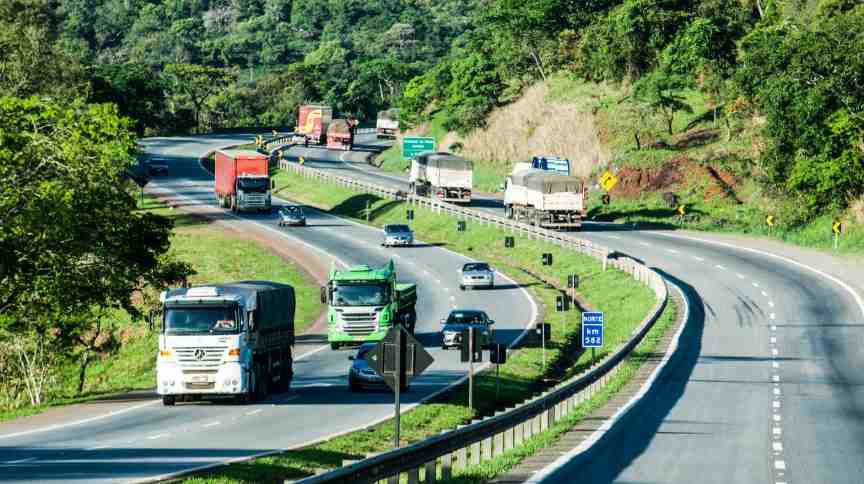
This time, the weight of the asset in dispute intensified the competition. The Fernão Dias highway, the second busiest in Brazil by traffic volume, serves approximately 250,000 vehicles per day and roughly 16.6 million inhabitants across 33 municipalities along its 569 km length.
"It's a large, complex asset that perfectly aligns with Motiva's strategy," says Eduardo Camargo, CEO of Motiva Rodovias. He also thanked Arteris for their previous management: "We will take very good care of the highway that you have managed until now."
The bidding for the Fernão Dias highway marks Motiva's return to highway concession auctions, after a lack of participation in the first half of the year. Camargo states that Minas Gerais is a state where the company was present until 2024, through the concession of the Confins and Pampulha airports. "But, as everyone knows, we are in the process of selling our airline division and are now arriving in Minas Gerais through the BR-381 highway."
According to the executive, the tenders at the beginning of the year did not match the investment profile that Motiva had in its asset portfolio - the company's strategy is to seek larger assets, such as the BR-381 highway, that generate a high volume of revenue.
Until September, among federal tenders, Motiva only participated in the simplified auction for BR-163, in Mato Grosso do Sul, the first of its kind held by the federal government - a highway that it already operated and did not face competition.
The new Fernão Dias highway will deliver a significant set of improvements, including 108 km of additional lanes, 14 km of service roads, 29 new pedestrian overpasses, 62 improved access points, realignment corrections, new tunnels, wildlife crossings, special devices, and modern environmental and operational solutions.
All ten existing toll plazas will be maintained, with the adoption of the Frequent User Discount (DUF) and the possibility of automatic payment via tags — a measure that benefits everyone who uses the corridor daily.
As has happened in other concession renewals, the toll rates – currently at R$ 3.00 (passenger cars) – will increase. The rate has not yet been released. The annual adjustment for this concession always occurs on December 19th.
New competition
The new bidding model was more discussed at B3 than the auction itself. Viviane Esse, National Secretary of Road Transport, states that the ministry's initiative seeks to improve and reorganize contracts and offer the market a model that has already been renegotiated with the current highway concessionaire.
The federal government considered extending Arteris' contract, but decided to open a new public bidding process.
“We found that 14 highways — practically more than half of those under concession — were underperforming, with works paralyzed or without investments to continue,” says Esse. In the case of the Fernão Dias highway, there will be route corrections, due to the fact that the highway crosses a winding region, causing a high number of truck rollovers.
"To give you an idea, last year the highway was closed for 52 days, counting all the stoppages caused by accidents, which is why we renegotiated these contracts, modernizing them and including new works," he adds.
Paulo Dantas, partner at the law firm Castro Barros Advogados and specialist in concessions, states that the adoption of the simplified model by the Ministry of Transport proved adequate to unlock the necessary investments. He highlighted the participation of the TCU (Federal Court of Accounts) in structuring the new auction.
“The result reinforces the role of the TCU (Brazilian Federal Court of Accounts) in building legal certainty and demonstrates that, under appropriate conditions, the simplified procedure can generate competition, more competitive rates, and better investment prospects for highway users,” Dantas emphasizes.
According to Daniela Poli Vlavianos, from the law firm Arman Advocacia, the great innovation of the new model lies in treating a contract in execution not as an immutable bond, but as an asset subject to restructuring through public bidding.
“The mechanism breaks with the traditional logic of bilateral renegotiations — often asymmetrical and lacking transparency — and brings the infrastructure sector closer to international 'rebidding' practices, allowing other operators to compete for the rebalancing conditions,” he says. “This openness to competition reduces regulatory risk, generates more efficient economic signaling and, as seen in this specific case, puts pressure on tariff moderation.”
The BR-381 concession is part of a cycle of 13 highway auctions promoted by the Ministry of Transport, a portfolio of assets that exceeds 10,000 km of concessioned highways. The ministry expects this number to be repeated in 2026.