

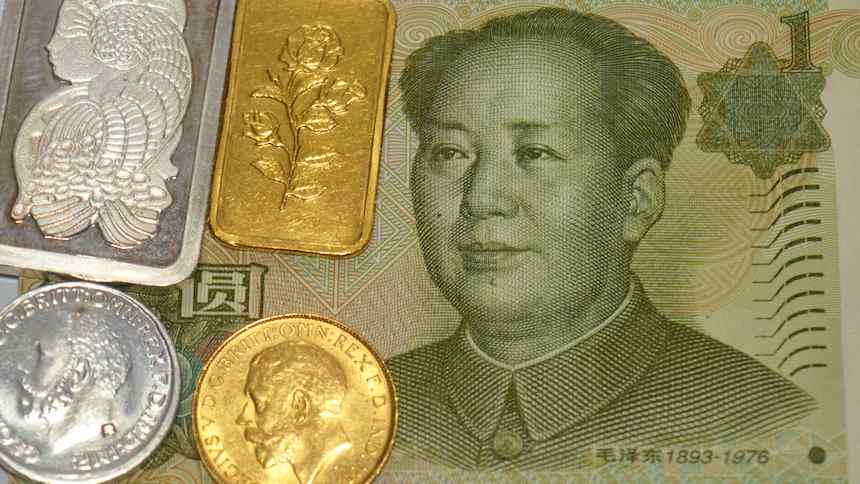
A “perfect storm” has hit international metal market prices – such as gold and, especially, silver – over the past five days, to the point where these commodities have become detached from supply and demand fundamentals.
The rally surrounding these two metals was fueled last week and continued on Monday, February 2nd, by a wave of speculative money coming from China and fluctuations in the dollar exchange rate, in a surge up and down rarely seen in such a short period in commodity markets.
Price movements on Monday, the 2nd, were more dramatic in silver - a relatively small market, with annual supply valued at only US$98 billion at current prices, compared to US$787 billion in the case of gold.
The price of silver opened the week plummeting by an average of 10%, while silver futures fell 17% in Shanghai and gold futures retreated more than 15%. On Friday, January 30th, the price of silver had already fallen by more than 30% and that of gold by 9% - the worst day in more than a decade.
Other metals also suffered sharp declines on Monday, the 2nd. Copper fell more than 4%, to around US$5.68 per pound, while platinum dropped more than 8%, to around US$1,945 per ounce. Aluminum futures contracts in Shanghai also declined by about 9%.
Silver and gold prices had been rising since last year, reaching the status of a safe-haven investment in the wake of the dollar's devaluation. Silver, however, has been in the spotlight more recently, after dramatically surpassing gold, earning nicknames like "gold squared" or "gold on steroids" due to its super-appreciation.
Metal prices have soared more than 250% in the last year, reaching US$114 per ounce in New York trading. At its peak, the increase was 63% in January alone. The price of gold also jumped: from US$2,600 to more than US$4,300 per ounce, representing an appreciation of over 65% throughout 2025. This year, it hit a record high, exceeding US$5,000 per ounce.
In China, where silver is needed for the production of solar panels and coveted by speculators, futures contracts for the metal reached even higher levels, surpassing US$140 on Thursday, January 29. The silver rally began to crumble the following day, when prices plummeted 36% from their historical highs, falling below US$80 an ounce.
The fall in the price of silver was attributed to two specific factors, typical of a "perfect storm": one of them, the recovery of the dollar after President Donald Trump's announcement that Kevin Warsh would be the next chairman of the Federal Reserve, the US central bank.
The choice of Warsh, a hardliner in the fight against inflation, allayed fears of a Fed chairman docile to pressure from Trump to lower interest rates. Days earlier, the gold and silver markets had experienced a sharp rise after Trump's statements that the dollar exchange rate was "great"—which caused a sharp drop in the US currency.
Another factor contributing to the fall in silver prices on Friday came from China, where demand for the metal has always been higher than in other international markets. Analysts attributed the sharp decline to Chinese investors rushing to realize profits after this year's meteoric rise, aiming to adjust their positions.
"Before the correction, warning signs emerged on Tuesday when Chinese investors struggled to withdraw funds from leveraged gold and silver trading accounts, and several Chinese funds suspended subscriptions to control overheating sentiment," wrote Fabien Yip, market analyst at the consulting firm IG.
In response to the volatility, major trading platforms, including the CME Group and the Shanghai Gold Exchange , have increased margin requirements. Higher margins require investors to deposit more money to maintain their positions. The measure aims to cool speculation, but often forces leveraged investors to sell, further increasing downward pressure on prices.
Chinese New Year
The strong demand for silver and gold increased in January also due to the arrival of the Chinese New Year - which will be celebrated on February 17th, a Tuesday. This date changes every year because the holiday follows the Chinese lunar calendar, not the Gregorian calendar used in the West.
Chinese New Year is traditionally the busiest time for buying gold and silver, as Chinese families exchange jewelry and coins as gifts. The market will be closed from February 15th to 23rd in mainland China and from February 17th to 19th in Hong Kong.
The heated demand and the wave of buying by Chinese speculators – from individual investors to large equity funds that started trading commodities – ended up driving metals, from copper to silver, to new records. With the price surge, managers of systematic strategies, such as "commodity trading advisors" who follow trends, entered strongly, adding even more momentum to the rise.
“We identified about three or four weeks ago that this had turned into a momentum operation, not a fundamentals-based bet,” said Jay Hatfield, chief investment officer of the hedge fund Infrastructure Capital Advisors.
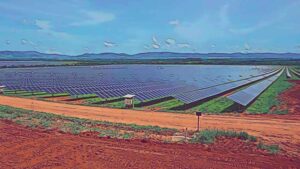
Unlike gold – whose price fluctuations are more closely tied to the moods of the US dollar exchange rate – silver has a strong market component driving its appreciation. With the surge in the metal's price, the world's largest manufacturers of solar panels have seen their profitability plummet. Some are raising prices and accelerating plans to replace silver with cheaper materials, such as copper.
An average 400-watt residential solar panel contains about 4 to 6 grams of silver, according to Sagar Chopra, a research analyst at the energy consultancy Wood Mackenzie. “For years, silver accounted for 5% to 7% of the manufacturing cost of a solar panel,” says Chopra. “Now, it has become the largest cost component in solar cell production, representing 15% to 20%.”
Last week, Chinese police intercepted a car with two occupants attempting to cross from Hong Kong to the neighboring city of Shenzhen in mainland China, carrying contraband silver. Hidden in the car were 227 kilograms of silver bars, with an estimated market value of approximately US$782,000.
The pair were likely headed to one of China's largest precious metals markets, the Shenzhen Shuibei Gold and Jewelry Market, hoping to profit from the biggest silver price surge in a generation. The market, where prices trade at a premium compared to other countries, has become the epicenter of a metals craze that has captivated investors worldwide.
The rush extended to the Chinese financial market. At the end of last week, while the price of silver plummeted, the iShares Silver Trust, the largest exchange-traded fund backed by silver, recorded more than US$40 billion in trading volume. This placed it among the most traded assets on the planet—when, just a few months earlier, it rarely exceeded US$2 billion.
The rise in silver overshadowed, but did not prevent, the rise in gold. The recent decision by the Chinese government to anchor the reduction of its global dependence on the US dollar in gold helped to open a new cycle of appreciation for the asset – which has risen 30% since January and doubled in value in the last two years.
In a recent note to clients, the investment office of UBS Global Wealth Management stated that it continues to consider gold "an attractive asset and a strong hedge."
The Swiss bank's unit maintained its overweight recommendation for the metal, raising its price target to $6,200 per ounce for March, June, and September, compared to the previously projected $5,000. The institution forecasts a slight correction to around $5,900 by the end of 2026.