

A day after securing an indisputable victory in the second round of Chile 's presidential election, far-right candidate José Antonio Kast adopted a moderate tone on Monday, December 15th, asking for opposition support to lead an emergency government to tackle the problem of violence – a central theme of the election – signaling that he would not adopt radical measures.
“I have to be very honest from day one, there are no magic solutions here,” said Kast, 59, in his victory speech early Monday morning. “You can’t change everything overnight; rebuilding the country requires everyone’s effort.”
Elected with 58% of the vote, defeating the communist candidate Jeannette Jara – who obtained the support of 42% of voters – Kast should use the period until his inauguration, scheduled for March 11, to negotiate with center and moderate right-wing parties for a parliamentary base in the new Chilean Congress, which lacks a defined majority.
Analysts point to the political fragmentation in Chile as the main reason for the caution shown by the new president. His right-wing coalition will hold 42 of the 155 seats in the Chamber of Deputies and seven of the 50 seats in the Senate. The more moderate center-right coalition, to which Kast will also have to turn, will have 34 more deputies and 18 senators.
Even if this group gives him support, the eventual government bloc will still be one vote short of obtaining a majority to approve the promised measures.
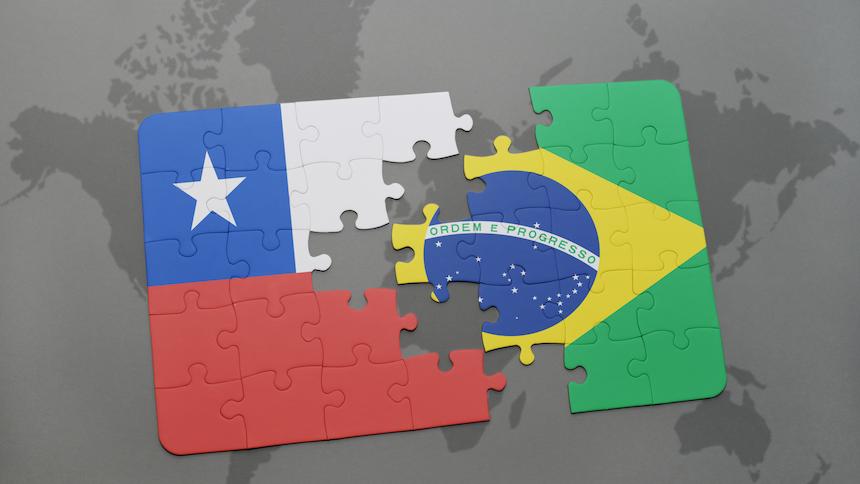
A Congress without a government majority, the issue of violence at the center of the debate, and the promise to cut public spending by US$6 billion (approximately 1.5% of GDP) in the first 18 months of government should make Kast's first year in office a kind of laboratory for Brazil's presidential campaign – which is expected to deepen the debate on the same issues as the Chilean election.
The start of Kast's administration will also be important for understanding the shift to the right in South American countries, with Chile joining Argentina, Paraguay, Ecuador, Bolivia, and Peru with conservative leaders. Brazil, Colombia, and Peru will hold elections in 2026, and the right has a good chance in all three countries.
In geopolitical terms, the Latin American scenario is becoming increasingly favorable to the President of the United States, Donald Trump , whose government has been reinforcing its interest in expanding its influence in the region.
Kast, an avowed admirer of former dictator Augusto Pinochet, is expected to be pressured by Trump regarding his strategy to reduce the regional economy's dependence on China, the Andean country's main trading partner, and expand access to critical minerals – Chile is the world's largest copper producer and has one of the largest lithium reserves.
Topics such as Trump's threat to overthrow Venezuelan dictator Nicolás Maduro and how countries in the region allied with the American president will position themselves are also expected to be explored in the Brazilian presidential campaign.
Market on the rise
Kaust's economic agenda, however, will be closely watched by opposition candidates in Brazil.
The new Chilean president will take office in a scenario of relative stability, despite a decade of low growth. The peso has appreciated by almost 10% this year. Inflation is expected to fall to the Central Bank's target of 3.0% in the first months of 2026, and the economy has been performing well, remaining close to its potential.
Anticipating Kast's victory, the financial market has been accumulating gains since the second round was defined, with spreads on bonds relative to US Treasury bonds at levels not seen since before the 2008 global financial crisis, stocks at record highs, and the cost of insuring Chilean debt against default returning to pre-pandemic levels.
Part of the optimism stems from the promises of the new Chilean president to bring the country back to fiscal balance. Kast intends to reduce the income tax rate for medium and large companies from 27% to 23%, accelerate economic growth to 4%, compared to the current 2.5%, and simplify regulations.
One of his most controversial proposals is the promise to cut public spending without reducing social benefits – a goal considered audacious for a government without a guaranteed majority in Congress.
In a note to clients, Goldman Sachs pointed to three immediate challenges for the new Chilean president. The first – and the one that most mobilized voters – is dealing with the public perception of deteriorating security conditions.
Although Chile remains relatively safe compared to its regional peers, insecurity and violence have increased in recent years. Homicide rates rose from an average of 3.4 per 100,000 inhabitants in the previous decade to a peak of 6.8 in 2022.
The fact that homicides decreased to an average of 6.0 per 100,000 inhabitants in 2024 – and the first half of 2025 showed further improvement – meant that insecurity, under the responsibility of the current left-wing government of Gabriel Boric, was Kast's greatest achievement.
The second challenge highlighted by Goldman Sachs is unemployment, at around 11%. "In our assessment, recent policy changes have had a significant impact on the labor market, as substantial increases in the minimum wage, higher pension contributions, and the transition to a 40-hour work week have raised labor costs," the bank states.
Thirdly, public finances are on track to miss the fiscal rule for the third consecutive year in 2025. “The structural imbalance has led to an increase in public debt, which has risen from less than 5% of GDP in 2008 to more than 42%, requiring a response,” warns Goldman Sachs.
Peter Siavelis, a professor of political science at Wake Forest University, states that Kast's election underscores the depth of the crisis of confidence in Chile's political institutions. "The result is best understood as yet another expression of distrust in political elites and the mechanisms of government, rather than a mandate for a conservative transformation of Chilean society," says the academic, quoted by Bloomberg .
Kast's economic team is expected to include figures from outside the Chilean technocratic establishment. Among his allies are his chief economic advisor, Jorge Quiroz, economist Bernardo Fontaine, former congressman Rodrigo Álvarez, and businessman Alejandro Irarrázaval.
A lawyer by training, founder of the Republican Party of Chile and federal deputy for 16 years, Kast has no experience in the Executive branch – this was the third presidential election he contested. A father of nine and aligned with a conservative social agenda, he promised to govern for all Chileans.
As is customary in Chile since the return to democracy, the election results were acknowledged by the opposing candidate and government official: "Democracy spoke loud and clear," said Jeannette Jara, in a post on X.