


The more subdued local economic agenda in the coming days, and the international focus on the European Central Bank's (ECB) monetary policy meeting on Thursday, July 23, are shifting the attention of financial agents towards Brazil's political calendar , culminating in the October elections. The elections will include the presidency and vice-presidency of the Republic, state governorships, senators, federal deputies, 595 other positions under scrutiny, as well as state and district representatives.
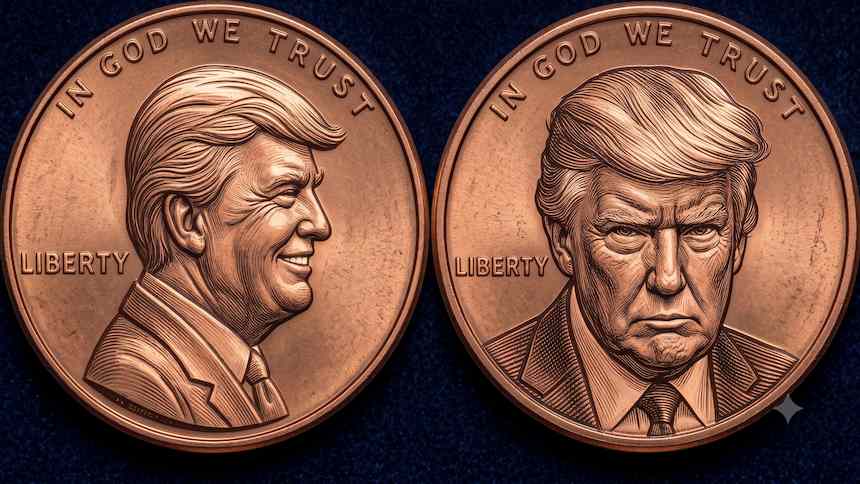
The race to the "mega-election" does not diminish the relevance of economic data, which may, however, be re-evaluated because projections for key variables are in a phase of trend consolidation, more exposed to events that depend on the mood of Donald Trump , who did not hesitate to impose new tariffs on Brazil.
This time, with a 25% tax on Brazilian exports starting Wednesday, July 22nd. This action could lead the government to invoke the Reciprocity Law, with two consequences: triggering a trade war between the US and Brazil and strengthening President Lula's discourse in favor of national sovereignty – thus strengthening his advantage in the electoral battle.
Among economic indicators and based on the Focus survey, inflation expectations for this year remain high, although they have moderated since the June result, at 0.16%, half of what was expected, with the forecast for 2027 increasing for the eighth consecutive time, further distancing itself from the 3% target.
Projections for GDP continue to hover around 2% for 2026 and decline for 2027. The outlook for the Selic rate is a 0.25 percentage point drop in August, to 14%, with a chance of a similar reduction in September and a further 2 percentage point decrease by the end of next year.
In the fiscal scenario, the indication of a deficit of 0.5% of GDP this year persists for 21 weeks, and for 16 weeks, of 0.4% next year, in addition to a firm increase in public debt while awaiting proposals for economic policy for the new presidential term – with or without Lula in the Planalto Palace.
Over the next three weeks, discussions on benchmark interest rates by the Federal Reserve , the US central bank, and the Central Bank of Brazil will be critical to expectations and may justify eventual revisions or validation of already established economic scenarios. This round will not include a "Super Wednesday." The Fed will set its rate on July 28th and 29th, and the Central Bank on August 4th and 5th.
Party conventions will follow this schedule, beginning on July 20th and ending on August 5th. Dedicated to defining candidates and slates for the elections, this period coincides with another relevant event – the recess of Congress, starting on Saturday the 18th and extending until July 31st.
Given the election campaign, postponing decisions crucial to the government – for better or for worse – and overloading parliamentary tasks immediately after the recess and conventions are not out of the question. To mitigate this risk, on Wednesday the 15th, Senate President Davi Alcolumbre announced in the Plenary a concentrated effort between August 10th and 14th and between August 31st and September 3rd – an initiative shared with the Chamber of Deputies.
Significant risk
The dreaded "bomb bills" are already being put forward. The proposal that provides for special retirement benefits for health workers, with an estimated impact of R$ 27 billion, which was approved in the Senate, including with dozens of votes from PT parliamentarians, could be enacted by Congress later on and lead the government to the Supreme Federal Court (STF) contesting the decision which, according to BTG Pactual, is a setback compared to the pension reforms carried out in recent decades.
But the list of pending parliamentary issues goes beyond that. It is extensive and far from trivial, even considering the interests involved. Among them are the 2027 Budget Guidelines Bill, the basis for defining the Union Budget for the first year of the next administration; proposals on public security; the end of the 6x1 work schedule , extremely important for President Lula's approval rating; the regulation of the use of rare earth elements ; and the use of extra oil revenue to finance tax reductions on fuels.
Furthermore: the Provisional Measure, resulting from an agreement between the Chamber of Deputies and the Treasury, which establishes the renegotiation of rural debts that should address the indebtedness of R$ 100 billion of producers; the expansion of the revenue ceiling for individual micro-entrepreneurs; the Special Tax Regime for Data Center Services ( Redata ); the Legal Framework for Artificial Intelligence; the Central Bank's financial autonomy project; and the nominations of Luís Roberto Barroso's replacement on the Supreme Court and of directors of the Central Bank, which, on January 1, 2027, will complete one year with its Board of Directors lean. In plain English – depleted.
That is, lacking effective leaders in the Economic Policy Directorate, a kind of "vice-presidency" of the Central Bank, and in the Directorate of Financial System Organization and Resolution – responsible for authorizing the operation of institutions, analyzing corporate reorganizations, and conducting intervention and liquidation processes. The most recent decisions taken by this area involved Master and BRB , with political repercussions that are far from over, given the profusion of authorities implicated in financial scandals.
It's a fact that discussions about positions in the Supreme Federal Court (STF) and the Central Bank (BC) don't reach the average citizen, nor do they alter their routine or count "points" for the presidential election. However, the vacancy compromises the work of these bodies. And the delay in defining these positions weakens, among other things, the choices of President Lula, who has the prerogative of making nominations, which are subordinate to the Federal Senate. Why?
The delay suggests how irrelevant the composition of these institutions is to the Executive branch, which has prioritized the electoral contest for months, a contest that, according to opinion polls, currently points to a victory for President Lula over his main opponent, Flávio Bolsonaro, who is embroiled in successive crises – but still in the race.