

Painting, in general, offers something to the eye: a scene, a gesture, the trace of the brush on the surface. Antonio Dias (1944-2018), however, subtracted the image and painted the word. “The written word as a possibility of creating a mental image (non-painting),” he noted when applying for a Guggenheim Foundation grant in 1971.
This gesture appears in Image+Mirage , at the Gomide&Co gallery in São Paulo. The exhibition brings together seven “non-paintings” made between 1968 and 1971, during the artist's early years in Milan. Four of them had never been shown in Brazil before.
Organized in partnership with Sprovieri, London, the exhibition presents works that belonged to the collection of the Italian art dealer Gio Marconi, head of the Galleria Gio Marconi and the Fondazione Marconi. “This is a collection that has never been for sale, but about two years ago Marconi expressed interest in selling it,” gallerist Thiago Gomide told NeoFeed .
The British gallery considered it would be difficult to launch the collection on the market without presenting it in Brazil, the artist's homeland. The strategy worked: half of the works were sold in the first week.
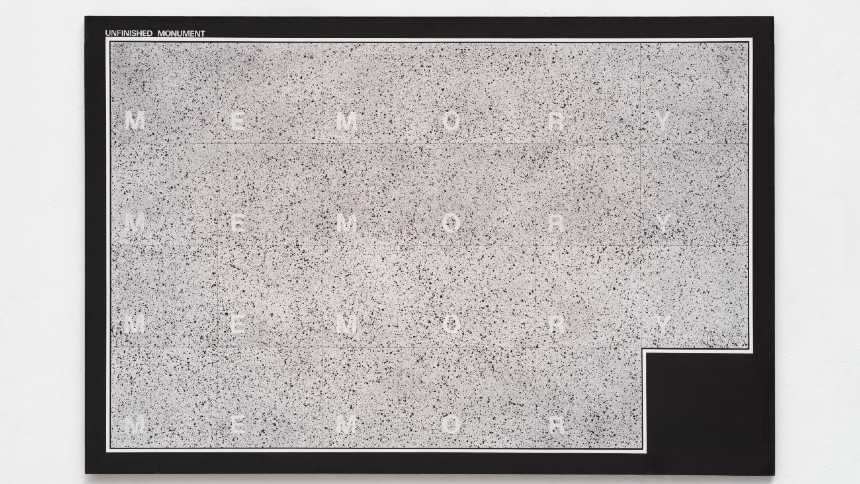
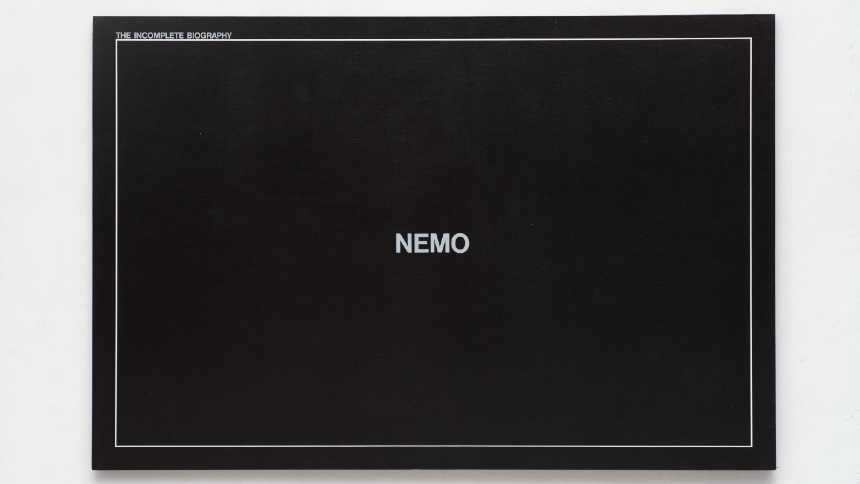
These works mark the beginning of The Illustration of Art series (1971–78), considered one of Dias' most important. In these paintings, he does not offer images; he subtracts them. The surface takes on the appearance of a carefully laid-out page.
Technical lettering, inspired by Helvetica typography, is organized within precise diagrams. By appropriating the language of design and visual communication, Dias transforms what circulates as neutral visuality in everyday life into a critical subject.
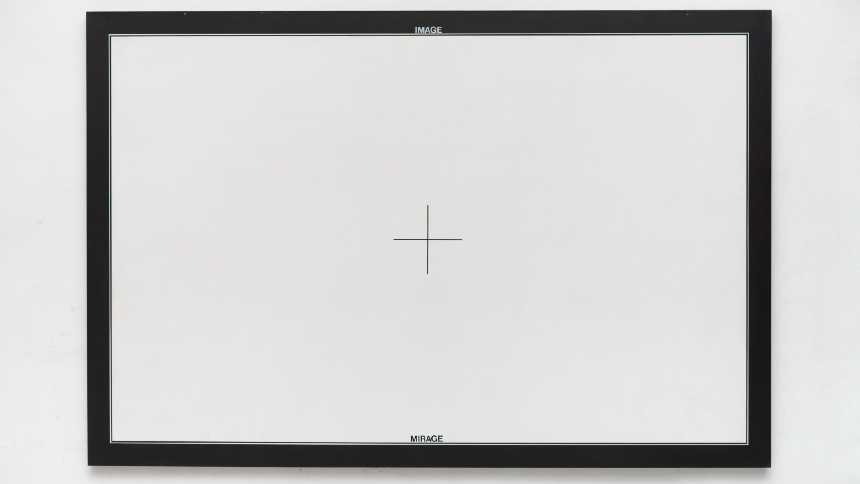
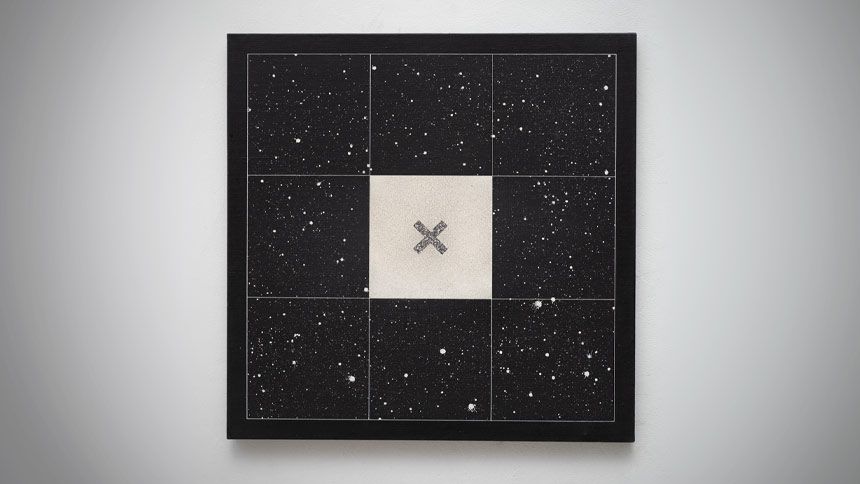
One example is the large canvas Image/Mirage (1970), measuring two by three meters: a vast white field cut in the center by a thin cross. A black border frames the surface and bears, above, “IMAGE ” and, below, “MIRAGE”.
“The observer is encouraged to confront the enigma and, in some way, to become a kind of mental co-creator, mobilizing those few elements that, by themselves, are not enough to say anything. It is precisely in this living process of observation that the works can gain meaning,” explains curator Gustavo Motta to NeoFeed .
At first glance, Image/Mirage seems like a play on words. Motta, however, adds a piece of information that enriches the interpretation: "Mirage" was also the name of the French supersonic fighter Mirage III, used in the Six-Day War.
Suddenly, the cross in the center of the canvas is no longer just a symbol: it's a target. What seemed like mere language takes on political weight—an indication of the climate that would lead the artist to self-imposed exile in Italy.
The reverse side of the painting
Born in Campina Grande, Paraíba, Antonio Dias moved to Rio de Janeiro as a teenager. In the 1960s, he joined the so-called New Figuration movement, a group that appropriated pop aesthetics to formulate direct criticisms of the military dictatorship. In the works from this period, viscera, blood, and organs overflow from the canvas, in an aggressive materiality.
In 1966, faced with the tightening of the regime, Dias decided to leave the country. In Italy, he came into contact with analytical painting, a movement that brought the very supporting structures of the canvas, the frames, to the center of the work.
If before the images leaped from the surface, now the movement is reversed. As the curator suggests, the artist exposes the reverse side of the painting, stretching its formal limits with a political bitterness stemming from Brazil.
“Dias’ work stems from an experience on the periphery of capitalism, which is where the tragic context of these paintings comes from,” explains Motta. In all his works, Dias visually engages with the idea of what is inside, at the center, and what is outside the margins.
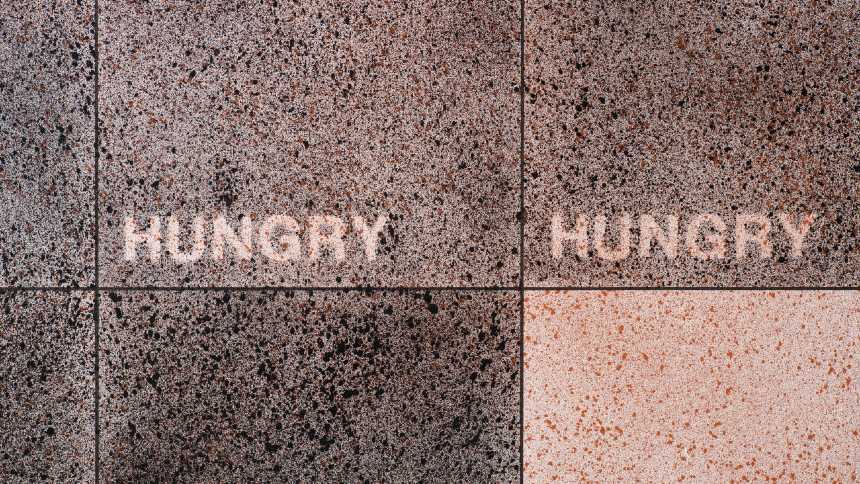
In Free Continent: Population (1968–69), Antonio Dias arranges the canvas like a chessboard. On the black border, one reads “ Free Continent ” and “ Population .” Inside, 24 squares receive splashes of red and black paint—and almost all bear the word “ Hungry .”
One single square, however, remains unmarked. Like in sliding puzzles, the structure depends on this absence. The game is there, but so is the idea of lack, of scarcity.
“He appropriates a banal visuality that, at the same time, carries the inventive dimension of the game, of the open possibilities, and interprets it politically,” says Motta. “There is an attempt there to echo a political power.” Not by chance, among the words that appear on the screens are memory, freedom, territory, hunger.
The art of prophecy
The exhibition also includes documents preserved by the artist, now held by the Institute of Contemporary Art. Among them are clippings of games published in newspapers, in which the graphic margins appropriated by Dias appear. In The Tripper (1971), the procedure becomes explicit: a connect-the-dots game draws the outline of the map of Italy on the black background.
The documents allow for a dive into this "reverse" side of the work—a dimension that also guides the exhibition design by Deysson Gilbert. Instead of disguising the gallery's architecture with scenographic tricks, the artist decided to play the same game as Antonio Dias.
Metal structures, inspired by Dias' lines and symbols, support the documents and keep the back of the canvases exposed. Gilbert also appropriates one of the artworks' transport cases.
Image/Mirage emerges almost like a billboard , facing the street. But it is precisely its packaging that concentrates the most incisive gesture of the installation. “The box creates an obstacle to vision — a short circuit. That which normally facilitates the circulation of the work, the packaging, becomes an element that interrupts visual circulation,” explains Motta.
Painted more than fifty years ago, these works sound almost premonitory today. Sights, targets, desertified territories, aerial views, satellite images… A visual vocabulary that has become part of the everyday repertoire of the present.
Motta cites a note by Walter Benjamin according to which the history of art is a history of prophecies: predictions that can only be recognized long after they are formulated. “These works might have been fully legible in Brazil in the 1970s, or perhaps in a few places marked by experiences of systematized violence. Today, this structure has taken over the entire planet,” concludes the curator.