

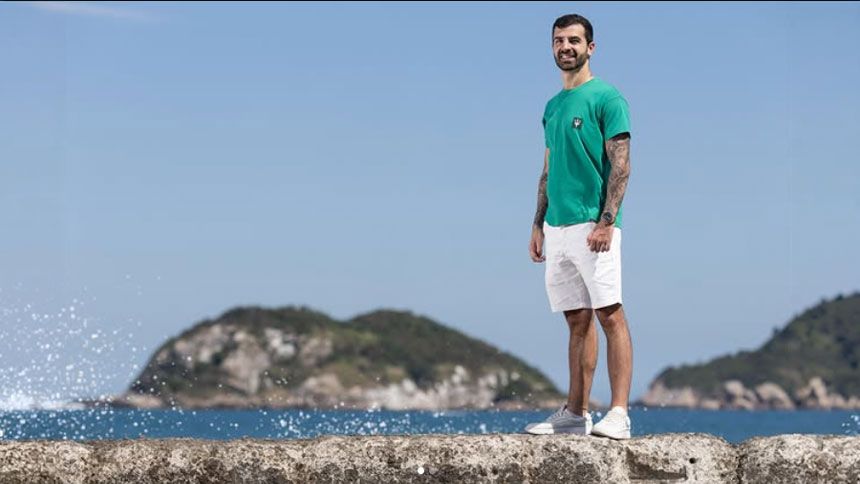

The doctor uncle could hardly believe it: “Look, it’s moving… It’s moving!” In a mixture of bewilderment and euphoria, his colleagues nodded: “It’s impossible!” But it was happening. Bruno Drummond’s right big toe had moved.
At 23 years old, he was admitted to Copa Star Hospital in Rio de Janeiro on April 28, 2018, a victim of a car rollover. Tetraplegia due to complete spinal cord injury—the fracture of the C6 vertebra, in the upper part of the spine, left him paralyzed from the neck down. “I only had slight movement in my shoulder,” he recounts in a conversation with NeoFeed . Like the vast majority of people in a similar situation, the young man was condemned to a life of complete dependence.
Three weeks after the accident, however, that thumb twitch indicated that, with Bruno, the story could be different.
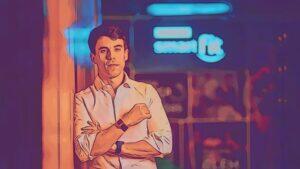
Now a banker, he was the first patient to receive polylaminin — the protein developed over nearly three decades by Rio de Janeiro-born biologist Tatiana Coelho de Sampaio, a professor and researcher at the Federal University of Rio de Janeiro (UFRJ).
Of the eight participants in the preclinical studies with the new substance, Bruno showed the most significant improvement. In two years, he regained almost all of his movement. And most importantly, his independence. He walks, drives, works, exercises, cooks, travels, dates — “I joke that I’m Dr. Tatiana’s little trophy.”
Among the other volunteers, a partial restoration of motor function was observed.
In medical literature, in the first year after the injury, 10% to 20% of complete spinal cord injuries spontaneously evolve into incomplete injuries—that is, they show some gain in sensation and motor control. "A robust functional motor recovery (...) is rare," reads an article in the Handbook of Clinical Neurology .
Bruno thus becomes the inaugural milestone in a gamble by Brazilian science. Rarely has there been such a close call to a treatment capable of restoring (some) movement to those suffering from severe spinal cord injuries. If the progress recorded so far is confirmed, Tatiana's innovation promises to revolutionize medicine.
"Intelligent scaffolding"
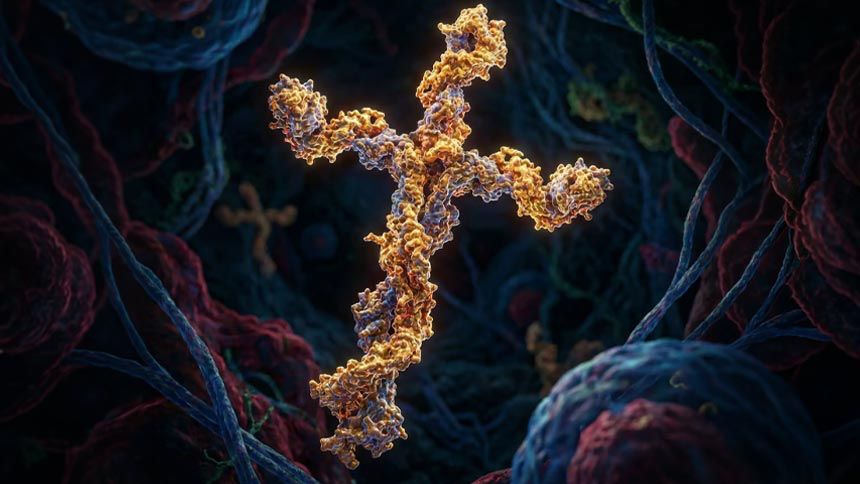
Polylaminin is a synthetic version of laminin, a protein naturally produced by the body. Acting as a kind of "smart biological scaffold," it not only provides physical support for cells but also guides and regulates cellular behavior.
Among its many functions is the repair of tissues in the central nervous system, including the spinal cord.
Studied for almost 50 years, the compound fragments outside the body. Tatiana, however, managed to create a method that not only keeps the laminin molecule intact but also enhances its effects.
Under a microscope, the "superprotein" stimulates the growth of axons, the extensions of neurons specialized in transmitting electrical impulses from the brain to the rest of the body. These "conduits" carry the signals that enable movement and sensory perception.
Thus, when applied to the area of spinal cord injury, polylaminin could reconstruct the neural pathway. And, the more recent the trauma, the easier the reconnection. Bruno received 1.5 milliliters of the compound less than 24 hours after the accident. The speed was decisive for his outcome.
Nothing, however, would have happened without effort. With emotional and financial support from his family, he immersed himself in two years of intensive physiotherapy.
Despite the enthusiasm surrounding polylaminin, there is a long way to go before the substance becomes a medicine. A pilot study with only eight patients is far from representative, as the small sample size prevents generalizable and robust conclusions about the effectiveness of the treatment.
Furthermore, the effects of the new molecule have not yet been published in a scientific journal, which prevents experts in the field from analyzing the methodology and reliability of the results. To give you an idea, approval to begin clinical trials with the protein created at UFRJ was only granted by Anvisa at the beginning of the month.
And, following the steps predicted by science, they could take up to a decade to complete.
“It’s not an achievement yet, it’s a promise of treatment,” Tatiana has said. “The day she’s registered, if everyone can walk again, then we’ll have truly made a revolution.”
Bruno is optimistic that in the future his case will no longer be an exception. Below are excerpts from his statement to NeoFeed :
“My family is from Rio, but I grew up in São Paulo. On April 28, 2018, my father, my stepmother, my younger brother, and I drove to Teresópolis to celebrate my grandmother's birthday. Near our destination, we stopped at a gas station. When we got back on the road, I lay down in the back seat without a seatbelt and fell asleep.”
My father blinked at the wheel. The car hit a pole and rolled over several times. They said I woke up trapped in the wreckage, cursing because I couldn't move. But I don't remember anything.
I was taken to the Saracuruna hospital [a public institution in Duque de Caxias]. Thanks to my uncle, who is a doctor, I was quickly transferred to Copa Star. With my diagnosis of tetraplegia, he and an aunt who is a spine orthopedist put together a team to take care of me.
Someone mentioned that an experiment was underway at UFRJ (Federal University of Rio de Janeiro) with a protein tested on animals, without significant side effects. I was unconscious, and my uncles decided to include me in the research. There was no way I could get any worse.
Less than 24 hours after the accident, I underwent surgery and received the polylaminin injection. My case is an exception both because of the speed of the treatment and the support and knowledge of my family.
All I remember is waking up quadriplegic. I tried to move my body and nothing. I could only move my neck and, slightly, my shoulders. I thought: 'I'm screwed'. I became depressed.
"On its own, polylaminin doesn't recover anything."
I lived 23 years perfectly healthy, I was always super active, I'd been weight training since I was 14, I loved going out with friends, and then, out of nowhere, I couldn't move anymore. In the first few days, all I wanted to do was take Rivotril [an anxiolytic with sedative properties] and sleep.
But I always kept a lighthearted attitude. I was in a state-of-the-art hospital, surrounded by family and friends. A week later, I was already joking around and having fun. Being positive helped a lot.
Three weeks after the accident, my uncle saw my big toe move. They asked me to do it again. I did. They celebrated. I teased them: 'It's just my big toe.' But there was hope: if the signal went from my brain to my foot, there was a path open. Everyone celebrated.
At Copa Star, the first goal was to sit up without falling. It took two months. I was all crooked, but I could hold myself up without support. I returned to São Paulo and spent another two months hospitalized at AACD. I started intensive physiotherapy, morning and afternoon.
After being discharged from the hospital, I went to live with my father. He adapted the house for me. In the morning, he would take me to the AACD (Association for Assistance to Disabled Children) and in the afternoon to a private physiotherapy clinic, where I was seen by a spinal cord injury specialist. With his "big boss" demeanor, my father never let me miss any appointments.
I relearned movements like a baby. First, lying on the floor, I moved my legs from side to side. Then, on all fours, I crawled. Next, I tried to stand up and, later, my first steps. In eight months, I was walking with a cane or walker—crooked, but I was walking.
My previous physical condition helped. I lost 20 kilos, but I had muscle memory and body awareness. It was two years of total dedication. Every regained movement was a reason to celebrate.
Today I am 100% independent. I cook, drive, work, travel. Regaining independence after losing it is indescribable. I've come to value life in a new way—especially the little things.
I have some after-effects. The movement in my fingers is somewhat limited—the left hand is worse. I also have less feeling in my forearm, especially the left one. I've lost a lot of strength in my left leg. If I have to get up now and run, it spasms and I'll fall. If, however, my body is warmed up, I can even manage a little jog.
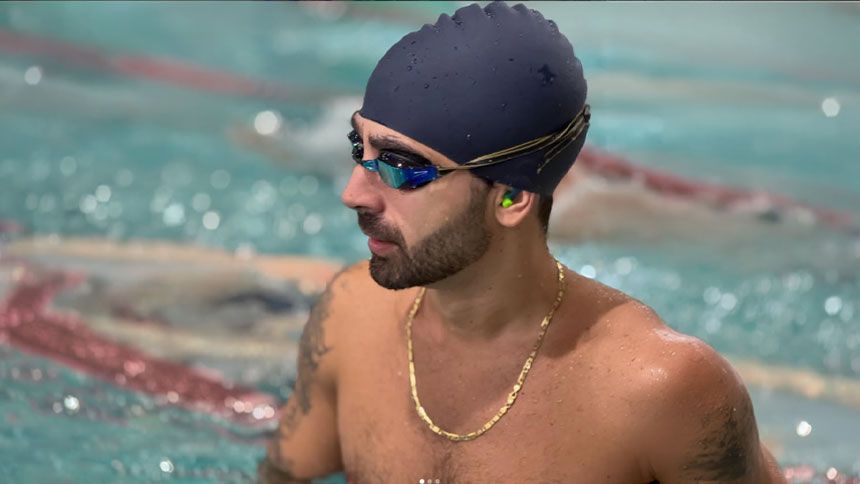
If I stop training, my body gets worse. I no longer do physical therapy, but I do weight training, swimming… keeping my body active is essential.
Throughout this process, I had doubts. Was my recovery due to the polylaminin, or would I have recovered naturally?
Over time, seeing similar cases evolve more slowly, I came to believe that she was, indeed, fundamental.
But, on its own, polylaminin won't restore anything. Physical therapy, providing stimuli to encourage movement, is a sine qua non for recovery.
And what about the use of polylaminin for the treatment of chronic lesions? Can it be used in patients with incomplete lesions who retain some sensitivity? Now, with the start of clinical trials, the answers to all these questions will begin to emerge.
I think I've reached the peak of my recovery. Generally, the peak happens about two to two and a half years after the accident. But I don't like to use the word 'never'.