

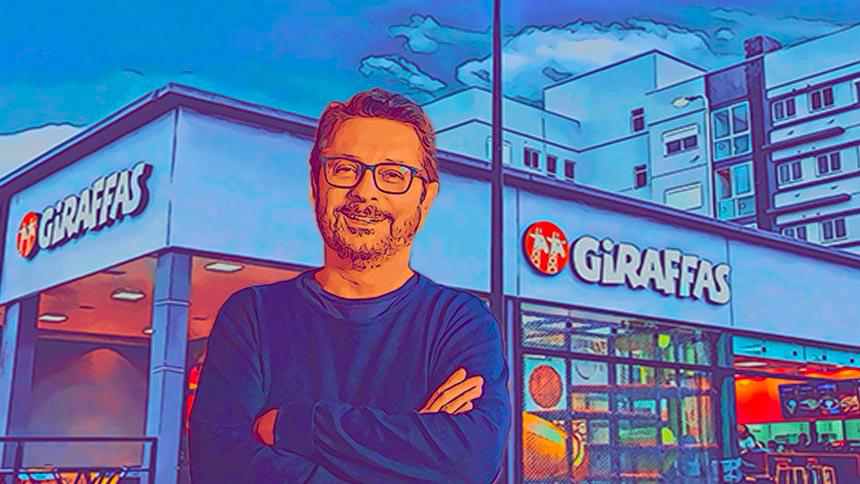

The Giraffas restaurant chainhas decided to elevate its traditional "prato feito" (a typical Brazilian dish). The meal, basically consisting of rice, beans, and meat, will now include a premium cut of meat on the menu: picanha (rump cap).
“We identified that there was this demand in our restaurants, mainly from consumers who were willing to pay a little more,” says Carlos Guerra, founder and CEO of the Giraffas chain, in an interview with NeoFeed.
"There's an aspirational aspect to picanha, which isn't something the Brazilian consumer imagines. If they can afford it, they'll buy it," he added.
To increase sales volume, the fast-food chain, which has 400 physical locations in Brazil, expanded its offering of dishes featuring the meat. Previously, there was only one option. At the end of the year, the chain began offering a cheaper, ready-made dish in strip form, and a more expensive premium line at R$ 64. The existing dish was placed in between. Sales volume almost tripled.
A year ago, President Luiz Inácio Lula da Silva stated that Brazilians would "go back to eating picanha" (a cut of beef), in response to rising food prices, especially beef. But what we saw was a 12% increase in prices between 2024 and 2026, according to the Broad National Consumer Price Index (IPCA). With this plan, Guerra's network is trying, in a way, to "fulfill this promise."
Girafas' goal is to increase its picanha production from 20 tons to 30 tons per month, and to have this cut alone account for 10% of the company's revenue. A year and a half ago, this percentage was less than 3%. The plan is to reach a revenue of R$ 1.1 billion in 2026, representing a 5% growth over 2025.
Furthermore, the company is in the testing phase of a hamburger made entirely from picanha (top sirloin cap), which is scheduled for release in October.
To increase volume and expand revenue, the company decided to compress margins and expand negotiations with its beef supplier, a medium-sized meat processing plant called Silva, located in Santa Maria, Rio Grande do Sul, which is able to meet the demand of the ready-meal chain.
"With the higher price of meat, we prefer to have a smaller slaughterhouse as our supplier, instead of the large companies in the sector, where Girafas becomes the biggest customer. This makes a difference when negotiating," says Guerra.
In total, the restaurant chain buys around 120 tons of Angus beef per month, a breed very traditional in the Southern region. This means that picanha alone will represent 25% of the total beef volume of the Giraffas chain this year.
In addition to beef, the company also buys 250 tons of chicken, 40 tons of sausage, and 20 tons of bacon monthly. Annually, it purchases six thousand tons of rice and beans. The chain sells 1.5 million "PFs" (Prato Feito - a typical Brazilian dish) per month. Of this total, the company plans to include picanha (top sirloin cap) in 150,000 of these dishes per month.
The focus on the type of cut changes a characteristic of the company, which has always been focused on the diversity of options and never had a "flagship" dish until now. Now, the businessman sees that, with the plan to grow in the volume of picanha, the trend is that the chain will gain a new audience, one that was not yet frequent in the restaurants.
“We’ve seen an increase in both lower-income and slightly higher-income customers. Those with average incomes have become more squeezed. Our clientele today ranges from C+ to A-. And those with higher incomes have started to see the more expensive picanha dish as a good meal option,” he says. As a result, the average bill at Girafas has also increased. Today, it exceeds R$ 50.
Guerra says that he had previously considered bringing in an Argentinian line of meat, with cuts like chorizo and ancho. But, in his view, what he took into account was the perception that the cut itself was already familiar to the population.
“Part of our audience would have difficulty understanding what ancho steak is. The focus was on having something that connected with Brazilians, who like rice, beans, and meat. The picanha steak that everyone knows and even has an emotional connection to. It's not something the consumer imagines,” explains the founder of Giraffas.
According to Guerra's assessment, another factor that helped increase protein consumption was precisely the rise in the number of people who started using some type of weight-loss pen. For this group, there is a medical recommendation to increase meat consumption.
“There is, in fact, a shift in the food industry. But people need to continue eating meat, and in a healthy way, with salad. And that's what our chain can offer. Of course, there will be a change in consumer behavior, but we are ready to have more for this audience, which is looking for less carbohydrates,” he explains.
In this regard, in addition to the increased use of picanha (rump steak), the chain will also launch a "fit" line in October, featuring redesigned ready-made dishes.
In addition to its growth plan involving more meat, the Giraffas chain also wants to increase sales volume through digital channels, which currently represent only 10% of its revenue. To achieve this, it plans to invest R$ 8.5 million in technology.
There is also no growth pipeline of more than 30 restaurants in Brazil, which would represent investments of R$ 50 million by franchisees.
Today, a street-level Girafas store requires an investment of R$ 1.5 million. Shopping mall locations cost around R$ 1 million. The average revenue for the chain is approximately R$ 250,000. Shopping mall locations generate around R$ 350,000, and street-level locations, R$ 400,000.
Of the stores in Brazil, 60% are in shopping malls, 8% in bus and train stations and airports, 7% in supermarkets, and 25% in street-level stores.