


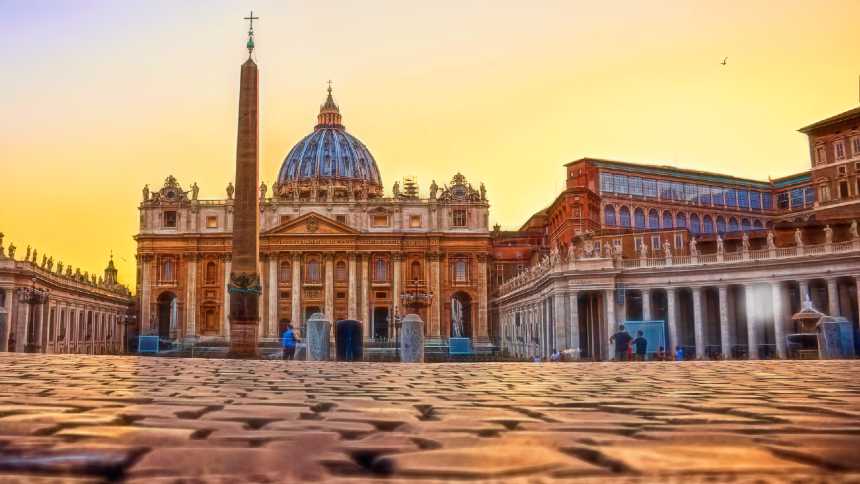
Rome - This is not an anniversary celebrating four centuries of a church, the largest in the Vatican , in Rome , and one of the most famous in the world. It is a "brand" repositioning with Italian public and private investments, estimated at "millions of euros" (the amount was not revealed).
In presenting the celebrations for the 400th anniversary of the Dedication (“consecration,” in Italian) of St. Peter’s Basilica (when it became a suitable place for religious worship), the Holy See made it clear that it wishes to mark the date by looking forward and not just to the past.
Cardinal Mauro Gambetti announced in mid-February a program that involves spirituality, artificial intelligence, and pilgrim flow management. "The project is particularly significant, considering that cutting-edge technologies will allow everyone to learn and interact with this new digital ecosystem," Gambetti told NeoFeed .
The vicar is the president of the Fabbrica di San Pietro, an institution created in 1523 by Pope Clement VII (1478–1534) to manage the artistic and architectural treasures of the sanctuary, and which continues to operate to this day.
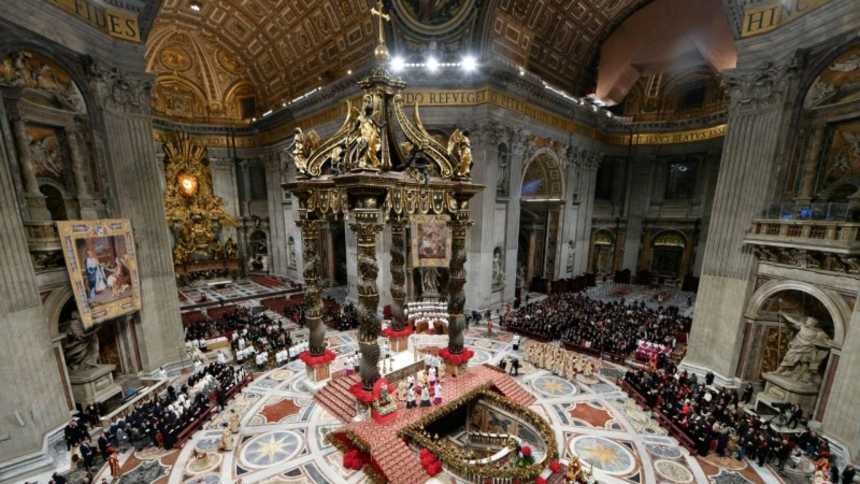
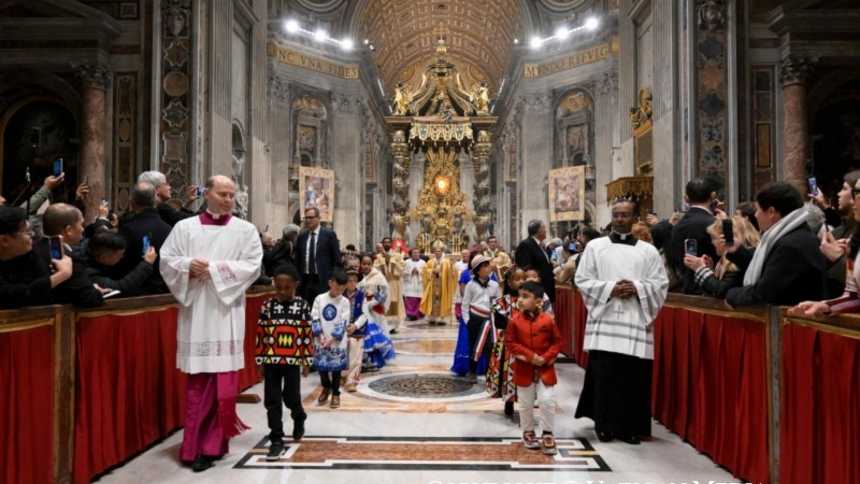
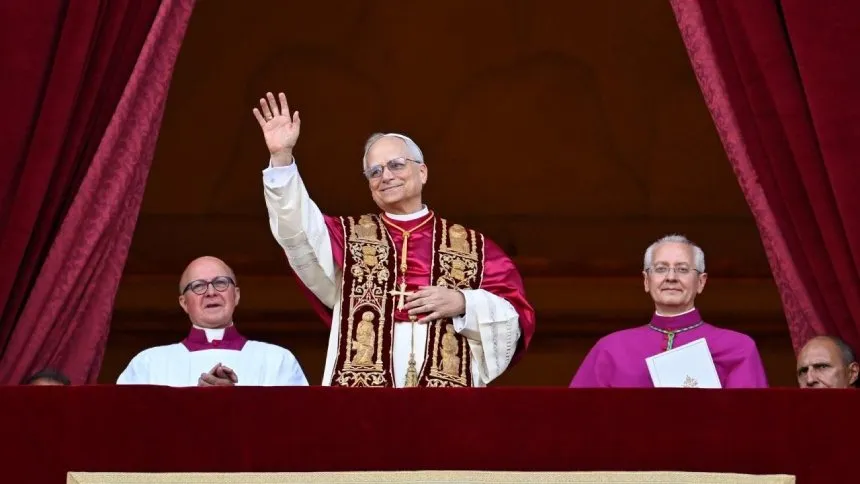
The official date of the consecration is November 18th, the day Pope Leo XIV will celebrate Mass, but the Vatican is already in full swing. What is most striking about the early celebrations is not the liturgical calendar, but the digital apparatus in operation since the announcement.
For the first time, worshippers can follow the main celebrations with simultaneous translation via artificial intelligence directly on their cell phones.
Simply scan a QR code available at the entrance or at strategic points to access a multilingual platform (more than 60 languages) with real-time audio and text. The tool was developed in partnership with the Dicastery for Communication (ministry of the Roman Curia) and the company Translated, using the Lara AI platform for live interpretation.
The move is symbolic and emblematic. At a time when the Church is debating the ethical impact of artificial intelligence, the Holy See has decided to officially incorporate it into its main calling card. It's not just about facilitating linguistic access, but about broadening its reach. The site receives millions of pilgrims every year.
During the Jubilee of 2025, 33.5 million people from 185 countries passed through Rome and the Holy Doors, and technology proved itself an instrument of evangelization.
Among the new features announced by the Vatican is a new Stations of the Cross in the main nave of the basilica, featuring 14 large-scale canvases created by the Swiss artist Manuel Andreas Dürr, chosen through an international competition. The style combines classical pictorial tradition with influences from the Florentine school.
In parallel, the Quo Vadis path will allow visitors to discover the monumental testimonies of the apostles, while an exhibition will showcase the complex design and construction processes of the church, from the sketches by Donato Bramante (1444–1514) to its completion by Carlo Maderno (1556–1629).
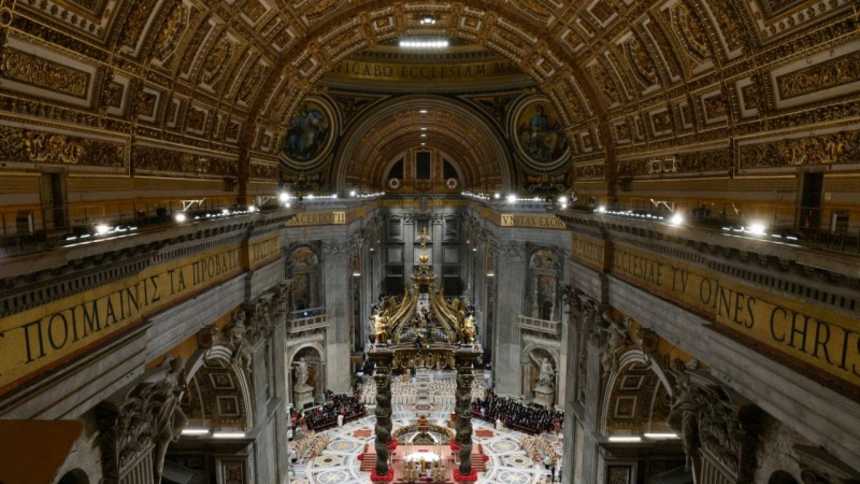
It will also be possible to explore historically inaccessible spaces. The complete terrace, with three fan-shaped sections, can be visited, as well as the Octagonal Rooms, where the original models made by the architect Antonio da Sangallo the Younger (1484–1546) and the dome design by Michelangelo Buonarroti (1475–1564) are located.
The Renaissance master even inspired the digital typeface “ Michelangelus .” The font accurately reproduces the artist's letters and numbers, transforming them into true works of art, and will be available for free in the Microsoft Office suite, the result of a long-standing collaboration between the Vatican and the company.
A real-time reservation system, called Smart Pass , will also be implemented, allowing for efficient management of visitor flow, especially during peak periods. It's a clear attempt to balance reopening and preservation.
In the same context, the food court located on the large terrace will be expanded to better accommodate the flow of pilgrims during the commemorative year. Some of the Italian press even reported that a panoramic bistro would be installed in the dome, which generated a lot of repercussion and was later denied.
Vatican sources clarified that it is not a restaurant and the expansion will be discreet, respecting the sacred context of the site. "A place to stop by, have a slice of pizza, a panino (sandwich)," confirms Cardinal Gambetti.
In the structural field, the Beyond the Visible program, developed in partnership with the Italian multinational energy company Eni , envisions an integrated and permanent system for monitoring the church's stability, applying cutting-edge engineering to protect a monument that has survived centuries, wars, and urban transformations.
For the first time, the building was studied and mapped with millimeter precision, from the ground floor to the basement.
Sensors monitor the state of conservation in real time, including sensitive structural points such as the Veronica pillar, a piece that supports the dome's drum and receives its name in reference to the Christian tradition of the saint who is said to have wiped Jesus' face on the way to Calvary.
“What is unseen is perhaps the most poetic and fascinating part of this action,” pointed out Fabrizio Mastai, a civil engineer at Eni. At the end of the press conference, Cardinal Gambetti evoked Pope Julius II (1443–1513), who in the 16th century, in 1506, decided to demolish the old building erected by Emperor Constantine (c. 272–337) over the supposed tomb of Saint Peter, to build the current one, which took 120 years.
If back then the project required destruction, today, he stated, "technology allows for renovation without tearing down." St. Peter's Basilica is ready for another 400 years.