


Olinda — In the sea of people that crowds the streets of Olinda's carnival , some figures inevitably stand out: the giant puppets. Usually measuring around three meters in height — in some cases reaching up to four meters — they come to life through someone willing enough to carry the heavy structure of these colossi for several kilometers, often in adverse conditions.
While the oldest puppets could weigh 40 kilos, today the average weight is between 20 and 30 kilos, although some exceed that, depending on their height and accessories. And, just like the most enthusiastic revelers, the giants accompany the parades of the samba schools from beginning to end.
The routes aren't necessarily long, but they are complex, considering that this is done by someone carrying and moving the puppets up and down the slopes of the Historic Site of Olinda, especially on the hottest days.
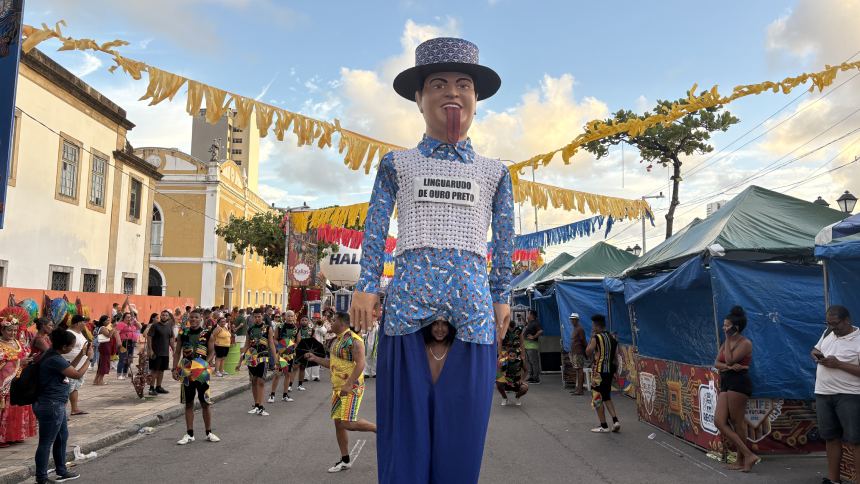
Marcos Antônio, a 33-year-old resident of Olinda, began his relationship with carnival puppets in childhood. At seven, he carried his first mini puppet, a smaller-scale version of the giant ones used mainly by children. "That's where the passion came from, and I'm still carrying a puppet today," he says, who since 2014 has been responsible for carrying the puppet for the Linguarudo de Ouro Preto carnival group.
As he tells NeoFeed , carrying the giants is more a matter of habit than physical fitness, although he maintains a regular exercise routine that includes running and the gym. Linguarudo, weighing around 35 kilos, is the heaviest among those he usually carries.
Visual artist Paulo Cezar, 41, was another one captivated by giants since childhood, when his father gave him his first miniature doll. In the following years, he developed his own dolls and, still in his teens, received his first commissions. With 28 years of experience, he estimates he has already made more than a thousand dolls.
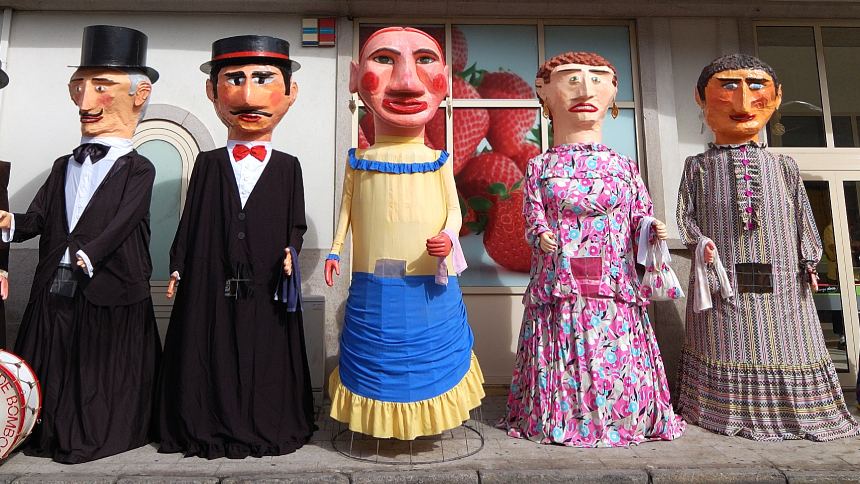
Although they are symbols of the Pernambuco carnival, the giant puppets are inspired by European festivities. There are records dating back to the Middle Ages of giant figures used in processions and popular festivals, a practice that continues in countries such as Portugal, France, and Belgium.
Through the hands of a Belgian priest
The pioneering giants of Pernambuco's carnival were born in the state's interior, in Belém do São Francisco, thanks to a Belgian priest who arrived in the city around 1910. In addition to his religious work, Father Norberto Phalempin spread European culture and art to the area.
The religious figure's accounts of the use of giant figures in processions inspired the craftsman Gumercindo Pires de Carvalho, who created, in 1919, the giant puppet Zé Pereira, the first in Brazil.
“Ten years later, the giant doll Vitalina appeared, and she began to accompany Zé Pereira,” Emerson da Silva Neto, administrative agent of the Secretariat of Tourism, Culture and Economic Development of Belém do São Francisco, the department responsible for the Zé Pereira and Vitalina Memorial, told NeoFeed.
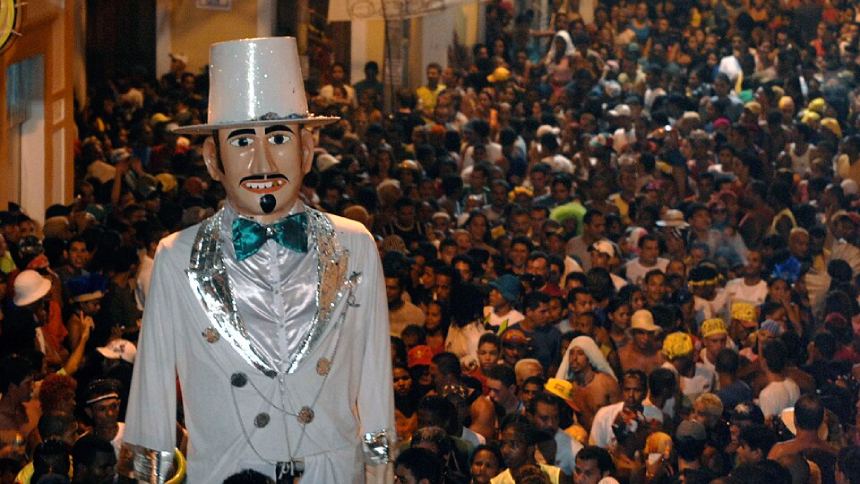
In Olinda, the oldest and most famous puppet still circulating is also imbued with an almost magical aura: the Midnight Man, who parades punctually at midnight, at the turn of Carnival Saturday to Sunday.
Standing at an imposing four meters tall and elegantly dressed, the Midnight Man is not simply treated as a giant puppet, but rather as a calunga, as sacred figures representing ancestors or entities are called in Afro-Brazilian culture. His first parade was on February 2, 1932, the day of Iemanjá, the water deity of Candomblé, which reinforces the mythical nature of the character.
The love life of dolls
It's not just the revelers who have the right to experience their carnival romances. Romance also exists between the giant puppets, including long-lasting stories, complete with marriage and children, as was the case with the Midnight Man and the Noon Woman.
The two rarely meet, as they traditionally parade on different days and at different times, but their relationship dates back to the 1970s and can be seen in photos from that time showing the two giants as if they were kissing.
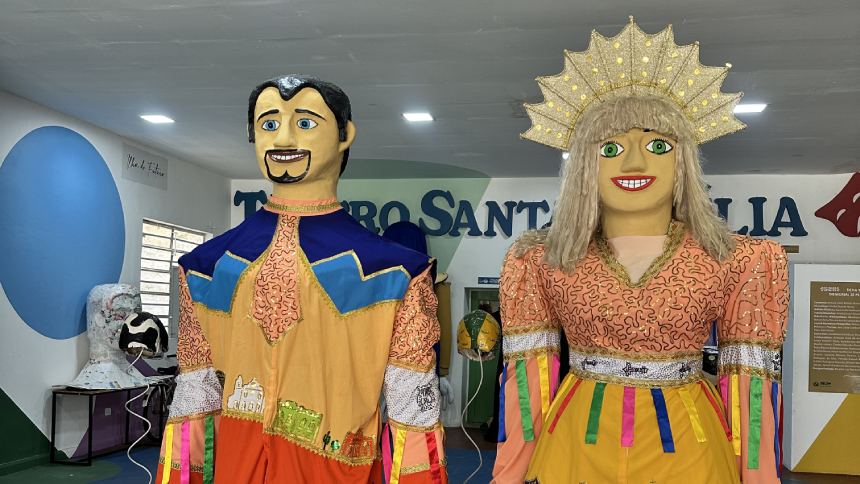
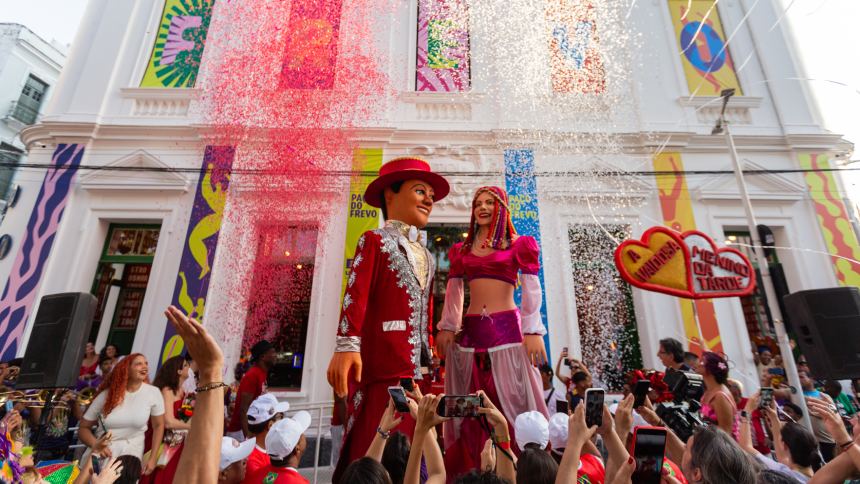
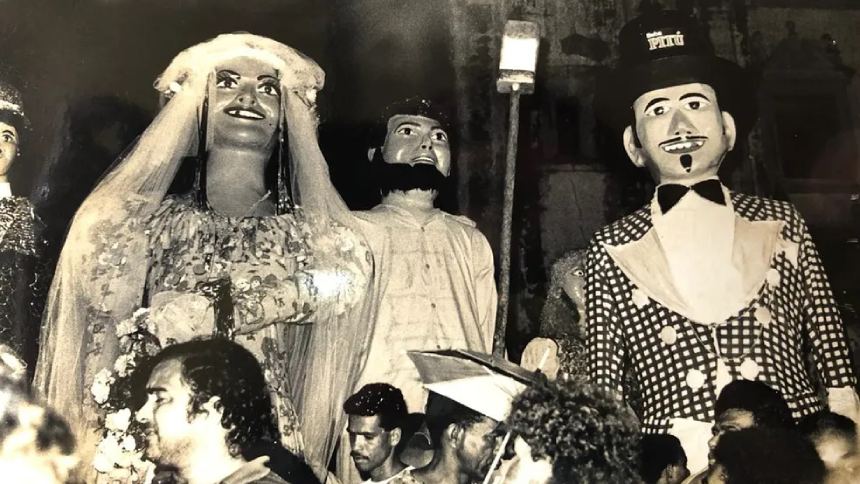
From this relationship "were born" the Afternoon Boy and the Afternoon Girl, and the union was sealed with a wedding in 1990. The Afternoon Boy, like his father, also shows an inclination for romance: he recently got engaged to Vaidosa, a giant of the samba school of the same name.
The relationship between the two was noticed by the multi-talented artist Maria Flor, who says she saw a flirtation between the Child and the Vain Woman in a procession and had the feeling that one giant was looking at the other.
When commenting on what happened with the president of the A Vaidosa carnival group, Maria Flor's look at the puppets ended up giving rise to an engagement celebrated between the giants of the two groups, in September 2025.
Vaidosa, on the other hand, is not the daughter of a giant puppet. The father, in this case, is the carnival artist Edmilson Nascimento, who in 1995 created the troupe, responsible for one of the best-known puppets of Olinda, which, incidentally, has few female figures.
“The idea was precisely to create a doll that had a female representation. It was very significant in leading to the emergence of other dolls, and many women also saw themselves represented,” she tells NeoFeed .
Agents who are anything but secret.
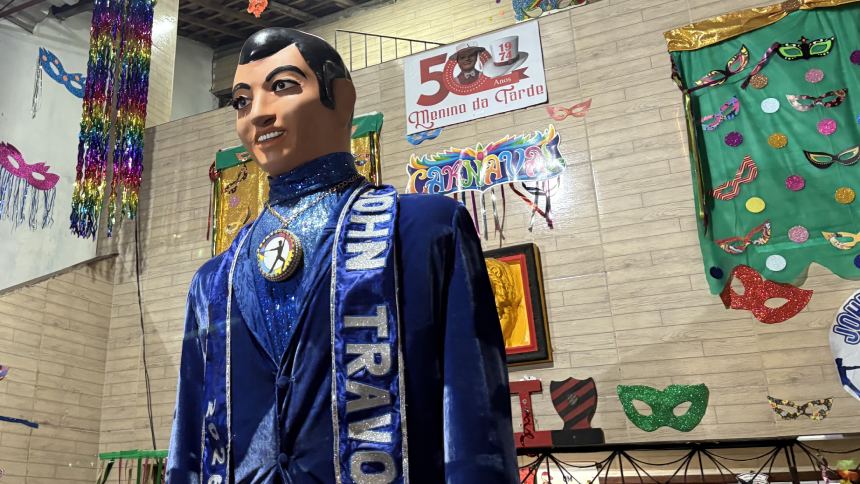
In most cases, the giant puppets serve as a physical representation of the carnival groups, as is the case with the Midnight Man. But these figures are not always fictional characters. One example from the city is the John Travolta carnival group, whose puppet is inspired by the actor from Saturday Night Fever .
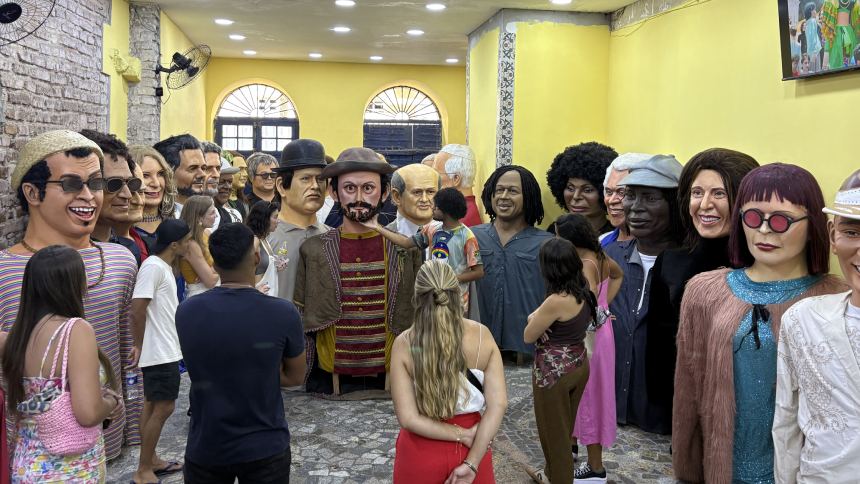
And giant puppets of celebrities have become a tradition of their own. The largest stronghold of them is at the Giant Puppet Embassy in Recife. Conceived by businessman Leandro Castro, the space maintains a permanent exhibition with around 100 figures.
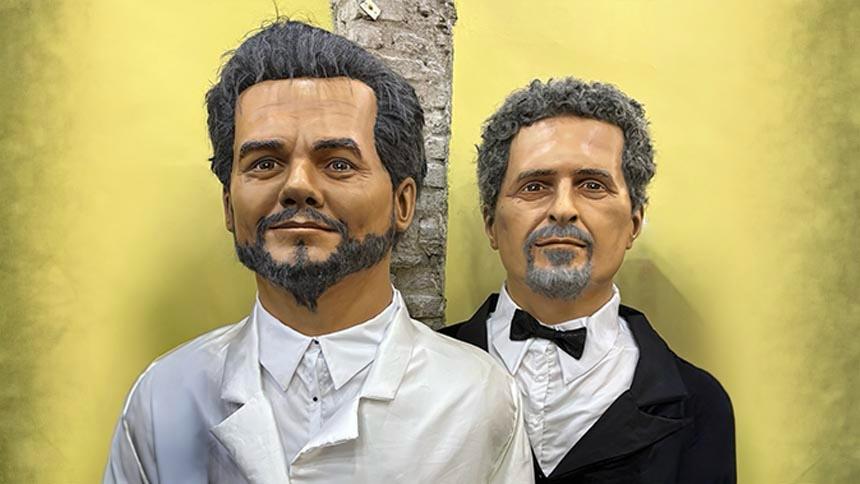
Among the newest faces are the wax figures of actor Wagner Moura and filmmaker Kleber Mendonça Filho, from the movie "The Secret Agent ." "It's like a Madame Tussauds, but with giant figures," Castro tells NeoFeed , referring to the famous wax museum founded in London.
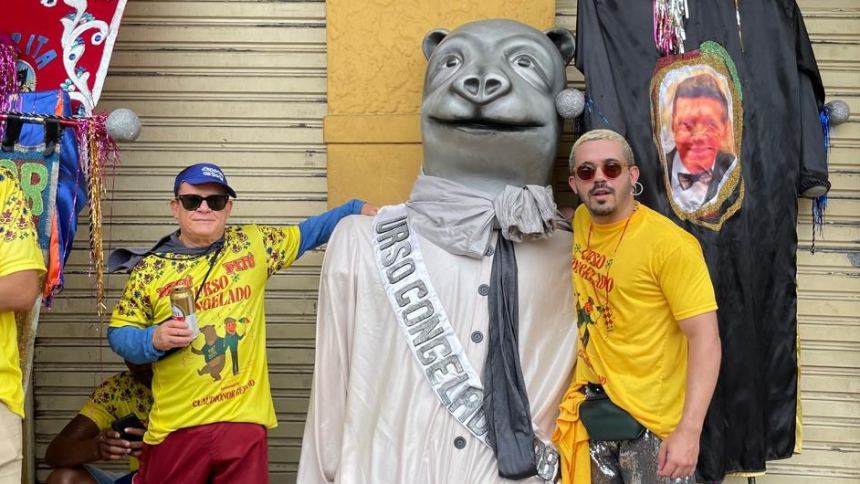
While celebrities are an inspiration for new giants, some have more abstract origins, like the Frozen Bear. Francisco Guerra de Holanda, leader and one of the founders of the group, explains that the puppet has two inspirations: the carnival game of the bears – in which people dressed as bears bang cans asking for money – and the price and wage freeze during Sarney's presidency, at the time of the group's founding in 1987.