


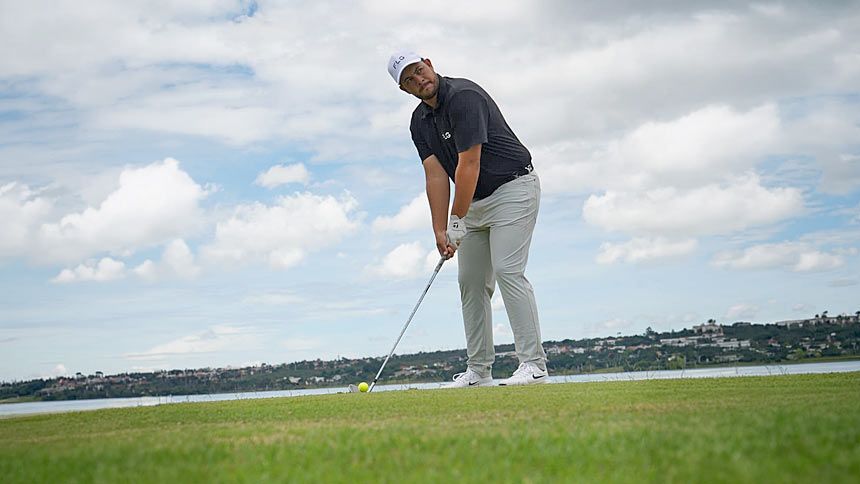
In a country where golf is primarily a sport for businesspeople , high-income families, and financial market executives , the sport entered the life of Andrey Xavier, from a humble family in the interior of Rio Grande do Sul , by chance.
But his talent made him one of the sport's highest earners as an amateur and attracted the attention of FLG, a real estate and capital structuring hub, which became his sponsor and placed him on the professional circuit.
This weekend, the 25-year-old athlete is competing in his first tournament as a professional, the Gira de Golf Professional Mexicana in Puebla, Mexico . And, on March 24th, he will be in the United States for the GPA Tour AM Q-School . Immediately afterwards, he will go to Curitiba for the 76th Open Golf Tournament.
The strategy for the year involves expanding our international presence, gaining points in the world rankings, and acquiring competitive experience in fields with a high level of technical skill.
“Golf is my life, but I never imagined I could be a professional and make a good living from it. I'm now looking forward to competing not only for trophies, but for money in this new stage of my career,” says Andrey Xavier, in an interview with NeoFeed .
Former leader of the national ranking and 48th in the world amateur ranking, Andrey has accumulated many titles, such as the Junior Orange Bowl in Miami in 2019, the three-time Brazilian amateur championship and the victory at the Grama Pro Invitational 2025.
Up until that turning point, Andrey's entire career was self-funded, surviving on financial assistance from the clubs where he trained and a government athlete grant.
In the meantime, he went through family losses, interruptions in his sport, and successive comebacks. Now, he will have the structure to try to make a living from competitive golf with the agency FLG Sports, the sports arm of the FLG platform.
“We decided not only to sponsor, but also to represent an athlete who had a very strong history of perseverance and inclusion. We will provide all the necessary structure for international competitions. And, with him, we are launching FLG Sports,” says Fernando Guimarães, founder and head of real estate at FLG.
He started playing golf at age 8, in a social project called Boa Bola, in Santana do Livramento (RS), a city on the border with Uruguay. The program, created for underprivileged children from the neighborhood next to the club, offered golf and tennis lessons to those who would not normally have access to those sports, like him.
His mother was a homemaker who took care of him and his sister, while his father supported the family working in a poultry processing plant. The club was near their home, and his friends already attended the program. He played soccer, but he started dividing his time between the sports offered there and, little by little, he stayed and started enjoying it.
“Before, I liked playing soccer, but they convinced me to go and I started to like golf. It’s a sport that depends only on you, it requires total concentration. And I realized I had a knack for it,” says Andrey.
"Bad moment"
He progressed as he grew up, but his advancement was abruptly interrupted by the death of his mother when he was between 14 and 15 years old.
It was this episode that disrupted his life, temporarily took him away from golf, and led to another change. His maternal uncle invited him to live with him in Porto Alegre and began to play a decisive role in rebuilding his career.
“I was going through a really bad time and my uncle adopted me and said I couldn’t stop playing golf, that I was good at it and my mother would be proud of me. And in the big city I had better opportunities,” he says.
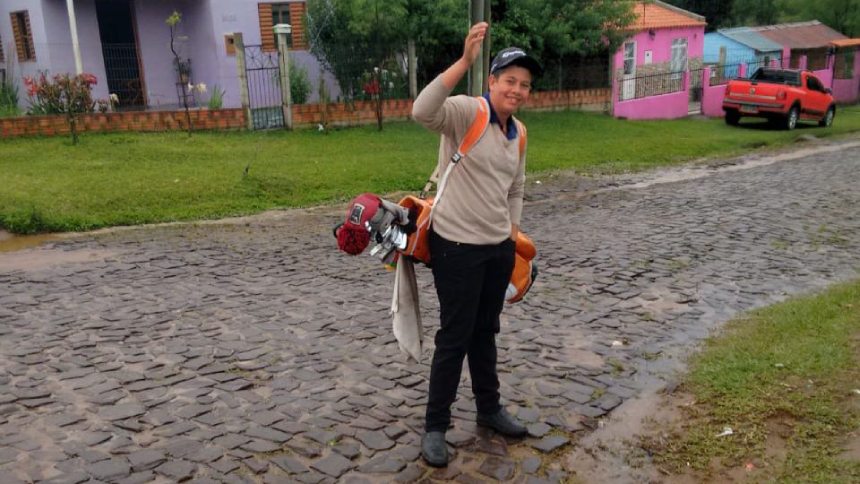
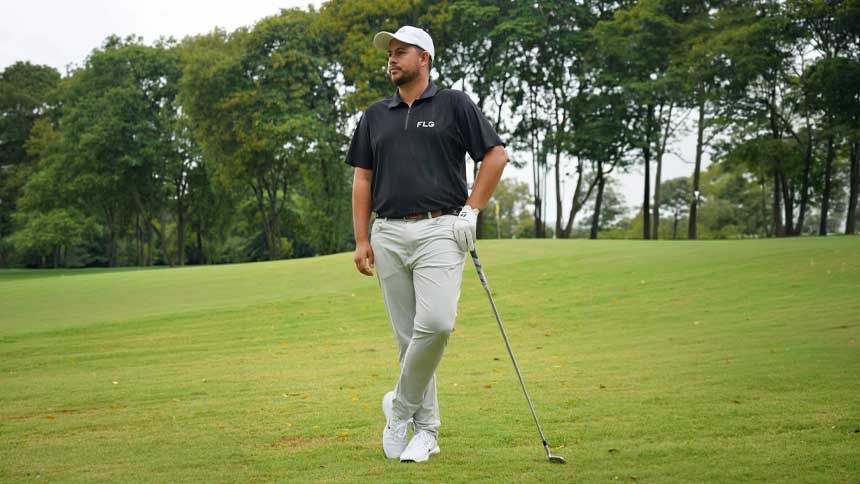
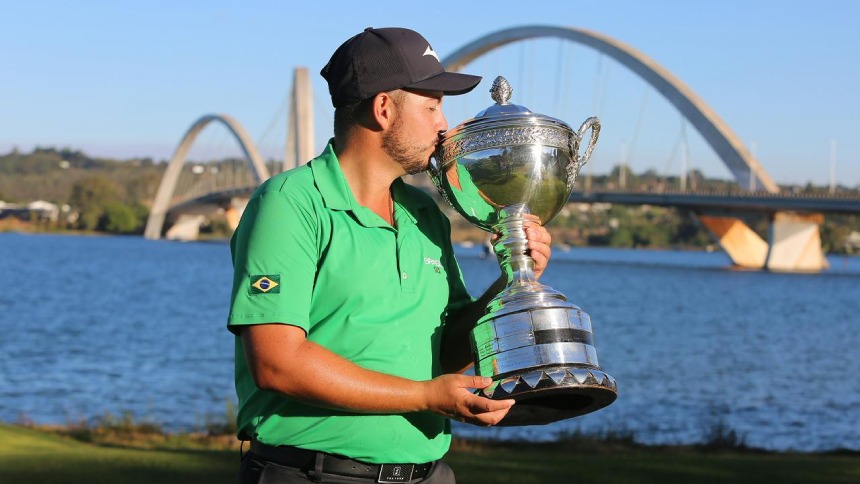
Andrey began training at the Belém Novo Golf Club, where he found a structure more geared towards high performance. It was during this phase that one of his greatest achievements in amateur golf emerged: the title of the Junior Orange Bowl in Miami, a prestigious international junior tournament, which he won at the age of 18.
Even so, his career didn't continue smoothly. During the pandemic, Andrey returned to the countryside and stopped playing again. He spent a year without competing. When he returned, he went straight to the Brazilian Amateur Championship, the main national tournament in the category, and won.
That result, in his words, served almost as a calling. After a long period of inactivity, winning the country's main amateur tournament proved that abandoning the sport made no sense.
"I said: there's something here that makes me not want to stop playing golf, because it's not normal for me to be idle and win the biggest tournament in Brazil," he states.
The victory reopened the path, but it still didn't solve the main problem: how to transform performance into a sustainable career. It was only later, already in Brasília, that this equation began to change.
The capital entered the story when Renato Silva, a professional who knew Andrey's potential, called him to gradually resume his career. He accepted the invitation, moved to Brasília with his wife and two daughters, and began training with a new routine. The return to the circuit was accompanied by results, until he regained the lead in the Brazilian amateur ranking.
Even so, turning professional was not yet an automatic consequence. In golf, becoming a professional means more than fulfilling a bureaucratic requirement. It requires a sporting resume, competitive experience, and, above all, the resources to cover the logistics of tournaments, travel, registrations, training, and adapting to a heavier and more expensive schedule.
Then Andrey started working with a Venezuelan coach , with whom he began to develop the idea that the amateur cycle was reaching its limit. The plan was to compete in the Latin America Amateur Championship, the LAC, one of the most important tournaments in Latin America, and after that, take the next step.
In the midst of this process, through the coach, he met Fernando, who was connected to FLG and would become his sponsor and manager.
Behind Andrey Xavier's debut on the professional circuit, FLG is making a move that goes beyond supporting a promising athlete. The creation of FLG Sports marks the group's formal entry into the sports world, aiming to extend a broader strategy of brand positioning, relationship building with key investors, and business generation. Using the sport, they are connecting with entrepreneurs, investors, and high-net-worth families—the golf audience and target of their funds and real estate projects.
“It’s a world of business without badges,” says Fernando Guimarães. “Playing golf with Andrey or attending his tournaments with us allows us to network with these investors, who not only generate funding for the funds but also originate deals.”
Founded by Fernando Guimarães, FLG built its trajectory in the real estate market and capital structuring. The company operates vertically integrated, encompassing land origination, development of logistics projects—including built-to-suit models—asset management, and portfolio recycling via the capital markets.
With consolidated revenue of R$ 78 million, the company wants to replicate this strategy in other sports linked to high-income niches, such as polo and tennis.
According to Guimarães, the initiative began as a positioning strategy, but it has already started attracting other brands interested in sponsoring Andrey and the project. For the athlete, this new phase also has another objective: to help make golf more well-known in Brazil: "My dream is to bring golf to more people in Brazil and make it a more popular sport."