



Little by little, Brazil is preparing to overcome an old paradox – that of beer . The third largest producer and consumer of the beverage on the planet, the country has never managed to cultivate, on a large scale, the fundamental ingredient for its production: hops . Only 1% of the plant used by national breweries grows on Brazilian soil.
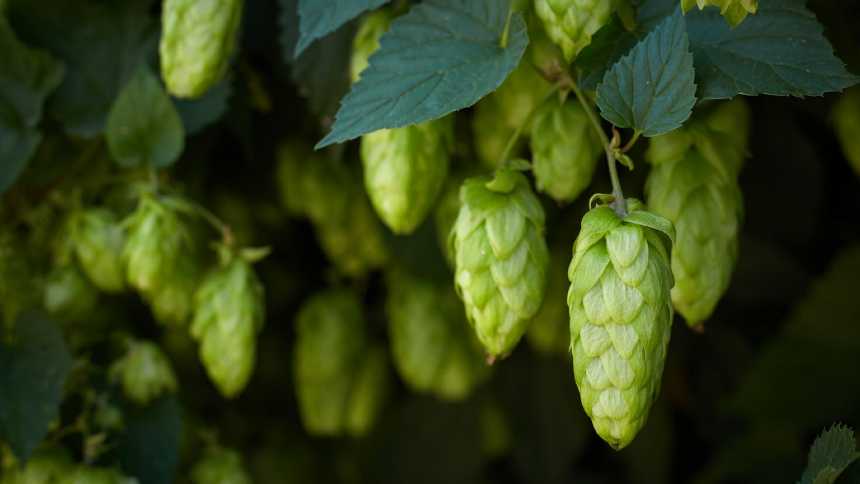
Native to temperate climates and high altitudes, this herbaceous plant is responsible for the bitterness that balances the sweetness of the malt, as well as imparting complex aromas and flavors—from floral and herbal notes to citrus and fruity ones. It also contributes to foam formation. And its antibacterial properties help preserve the beverage for longer. Without hops, beer would be a cloudy, sugary, and tasteless liquid.
Thanks to innovations in cultivation techniques, however, since 2018 the herbaceous plant has been undergoing a process of "tropicalization." And where hops previously did not thrive, today they grow robust and healthy.
Between 2021 and 2024, production jumped from 18 tons to 81.3 tons, according to a report by the Brazilian Association of Hop Producers (Aprolúpulo).
It's low compared to global averages, but significant for a country that, until recently, depended almost entirely on imports—primarily from Germany and the United States , which account for nearly 75% of the world's hop-growing area. But productivity here has grown by almost 90%.
“In a highly concentrated global market, the competition for quality is with giants who have been doing this for hundreds of years,” Daniel Leal, vice president of the association, tells NeoFeed . “To get there, we need more consistency and reliability in productivity. The challenge is great, but we are moving towards overcoming it.”
Brazil is entering a market valued at US$9.43 billion last year, according to a study by the consulting firm Fortune Business Insights. By 2025, it is expected to generate just over US$10 billion and, by 2034, close to US$18 billion.
For now, the main customers for domestically produced hops are craft breweries — small and medium-sized ones, as Teresa Yoshiko, founder of Viveiro Ninkasi in Rio de Janeiro, tells NeoFeed .
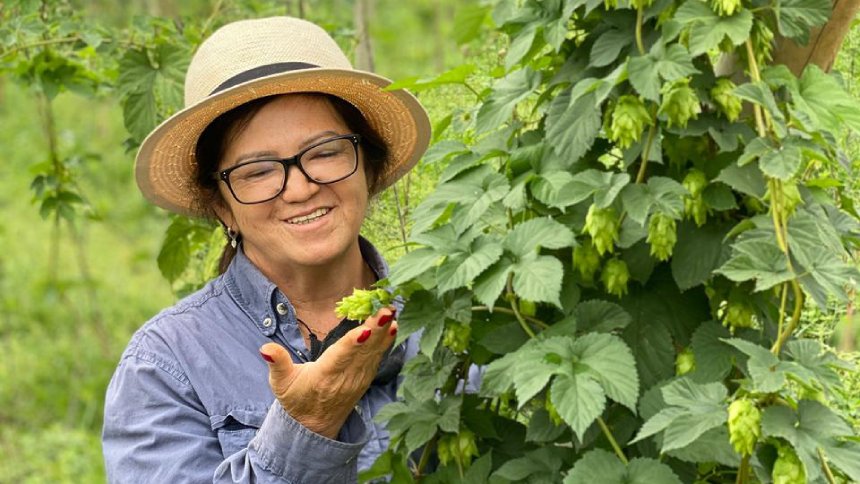
“In the field, the producer is already set. Now, the big bottleneck is in processing, which demands expensive equipment and mechanical work,” she says. “This is the moment for the sector to unite to create a single processing facility, through cooperatives, and effectively begin to grow.”
It's unanimous among industry players : in five years, Brazil will be self-sufficient in hops. Major brands like Ambev , Heineken , and Grupo Petrópolis will then produce 100% Brazilian beers. This would mean reaching a market value of at least US$64 million—equivalent to the annual amount imported today.
To achieve independence, the total cultivated area must reach 20,000 hectares, according to Yoshiko's calculations. An ambitious goal, considering that today hop plantations total just over 95 hectares.
“This [20,000 hectares] is nothing compared to the other crops we have here,” says the producer. “Today, it’s as if the hop market is a child learning to walk. To start running, it’s a small leap.”
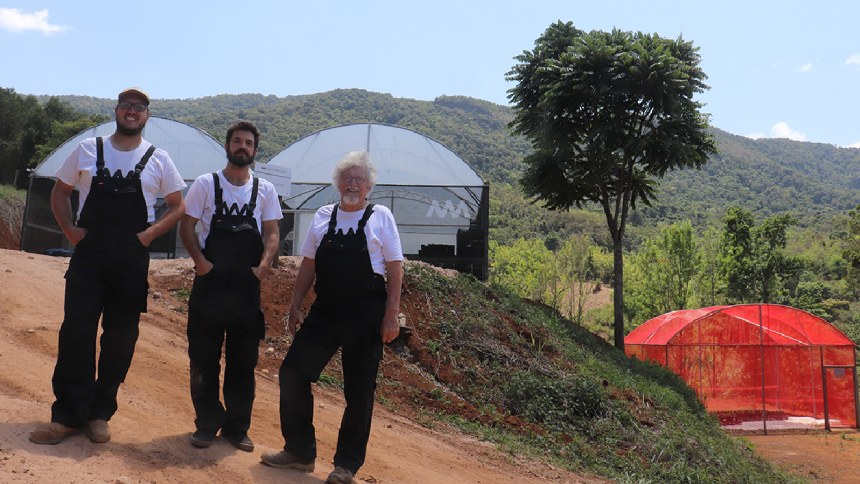
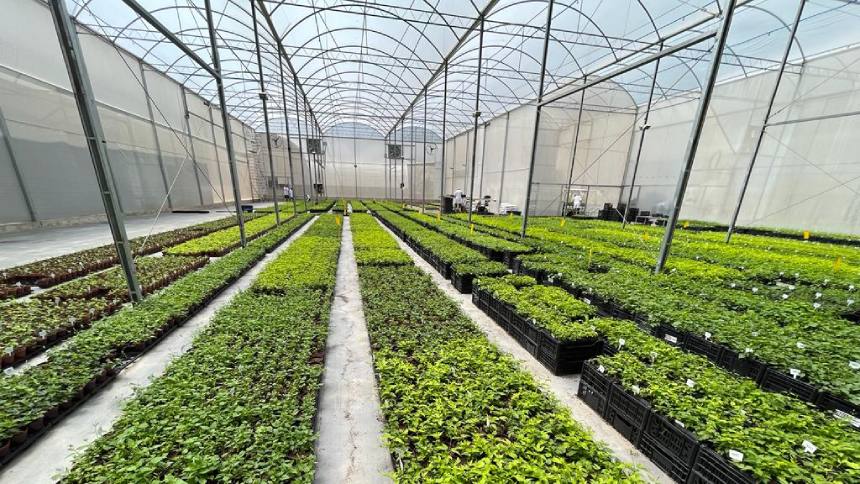
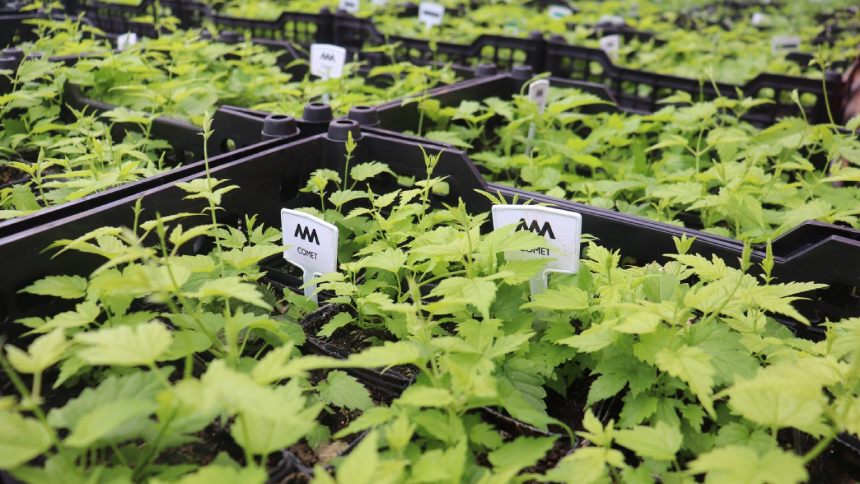
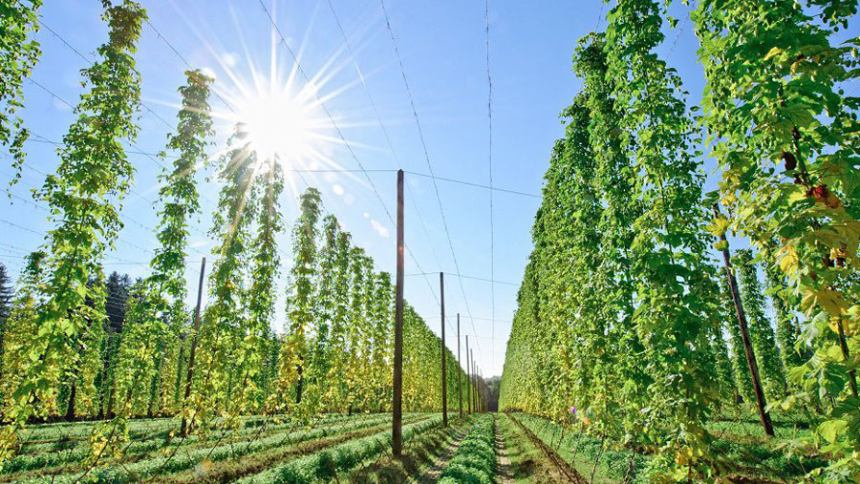
Felipe Wigman, partner at the Van de Bergen nursery in São Paulo, is also optimistic. “Brazil has the potential to become one of the world's major producers, following a trajectory similar to that of soybeans and eucalyptus—crops that were considered impossible here, but which, after being adapted to tropical conditions, transformed the country into one of the largest global producers,” says the businessman, in a conversation with NeoFeed .
As he explains, some small producers in the state are organizing to build an industrialization center, although the location is yet to be determined. Furthermore, a series of governmental initiatives, both federal and state, are seeking to strengthen production.
According to Wigman, in ten years Brazil has everything it needs to become a major exporting player. The benefits for the national brewing industry are immense — from price competitiveness and reduced instability from exchange rate fluctuations to proximity to the countryside, enabling the handling of fresher and therefore higher quality products.
Owner of the Itaipava brand, Grupo Petrópolis is one of the major players investing in Brazilian hops since 2018. The company used the herbaceous plant grown on its farm in Uberaba, Minas Gerais, in the special edition of Black Princess Braza Hops, produced between 2020 and 2022, says Leonardo Penna, Beer Innovation and Production specialist at the group, in an email interview with NeoFeed .
Transforming Brazil into a global hop producer is not an almost insurmountable challenge only thanks to the country's aptitude for agricultural innovation. The Serra da Mantiqueira region , for example, now produces award-winning winter wines abroad because of double pruning, a Brazilian invention.
Tricking the plant
Hops adapt to our climate and soil in a similar way. The plant needs at least 15 hours of sunlight per day. However, here, the length of the day varies little throughout the year, remaining close to 12 hours. This can bring forward flowering, which harms the quality of the harvest.
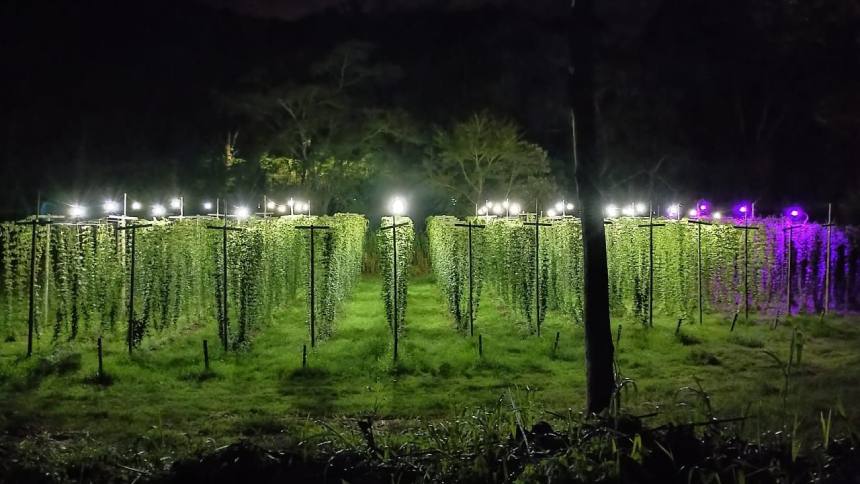
Brazilian producers, then, decided to "trick" the plant. "When the sun sets, we turn on the lights, artificially creating a 17-hour day. With the light, the plant grows without flowering," explains agronomist Felipe Francisco, owner of the consulting firm TechLúpulo, to NeoFeed . "When we turn off the lights, the hops flower intensely and evenly."
Since Brazil is a predominantly low-lying country and therefore has higher temperatures and less temperature variation, the solution has been adjusted agronomic management, such as partial shading, controlled irrigation, and protection against excessive heat.
“We tested several theories in a controlled environment, ranging from nutritional management to fertilizers and hop drying methodology, so that these discoveries can be safely taken to the producing regions of Brazil,” Gustavo Xavier, a researcher at Embrapa Agrobiologia in Rio de Janeiro, told NeoFeed .
With the adaptations, Brazil currently harvests up to three hop crops per year, while traditional producers in the Northern Hemisphere harvest only one.
Just as the sensory characteristics of wines are influenced by the terroir where the grapes are grown, the profile of beers is directly linked to the region where the hops are planted.
Since the identity of hops varies from place to place, hops grown in Santa Catarina will offer different experiences than hops harvested in Rio de Janeiro. In other words, there's a Brazilian hop variety for every taste – a major advantage of this market, which is still developing and seeking recognition.