

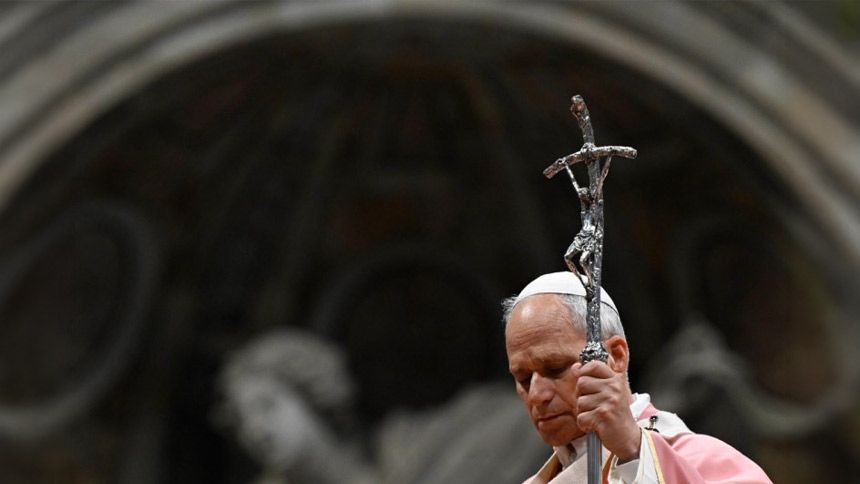
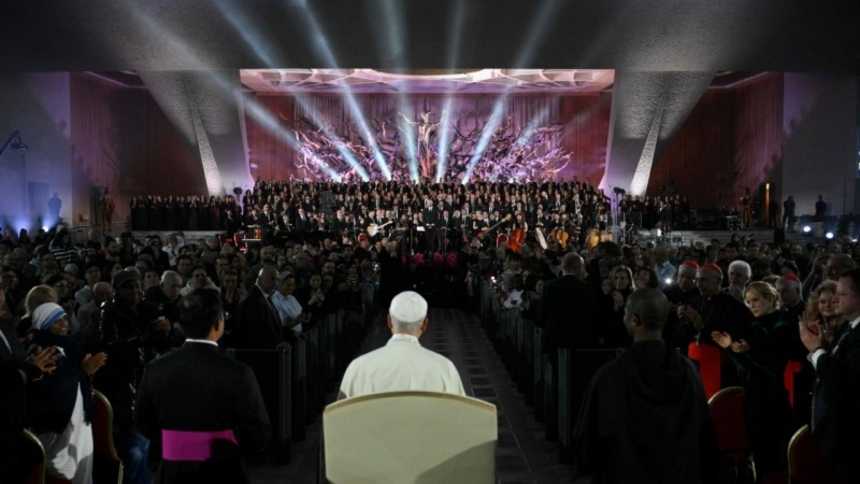
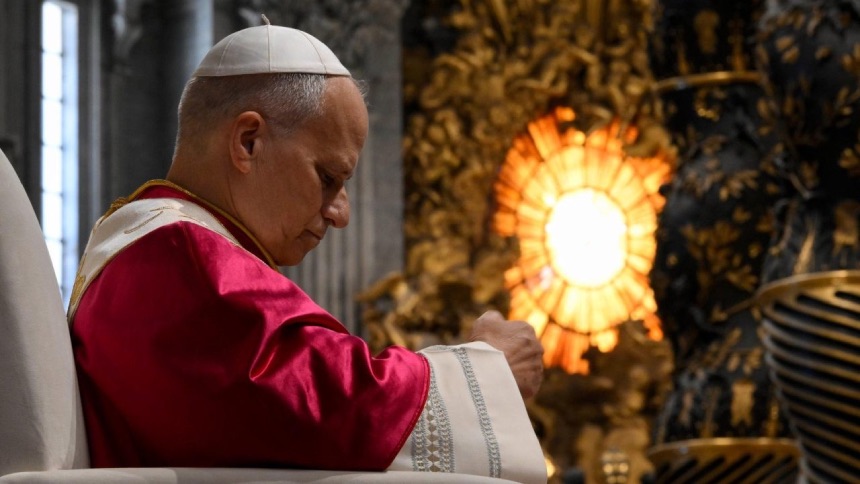
Rome — It was on April 11th, inside St. Peter's Basilica in Rome, that Pope Leo XIV delivered one of his most forceful speeches. During the Prayer Vigil for Peace, convened by the pontiff himself amidst the escalation of armed conflicts around the world, the Holy Father delivered a direct message.
Addressing the crowd gathered in the most symbolic temple of Catholicism, he was emphatic: “Enough with the idolatry of self and money! Enough with the ostentation of force! Enough with war! (...) The Church is a great people at the service of reconciliation and peace, which moves forward without hesitation, even when the rejection of the logic of war may cost misunderstanding and contempt.”
The Pope did not mention Donald Trump by name, but his remarks were interpreted as an indirect response to criticism from the White House following his stance on the military actions of the United States and Israel against Iran .
The reaction in Washington was immediate. The American president publicly attacked the pontiff, calling him "weak" and "disconnected from international political reality."
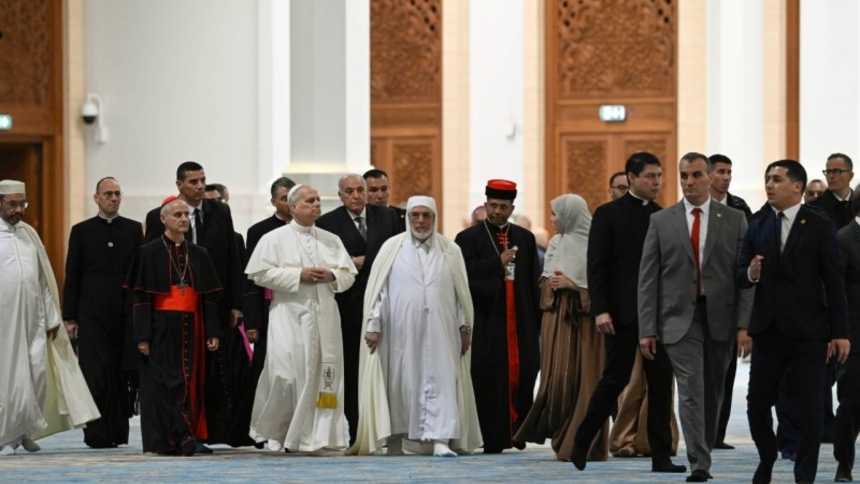
Hours later, already aboard the flight bound for Algeria, on an apostolic journey through four African countries, Leo XIV commented on the controversy with journalists:
“I am not afraid of the Trump administration. I speak of the Gospel, and therefore I will continue to speak out against war.” He added, “I have no intention of entering into a debate with him.”
This episode marks a turning point in this pontificate, which completes one year on May 8th. After a period in which he was described as a discreet figure with low media visibility, Leo XIV began to more frequently occupy the center of controversies, driven by the firmness of his positions and the growing impact of his statements.
With that, the idea that "the Pope is pop" began to make sense.
The transformation over the past year is evident. The conclave was marked by great unpredictability, surprising even analysts. Initially far from the lists of favorites and outside the central bets, the name of Cardinal Robert Francis Prevost reflected the search for a consensus profile amidst the internal divisions of the Church and the need to reposition the Vatican on the global stage. The fact that he was American was a disadvantage.
"Foot in the mud"
It is in this context that Vatican expert Filipe Domingues, director of the Lay Centre and professor at the Gregorian University in Rome, helps to interpret the moment. “The cardinals understood that Francis (1936-2025) was very charismatic, that, with his own style, he imposed himself on the very figure of the religious leader,” he tells NeoFeed . “The choice, then, should fall on someone more protocol-oriented, someone who would calm the waters he had stirred up.”
In this context, Prevost's biography gained strength, bringing together elements considered decisive in the selection process, such as extensive pastoral experience and work outside the Roman Curia.
Domingues defines the Petrine ministry as “a continuity in difference: a more participatory synodal Church, but, at this moment, with an emphasis on peace.” This is what led the Pope to become a global interlocutor: “He already has recognized moral authority, but it was the discussion at a rhetorical level that brought him to the center of attention. He, however, is not a politician. He preaches the Gospel.”
Being American, at this moment, is something that makes you an antagonist to the world's main crisis creator.
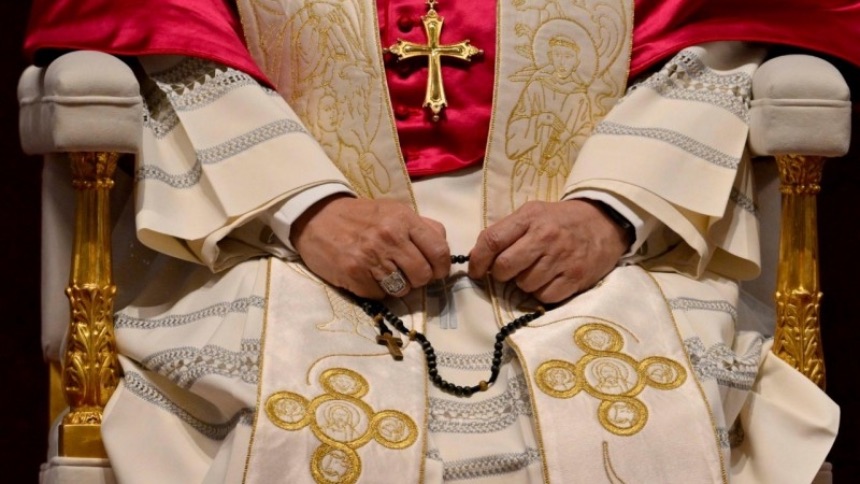
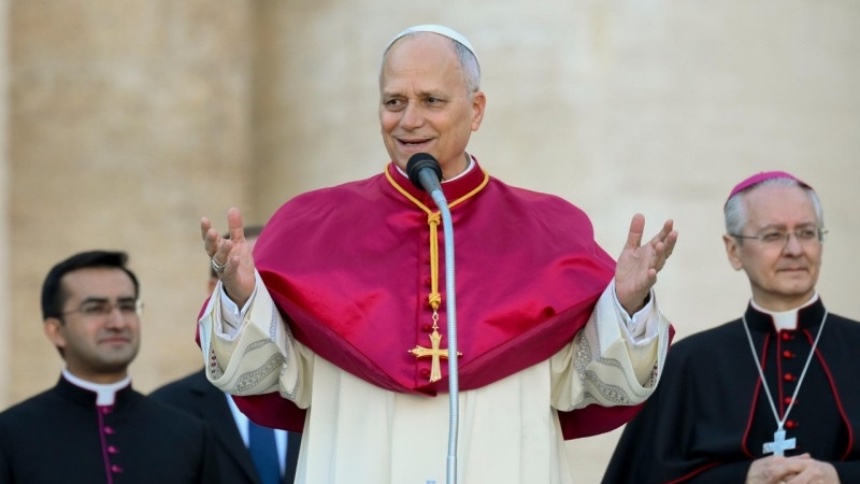
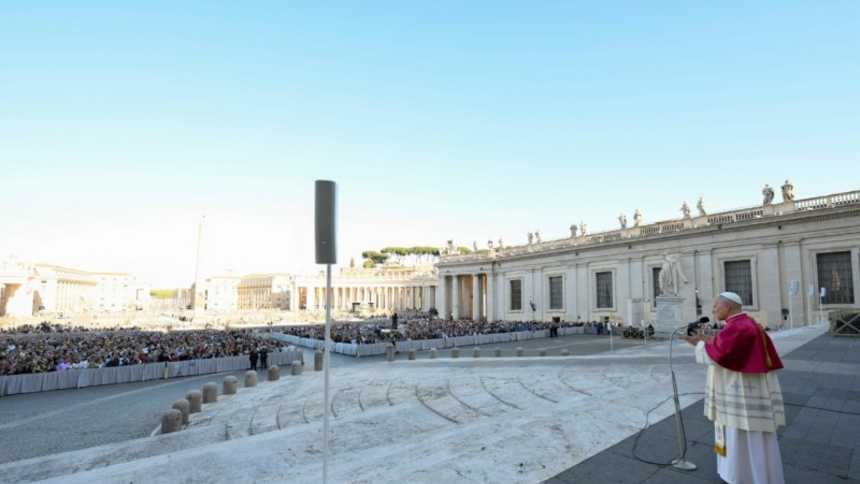
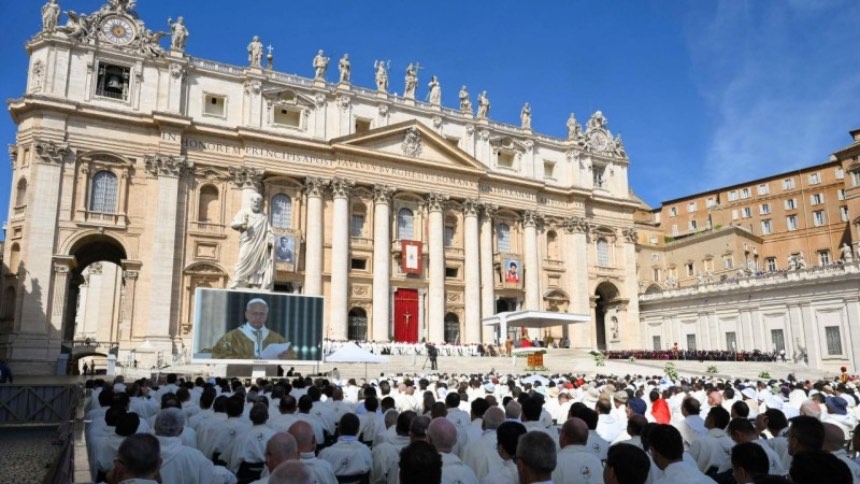
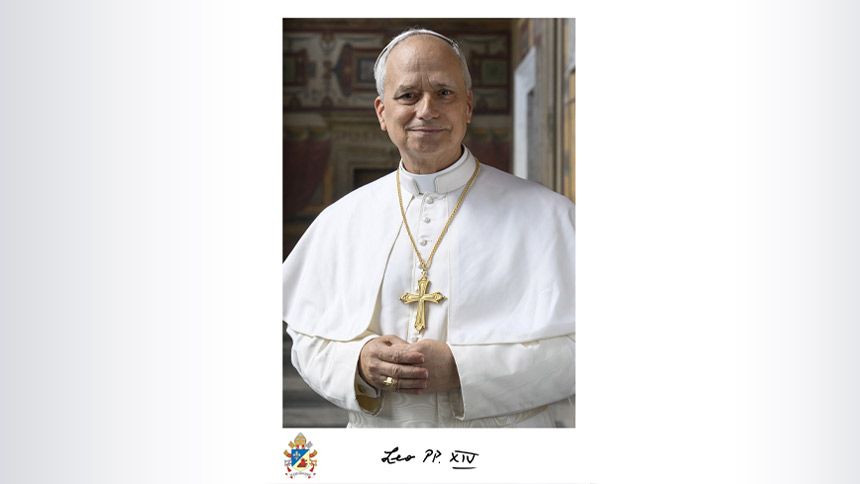
In recent books and analyses, Vatican experts portray Leo XIV as a discreet but strongly determined figure. In American Hope , CNN 's Rome correspondent Christopher Lamb defines him as "the most un-American of Americans," highlighting the image of "a lion who knows when to roar," guided by a long-term vision in the governance of the Church.
Journalist Elise Ann Allen, author of the biography Leo XIV: Citizen of the World, Missionary of the 21st Century , also reinforces this interpretation. She describes him as "confident and transparent" and notes that, from the beginning, he maintained a posture geared towards dialogue: "He is in no hurry."
Before being elected, Leo XIV spent about two decades in Peru , with a strong missionary presence, especially in the Chiclayo region, where he worked with communities in areas of social vulnerability. This period is remembered as the phase in which he "got his feet dirty"—an experience that helped shape his image as a practical pastor, not given to formalities.
The LGBTQIA+ community and victims of harassment
The pontiff assumed the post in the midst of a jubilee for the Catholic Church, a period of great symbolism and intense circulation of pilgrims in Rome, which immediately placed him at the center of the global religious agenda, including the canonization of Carlo Acutis (1991–2006) and Pier Giorgio Frassati (1901–1925).
Among his most high-profile moments was his participation in a Christmas concert dedicated to the poor, which brought together international music stars such as Michael Bublé.
Despite gestures of closeness towards vulnerable communities, sectors linked to the LGBTQIA+ community and more progressive groups are observing the moment with caution, pointing to the absence of more direct signs of institutional openness.
Another point of concern is listening to victims of sexual abuse in the Church. Although Leo XIV met with some of them and signaled a willingness to engage in dialogue, firmer measures and more severe punishments than those adopted so far are expected.
Within the Vatican, these interpretations are handled discreetly, in an effort to maintain a balance between doctrinal continuity and contemporary sensibilities.
Tennis and swimming pool
Behind the scenes, the picture is lighter and more unexpected. Leo XIV has moved into the Palazzo Apostolico, a historic complex next to St. Peter's Basilica and the administrative headquarters of the Holy See. The move came after structural renovations, and reports indicate that the Pope has adapted the space to a more functional routine, including the installation of simple exercise equipment.
In addition to the Vatican, he also goes to Castel Gandolfo on Tuesdays, on the outskirts of Rome, on the shores of Lake Albano, the traditional summer residence of the popes.
Leo XIV was disciplined with daily habits. He enjoyed tennis and, on one occasion, summed up his life there with the phrase: " Un po' di tennis, un po' di piscina " ("A little tennis , a little swimming"). He received a racket from the Italian champion Janik Sinner at his first public audience.
Between commitments and rest, she maintains an interest in technology, using the Duolingo app to practice languages. She has email and reads news articles at night before bed.
He wears a wristwatch and, in close circles, has reportedly mentioned with a certain nostalgia the fact that he can no longer drive.
This is a routine inevitably shaped by the demands of the job, which are widely documented on social media . Her audience comprises almost 80 million followers.
Even though he's reserved, it's a profile worthy of an influencer with a clear objective: a peace mission that should extend for several more decades.