


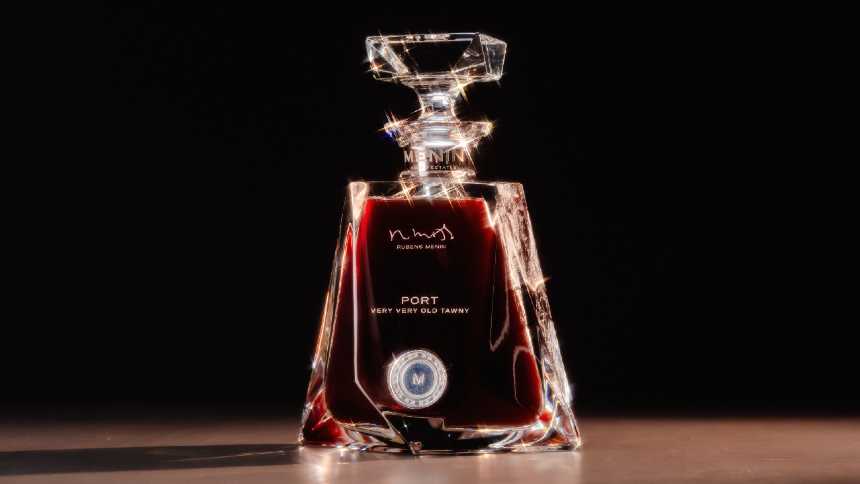
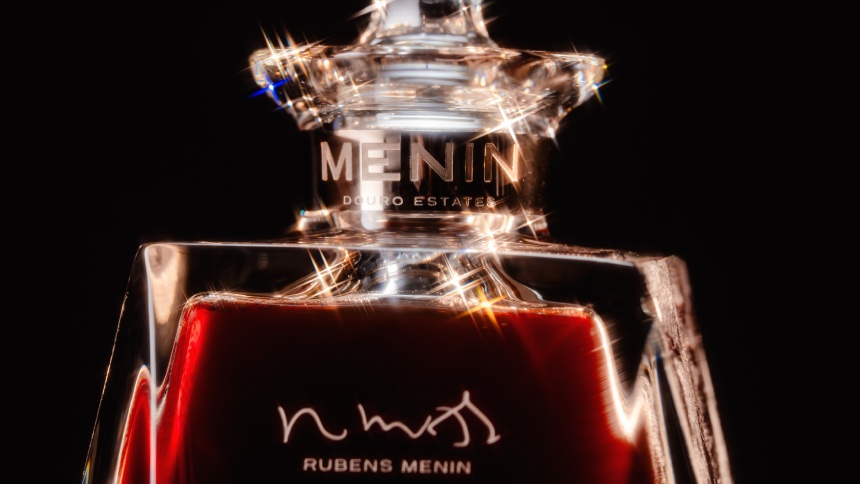
Brazilian businessman Rubens Menin took advantage of the week he turned 70 to launch a rare label. In a ceremony that brought together family and friends at one of his six estates on the banks of the Douro River in northern Portugal, he unveiled the result of five years of work by his winemakers: a "Very Very Old Tawny," a 150-year-old Port wine.
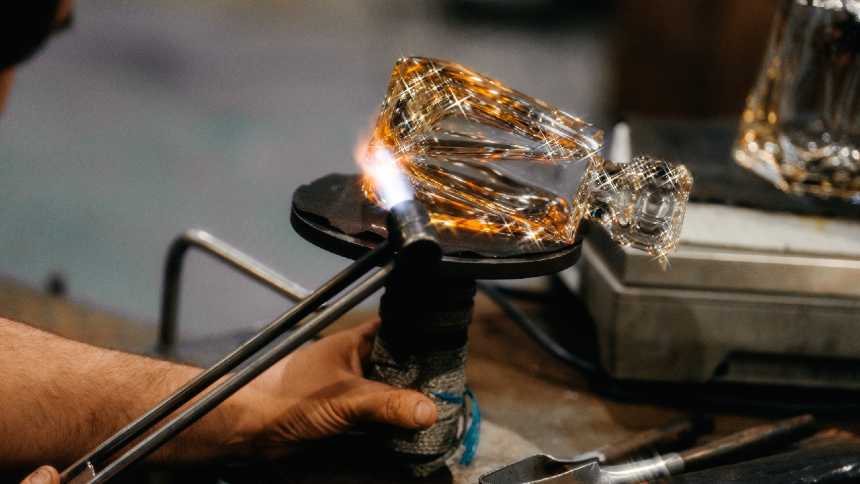
Production was limited to 200 luxurious beveled crystal bottles, each containing 500 ml. The label bears his name, a detail he was unaware of, and this was a surprise gift from his wife Beatriz, who was responsible for organizing the reception.
The celebration began with a blessing from a Catholic priest in the estate's chapel, followed by cocktails and dinner with live piano music, and concluded with ethereal violinists moving through the wine cellar amidst oak barrels, chandeliers, and crystal candelabras to present the new wine.
The bottle, which costs €10,000 in Portugal, does not yet have a scheduled arrival date in Brazil. But Menin, who considers the country his second largest market for wines, followed by Denmark and the United States, assures that he intends to change that soon.
“Brazil cannot be second. It needs to be first,” he said in an interview with NeoFeed , while tasting the HO Pontão Tinto (R$ 1,222), one of his top-of-the-line wines.
Currently, Menin Douro Estates has two brands: Menin, with five estates, and Horta Osório (HO), acquired in 2021, whose estate was completely renovated and for which new wines were created. Together, the two brands total 185 hectares of vineyards. Of these, 30 hectares are old vines, the most valued in the Douro.
The controlling shareholder of the construction company MRV, Banco Inter, Log Commercial Properties, and CNN Brasil, the businessman invested €65 million in land purchases, vineyards, the construction of wineries, and the restoration of nearly ruined buildings.
Menin wineries do not buy grapes; they use only their own. With these, HO makes 11 labels of table wines, and Menin makes 14. In addition, Menin produces 15 types of Port. This result is due to the work of consulting winemaker Tiago Alves de Souza, a star of the Douro region, and resident winemaker Manuel Saldanha.
The duo is responsible for the complex creation of the blend that gave rise to Rubens Menin — “Very Very Old Tawny”, 150 years old. To do this, they collected wines from various Douro wineries, which were tasted, identified and selected in a process they describe as “almost archaeological”.
“We gathered grapes planted in the 19th century, but it’s impossible to identify the number of grape varieties present,” says Tiago, who considers the result an “expression of the Douro’s heritage.” Before officially entering the market, the first bottles will be made available to collectors.
In the coming years, Menin plans to invest another €25 million in purchasing more vineyards, building another winery, and a hotel for wine tourism. "I'm happy with how things are going, and my expected return is 20% per year," he stated.
Portugal has 267 identified native grape varieties, with more than 100 of them found in the Douro region. To produce the wines for the two brands, 54 different types of grapes are used. The company's current production is 650,000 bottles per year, and Menin hopes to reach 1 million soon. To achieve this, it needs more vineyards.
His arrival in the world of wine, and more specifically in the Douro Valley, was unplanned. One winter afternoon, after Atlético Mineiro's defeat in Morocco in 2013, which led to the team's elimination from the Club World Cup, he went on a tour to Quinta do Crasto, in the Douro Valley.
"We were drowning our sorrows, drinking Vinha Maria Teresa, a red wine I love, when I thought: 'Wow, I want to own some land and make our own wine here.'"
This is how a personal project began, entirely funded with his own resources and unrelated to his companies.
No to fads
When discussing the quality of the wines he produces, Menin says his involvement is minimal, giving freedom and autonomy to his team of winemakers. Despite the decline in sales that Port wine has experienced worldwide in recent years, Menin's policy is to invest in high-end Port labels.
“Contrary to this trend, exceptional Ports are experiencing a growing market,” Tiago tells NeoFeed . Together with Manuel, in recent years he has produced ten Tawny Ports and ten white Ports: aged 10, 20, 30, 40, and 50 years.
In 2025, only 20 bottles of Menin's 80-year-old Port arrived in Brazil, most of which had already been sold for R$ 20,000.
Regarding other trends shaping the wine world, such as increased consumption of white wines and a preference for lower-alcohol labels, Tiago states that he prefers to follow the terroir and essential characteristics of the Douro region rather than follow fads:
"Fashions come and go, they are circumstantial. We cannot give up our identity because of them."
Before investing in the Douro Valley, Menin never even considered buying land in other regions of the world. In a way, this is because vineyards in Portugal are still very cheap compared to those in other demarcated areas, such as Barolo in Italy, Champagne, or Burgundy in France.
“The Douro region has enormous growth potential. I like to say it's a rough diamond that still needs polishing to become a brilliant one. My arrival here is driven by passion,” says the businessman.
His biggest fear, he says, was not being able to achieve a good quality/price ratio with his wines, which are indeed expensive and have a high value even in Portugal.
“Let’s take it easy and we’ll get there. Sometimes what we need is to moderate our animal instinct to do foolish things. Passion takes away a bit of our sense of reality. But the truth is that wine is giving me more joy than football,” he says, a fanatical supporter and owner of Atlético Mineiro since 2023.