

There is no doubt that Brazilian cinema is going through one of the most exuberant moments in its history. For two consecutive years, Ainda Estou Aqui (I'm Still Here) and O Agente Secreto (The Secret Agent) have placed the country at the center of the global conversation, winning awards at festivals such as Cannes , Venice, and Berlin, in addition to the Oscar for best international film for Walter Salles's feature.
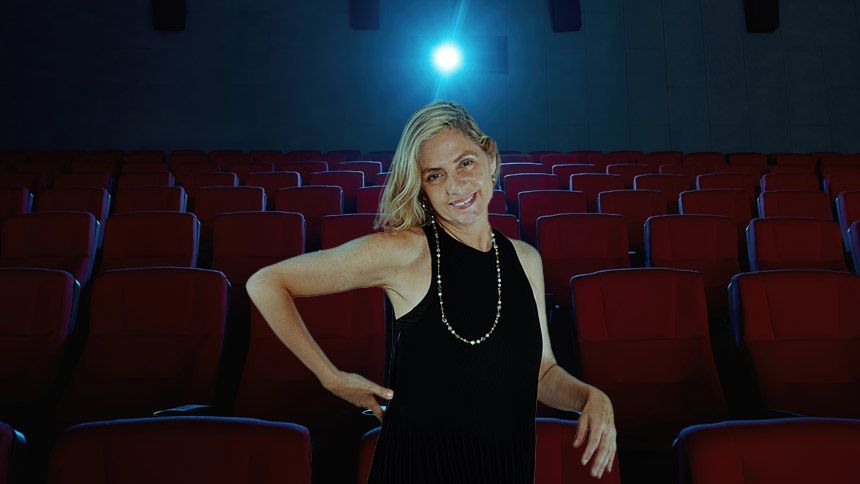
For Rio de Janeiro-based director, screenwriter, and producer Carla Camurati, these recognitions are indeed relevant, but they cannot become an automatic criterion for guiding national production. "Only diversity of content will make us grow," she says in an interview with NeoFeed .
“There is a repetition of the subject matter: violence is present in 70% of everything we have produced here. And that's very bad: the more violence you show, the more it multiplies and the more influence it has,” he adds.
Although to a lesser degree than in the past, themes such as dictatorship, police repression, and social tensions continue to serve as a kind of passport for Brazilian films to international audiences—a pattern that ultimately shapes both investor choices and viewer preferences.
“I think the Oscars are wonderful, but I’m very critical,” she says. “It’s an American award, made for Americans, which has only now begun to give space to international productions in categories like best actor, director, and film. It’s great to be there, but we need to value our space here in Brazil.”
The issue, according to the filmmaker, is one of preserving artistic freedom – which, with the entry of major studios into the game, could be compromised: “There is a disorganization in the focus on what is truly essential for national productions, and that is content.”
This dispersion is natural in an industry still evolving, but it shouldn't become a permanent characteristic. In her assessment, if cinema doesn't reinvent itself and broaden its themes, Brazil risks facing a hiatus, a depletion not only in its creative capacity but also in its relevance. "We are full of interesting young directors, we just need to open our minds," she says.
Camurati speaks with the authority of one of the central voices in the resurgence of Brazilian cinema in the mid-1990s, after the devastation left by the government of Fernando Collor de Mello.
Released in 1995, Carlota Joaquina, Princess of Brazil showed that it was possible to return to producing, distributing, and, above all, attracting audiences: around 1.5 million Brazilians went to the cinemas – a modest number compared to, for example, the more than 6 million for Ainda Estou Aqui , but significant for the time.

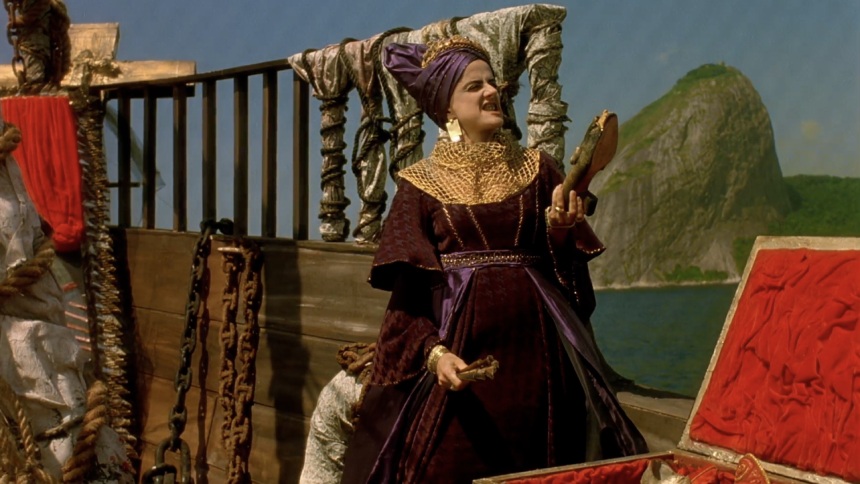
A blend of historical satire and biting humor, the film starring Marieta Severo circulated through 40 international festivals and helped put Brazil back on the map, paving the way for titles such as O Quatrilho , O Que É Isso, Companheiro? and Central do Brasil — and, later, for Cidade de Deus , culminating in its current success.
"Pay close attention to what is being said."
A little over three decades later, at age 65, the director is preparing to launch her seventh feature film on April 23rd in São Paulo — the documentary Roots of the Sacred Feminine , which took nine years to produce and investigates how the scriptures of the world's five major religions shaped (and still shape) the place of women in society.
The film spans centuries to reach the present day, revealing how narratives considered divine have been transformed into cultural, social, and political structures that legitimize silences, subjugation, and exclusion.
“What led me to make this film wasn’t my fascination with religions—which exists—but rather the femicides, which were already serious in 2017 and have only increased since then,” she says, reinforcing the distinction between religion and faith. “Being able to see things with a more critical, more contemporary eye doesn’t represent an attack on faith. And that’s what I tried to do.”
Camurati interviewed experts, researchers, and religious leaders, such as nun Cohen, rabbi Nilton Bonder, historian Mary Del Priore, and nun Ivone Gebara, among others. The director chose not to appear on screen, giving prominence to those who truly understand the subject.
“For me, the tricky part of this film was actually putting together this puzzle without a direct interlocutor, just with a few narrations that connect the characters,” he explains. “What I really want is for everyone to pay attention to what is being said.”
The filmmaker's career began in front of the cameras. For a long time, she was an award-winning actress in film and television. Her directorial debut was in 1987 with the short film *A mulher fatal encontra o homem ideal* (The Fatal Woman Meets the Ideal Man ). Six years later, she founded the production company Copacabana and, since then, has never returned to the spotlight. Outside of film, Camurati also dedicates herself to directing operas, another of her passions.