

Michael Lewis needed just over 300 pages to tell the story of how the financial collapse of September 2008 came about in a book that became a classic in the financial world of the 2000s. The Big Short , from 2011, which became an award-winning film ( The Big Short received five Oscar nominations in 2016), has since disappeared from Brazilian bookstores and is now sought after in used bookstores.
The book finally returns in Portuguese this month with a new feature: a previously unpublished afterword by the author about itsfilm adaptation. Its acclaim with both the public and critics is due to the way Lewis dissects what happened in the preceding years, leading up to that month and highlighting who benefited from the crisis.
The journalist translates the economic catastrophe that has become global into an accessible narrative, even when he has to explain complex financial concepts. In doing so, he brings to the general public a deeper understanding of the causes and flaws in the system that led to the crisis, something that other technical or academic books have not yet managed to do well, more than a decade and a half later.
The genesis of it all, Lewis explains, began after years of chaotic growth and when the greed of banks caused the American real estate market to reach its limit, culminating in one of the biggest bankruptcies ever seen in the market. Their trading practices, he writes, went beyond simple financial transactions: they were the result of the investors' unbridled ambition.
It was in this context that a group of independent investors identified the problem that Wall Street ignored—that the collapse was inevitable—saw this as a way to profit greatly, and made billions of dollars.
What did the real estate market have to do with what happened? In a scenario of fluctuating stocks , ratings from risk agencies, and weak government oversight bodies, debt securities and real estate derivatives were backed by subprime mortgages, mostly granted to borrowers with low repayment capacity, although they also reached segments of the middle class.
Subprime mortgages, therefore, functioned as a kind of mask to hide the true value of debts and served as the basis for the artificial expansion of credit promoted by the financial system, which would hardly be sustainable. In this way, operators were able to conduct deals that yielded millions of dollars overnight, a practice that would generate one of the biggest financial crises in history.
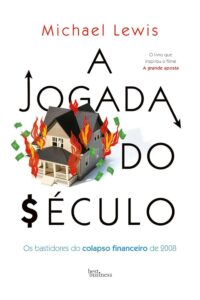
Despite Wall Street traders confidently repeating the fallacy that investments would hold firm even after signs of collapse, one group was not fooled, bet against the world's largest banks, and won – hence the book's title, The Big Short (published by Best Business). The key players involved are interviewed by Lewis and shed light on the plot that changed the mechanisms of the financial market and the global economy.
As the author defines them, they were eccentric investors who were closely linked to subprime mortgages, such as Michael Burry , Steve Eisman, Greg Lippmann, Charlie Ledley, and John Paulson. And names linked to financial institutions that played a central role in the crisis, such as Lehman Brothers, Citigroup, AIG (American International Group), and Household Finance, then a subsidiary of HSBC.
These characters are important because, together, they allowed Lewis to explain 2008 from distinct human perspectives: the solitary genius, the indignant critic, the curious novices, and the experienced cynic.
The main character in the book is Michael Burry, a neurologist who managed the Scion Capital fund. He became one of the first to realize that the American real estate market was inflated and that subprime mortgage-backed securities were unsustainable. He bet heavily against these securities using credit swaps, even in the face of strong resistance from investors and banks. In the book, Burry symbolizes the solitary, meticulous, and data-obsessed investor who saw the crisis before almost everyone else.
The standout name in the story was Steve Eisman, a fund manager inspired by a real person (Steve Eisman of FrontPoint Partners), portrayed as someone morally outraged by Wall Street. For him, the financial system is structurally corrupt, not just flawed, and he bet against the market driven by both financial conviction and ethical revolt.
While it represents the most explicit critique of the irresponsibility and greed of financial institutions, Charlie Geller and Jamie Shipley, two young investors, discovered, almost by chance, the possibility of betting against the housing market. Despite their inexperience, they perceived the fragility of subprime mortgages and devised a bold strategy, although they depended on the help of more experienced professionals to operate in the market.
Ben Hockett's name appeared in the book as the eccentric trader who worked with Geller and Shipley. He acted as a bridge between young investors and the more sophisticated financial market. Skeptical, reclusive, and critical of the system, he helped structure bets against the banks and demonstrated in his worldview a profound disdain for Wall Street culture. In doing so, he reinforced the moral and psychological tone of the narrative.
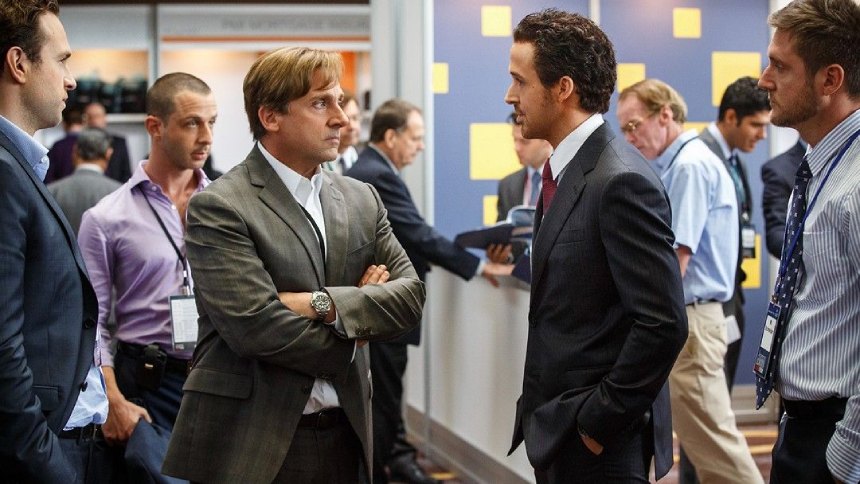
In the afterword, Michael Lewis states that he never envisioned *The Big Short* as a book suitable for film adaptation – in Brazil, the film was titled *The Great Short*. His goal was to narrate the 2008 financial crisis through eccentric characters who bet against the system, not to make technical themes, such as credit swaps and CDOs, appealing to cinema. Skeptical of Hollywood, he wrote, he believed that studios bought book rights more for speculation than for a real intention to film them.
What makes the making of the film even more surprising, he continues, is that it deals with Wall Street. Lewis argues that adaptations only happen when there is a "favorable accident," such as the interest of director Adam McKay, who managed to make the project viable. And he argues that writers should accept the changes inherent in the sale of rights and not interfere in the process, since there is no direct relationship between the quality of the book and that of the film.
Finally, he praises McKay for making complex financial topics understandable to the general public and for bringing the audience closer to a critical debate about finance and accountability on Wall Street.