

On June 21, the gardens of Lichtenberg Castle, a 13th-century fortress near the city of Kusel in southwestern Germany, will serve as the stage for a historic milestone in classical music.
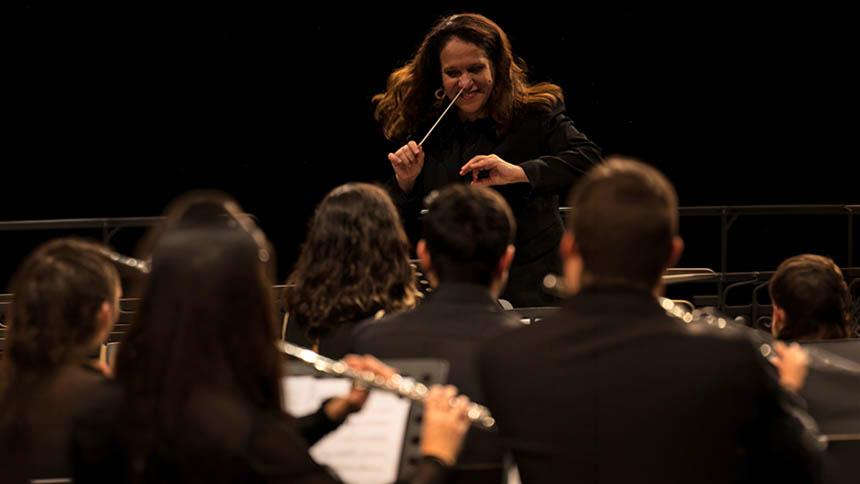
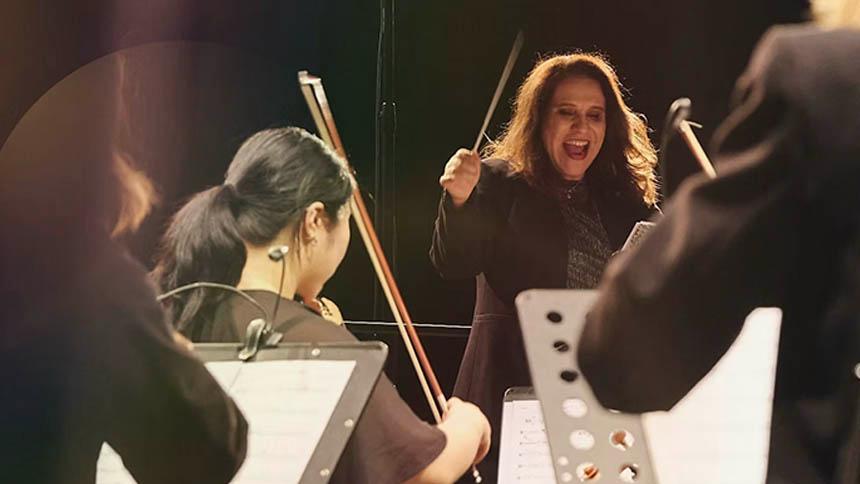
Under the open skies of the Musikantenland region, the "Land of Musicians," Rio de Janeiro-born conductor Andréa Huguenin Botelho will take to the podium to conduct the renowned Westpfälzisches Sinfonieorchester (WSO). For the first time in 130 years, the orchestra has a woman as its principal conductor.
The concert was conceived by her almost as a declaration of principles - a synthesis of her nearly three decades-long career not only as a conductor, but also as a pianist, composer, and researcher.
At 52, Botelho establishes cultural dialogues and intertwines traditions. One of the most influential voices in rescuing historically invisible female composers, she makes classical music a space for inclusion and innovation.
For her debut performance as head of the WSO, she goes beyond the established repertoire. There will be works by Béla Bartók and Georges Bizet, and to open the outdoor show, a fanfare by Aaron Copland.
But then, pieces from the region composed by the Wandermusikanten — the “wandering musicians” who, between the 19th century and the First World War, left the hills of the area and took their sounds to the four corners of the planet, including Brazil. In homage to them, Botelho composed a symphonic poem, inspired by ancestral melodies and the image of local birds.
The musicians of the WSO were moved. “One of the violinists, visibly emotional, told me that one of the chosen pieces had been composed by her great-great-grandfather,” recalls Botelho, in a conversation with NeoFeed . By dusting off the old compositions, the conductor affirms one of her purposes in the Kusel orchestra: to recover the identity of the “wandering musicians” for the world.
The selection also includes pieces by two female composers who, despite their talent, have been silenced by history: the German Emilie Mayer (1812-1883) and the American Florence Price (1887-1953).
To close the show, in a gesture of reverence to Brazil, Pixinguinha. The conductor made a symphonic arrangement for the choro Vou andando . "There's no one who doesn't smile when they hear this music," she comments.
Plucking at silences
Daughter of a doctor father and a teacher mother, raised in the Méier suburb, Botelho did not grow up in a musical environment. When she was five or six years old, while changing television channels, her attention was suddenly captured by a piano concerto. "I felt transported," she recalls.
The girl ran to her mother: “I want to do that.” However, the family wouldn't buy her the instrument; the “piece of furniture” was too expensive. So she built her own—out of paper—and went around strumming silences on an imaginary keyboard. “From that moment on, I never stopped pursuing this path,” she says.
At age 12, Botelho began studying at the School of Music of the Federal University of Rio de Janeiro (UFRJ). And, at 14, she discovered the grandeur and depth of Gustav Mahler: “It was my second spiritual calling. I became obsessed.”
The symphony, the Austrian composer said at the beginning of the 20th century, should be like the world; it should encompass everything. And Botelho decided to embrace that world. She would be a pianist, composer, and conductor.
Based on sociocultural prejudices and pseudoscientific precepts, many, including some professors, tried to dissuade her from the idea.
Over the centuries, the idea that women lacked the "natural authority" to conduct an orchestra, as well as the physical and emotional stamina to conduct monumental pieces like Mahler's symphonies, became entrenched. Furthermore, it was believed that gesticulating energetically was considered inelegant and unfeminine.
Botelho, however, persevered. Starting in 1998, she went to Germany, the United States, and Russia to study orchestral and operatic conducting. "Those were very difficult times, as there was a lack of female role models," she says.
She considered giving up. But she decided against giving up when she attended a concert by the National Symphony Orchestra of the Federal Fluminense University, conducted by Ligia Amadio, from São Paulo, one of the most respected conductors of our time.
"When I saw that incredible woman, in a stunning green dress, entering majestically to conduct Beethoven's 7th Symphony, I thought: 'If she can do it, so can I.' And Botelho did it."
"You rule like a man!"
One of her teachers, the Finnish conductor Jorma Panula, a legend in conducting instruction, was amazed by the way the Rio native conducted the orchestra: "You conduct very well: you conduct like a man!"
What he considered a compliment actually reflected the prevailing archaic mentality. Are artistic competence and excellence exclusively male attributes?
Few fields, like classical music, reveal the echoes of patriarchy with such clarity. The Berlin Philharmonic, for example, only admitted a woman as a full member in 1982. The Vienna Philharmonic, in 1997. Female presence has grown in recent years, but inequalities remain abysmal.
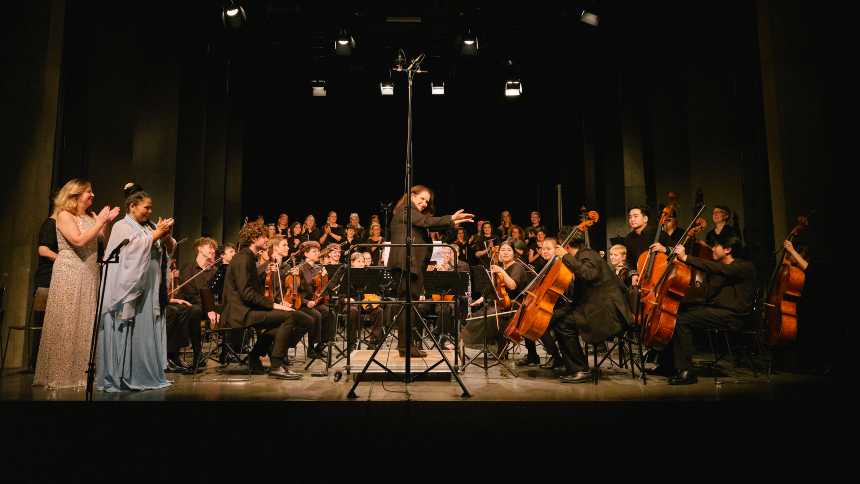
The shift began to take shape in the 1970s, with the second wave of the feminist movement. At that time, blind auditions were adopted—a strategy that remains common to this day. In addition to the screen, some philharmonic orchestras, like the New York Philharmonic, cover the stage with carpet so that the sound of shoes, especially high heels, does not reveal the candidate's gender.
Globally, women now make up, on average, 45% of the staff of major orchestras. In the fields of composition and conducting, there is also progress—albeit slower.
The number of works composed by women programmed in the seasons of major theaters is only around 10%. Recent surveys by entities such as the Bachtrack platform and the NGO Women's Philharmonic Advocacy indicate that, among the one hundred conductors with the most contracts in the world, only 13 are women.
There are more female engineers (17%) than female conductors on the planet. More female doctors (almost 50%) and more female lawyers (47%).
Listening and looking
For Botelho, the baton is just one of the tools for transformation. The other is documentary research. Recently, she was elected to the board of directors of the Archiv Frau und Musik (“Women and Music Archive”). Founded in 1979 and based in Frankfurt, the center is a world reference in the cataloging and dissemination of female compositions.
“My mission is to give visibility to Ibero-American women authors,” she explains. This includes authors from the past, such as Joanídia Sodré from Rio Grande do Sul and Teresa Carreño from Venezuela; as well as those from the present, such as Luísa Mitre from Minas Gerais and Yudania Gómez Heredia from Cuba.
Throughout her career, Botelho has proven tireless. She is also the creator of the Komponistin! ("Composer!") program, a series of concerts in Berlin focused on performing pieces composed by women from different periods.
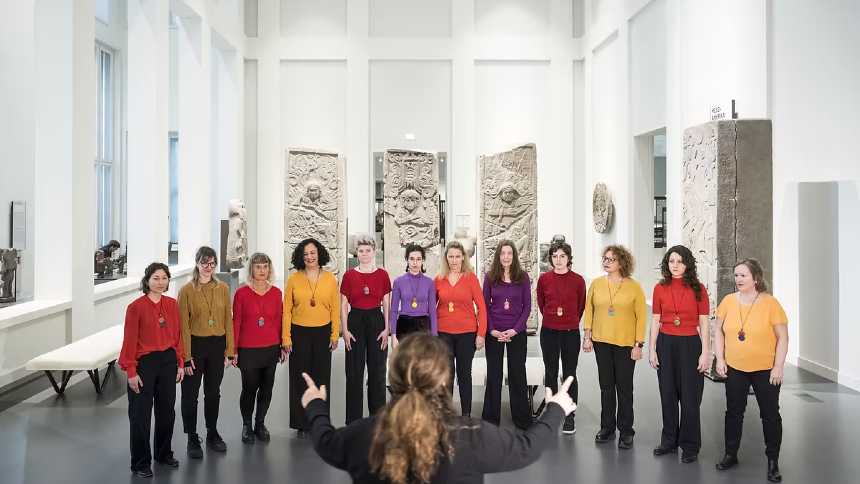
One of her most intriguing projects is the Ayabás Chor Berlin, an all-female choir dedicated to works in indigenous and African languages—a repertoire that consumed 15 years of research. "It's where feminism meets decolonialism," the conductor explains.
The choir is one of the pillars of the Brazilian Music initiative, launched in 2016 with investments from the German government. Its most recent achievement, the Brasil Orchester Berlin, from 2025, is the only symphony orchestra in Europe dedicated to Brazilian music, with instrumentalists from a dozen nationalities.
By bringing women, indigenous people, Black people, and Latinos to center stage, Botelho aligns himself with the growing movement in music that questions European centrality and seeks to dismantle the hierarchies of power, knowledge, and being inherited from the colonial period.
Botelho competed for the WSO position against seven other candidates. In Germany, the final decision on the conductor rests with the orchestra itself. And, by conducting a section of Felix Mendelssohn's The Hebrides , she was approved by a large majority—she received only two dissenting votes.
“These two people are afraid that I’ll bring too many works by women into the repertoire,” she says, amused. “I didn’t even want to know who they were, because I’ll recognize them by their eyes.”
It shouldn't be difficult for someone who, for 30 years, has been breaking down barriers, broadening listening—and perspectives. For herself and her contemporaries. For those who came before. And for those who are yet to come.