

With its so-called banking as a service – offering the infrastructure behind the financial products and services of fintechs and companies from different sectors – QI Tech has attracted investors such as General Atlantic and the Singapore Sovereign Wealth Fund (GIC). And it has achieved a valuation of over US$2 billion.
Now, the fintech company is taking this concept to another level – also a billion-dollar one – by launching a payroll-deducted credit card as a service. Under the white-label concept, this innovation will allow the company's approximately 700 clients to offer the product under their own brands to retirees and pensioners of the INSS (Brazilian National Social Security Institute).
“It’s our way of democratizing access to credit,” says Pedro Mac Dowell , founder and CEO of QI Tech, to NeoFeed . “This is a product that, today, nobody offers in the ‘as a service’ concept. What exists are some incumbent and niche banks offering these cards, but under their own brand.”
Currently, Caixa, Santander, Banco Pan, Daycoval, and BMG are some of the institutions investing in credit cards with their "brands" aimed at this audience.
“We estimate that, today, the monthly addressable market for INSS (Brazilian National Social Security Institute) payroll-deducted credit cards is around R$ 500 million,” says Mac Dowell. “And we believe there is room to take that figure to approximately R$ 2 billion. This is the market we are going to stimulate and that we are creating.”
Even with a decrease in the volume granted in 2025, the amounts moved in the personal credit segment for INSS beneficiaries as a whole, considering loans and credit cards - a much smaller portion in this calculation - are already substantial.
This type of loan generated a total of R$ 70.6 billion last year, a 31.5% decrease compared to 2024, largely due to security measures implemented to combat fraud and irregularities.
Despite the contraction, this segment, which had an accumulated balance of operations of R$ 278.7 billion in December, remained one of the leading sectors. In total, considering all modalities, R$ 220.2 billion in private payroll-deducted personal loans were granted in 2025.
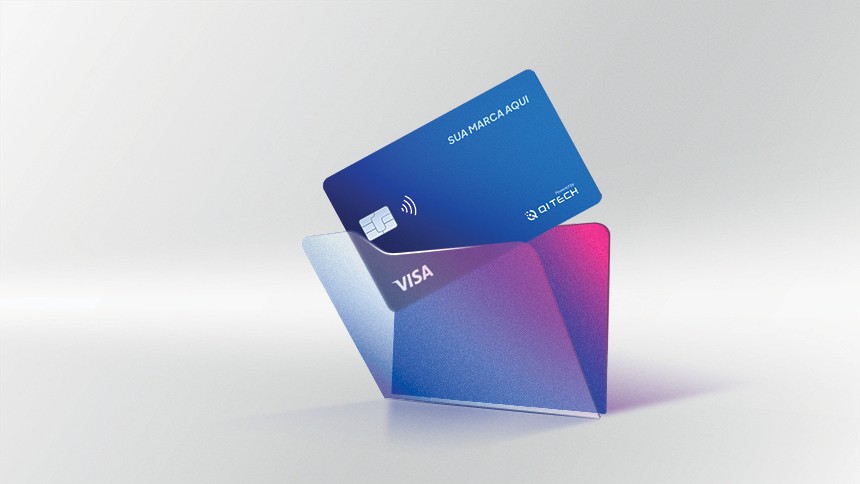
To add new digits, even indirectly, to that account, QI Tech is launching two cards under the Visa brand. The first is a traditional payroll-deducted credit card, and the second is a benefits card that includes life insurance, pharmacy discounts, and funeral assistance.
“With each card, the customer can use up to 5% of their retirement income to pay the bills,” says Roberto Amaral, partner and head of the lending as a service vertical at QI Tech. “And the limit on these cards is up to 1.6 times the value of the retiree's benefit, who, in turn, can withdraw up to 70% of that amount.”
QI Tech is responsible for all the processes behind this offering – from issuing the cards to credit engines and anti-fraud solutions. This package even includes the possibility of structuring and managing FIDCs (Investment Funds in Credit Rights) to finance these operations.
“We also provide this infrastructure for the FIDCs so that they can not only deposit the funds that will be used in the credit lines,” says Mac Dowell, “but also handle the collection and receipt of the installments that will be paid on this card.”
Currently, QI Tech manages approximately 1,000 FIDCs (Investment Funds in Credit Rights), which in turn result in more than R$ 164 billion in assets under its custody and administration.
Mac Dowell and Amaral highlight that, in this equation, QI Tech's clients gain access to a low-risk default model with high predictability of payment, based on direct deduction from their benefits. Meanwhile, INSS beneficiaries gain another credit option.
In this last aspect, the calculation made by QI Tech includes the 5% margin of the user's benefit on each card offered by the fintech, in addition to the percentage of up to 35% of their retirement income that they can commit to paying installments on conventional payroll loans.
“At the end of the day, we will be able to navigate through the three possible INSS products,” says Amaral. This statement refers to the fact that, since mid-2024, QI Tech has already been working with the infrastructure for payroll loans linked to INSS benefits and pensions.
Product with credit
Considering all modalities, QI Tech says it currently processes between R$7 billion and R$8 billion in loans granted monthly through its clients. By 2025, the fintech company recorded a total loan volume of over R$57 billion.
Regarding personal loans linked to the INSS (Brazilian National Social Security Institute), the monthly volume is around R$ 1.4 billion, with approximately 150,000 transactions. By 2025, more than R$ 12 billion had been originated in this area.
According to the company, the average loan amount for these payroll-deducted loans for INSS beneficiaries can be about 14 times higher than a clean personal loan – without payroll deduction or collateral.
In the quest to expand these numbers, from planning to execution, the new credit card offering began development in September 2025. The first production tests, in turn, were conducted internally at the turn of the year with a partner in the operation.
With these numbers in mind, from planning to execution, the new offering began development in September 2025. The first production tests, in turn, were conducted internally at the turn of the year with a customer base, including a partner in the operation, whose name was not revealed.
Now, QI Tech is extending the card to its entire customer base – currently, the company serves clients such as Vivo, 99, Wellhub, and Stellantis. Given the complexity of the product, the idea is to scale the offering gradually.
“This is a more selective sale, so that the cardholder can understand what the product is and how it works,” says Amaral. “So, we will release it to a pool of clients and then expand it to the entire customer base.”
In this first phase, Qualiconsig, a manager of payroll loans, loans, and refinancing, is one of the names leading the way, along with 15 other companies already on the waiting list for the product. In parallel, QI Tech is already preparing to expand this offering to other audiences.
“We are going to expand the benefits card to states and municipalities,” says Amaral. “We are already in the process of accreditation in some markets, and the next state where we should operate this product is São Paulo, still this year.”