


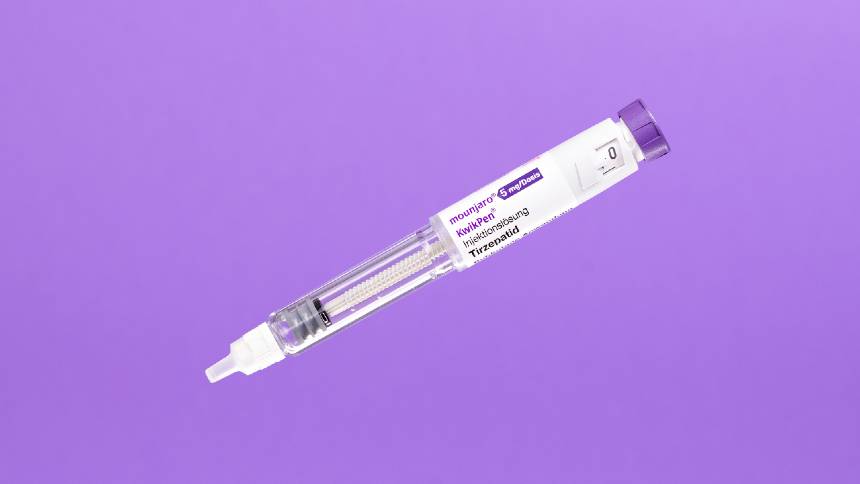
Brasilia and São Paulo - With the exclusive patent rights for semaglutide , the active ingredient in the Ozempic slimming pen produced by the Danish company Novo Nordisk, about to expire in Brazil, a bill currently being processed in the Chamber of Deputies aims to "take a swipe" at the American company Eli Lilly, owner of Mounjaro.
The bill proposed by federal deputy Mario Heringer (PDT-MG) aims to unilaterally terminate the patent for tirzepatide, the active ingredient in Mounjaro, which expires only in 2032. The proposal, which had its expedited processing approved by federal deputies, has received criticism from industry associations and the pharmaceutical company itself, who point to risks to legal certainty in the country and potential impacts on future investments.
“Lilly opposes the proposal that seeks to remove legitimate intellectual property rights. The measure violates technical standards, undermines legal certainty, and threatens the innovation that is responsible for bringing cutting-edge medicines to patients,” the company said in a statement sent to NeoFeed .
According to the pharmaceutical company, in 2025 alone, R$ 760 million was invested in clinical research in Brazil, currently one of the company's five largest operations worldwide. A possible advancement of the project could even lead to a revision of these figures.
“The weakening of intellectual property protections will make Brazil less attractive for future investments in innovation and will delay patients' access to life-saving therapies,” adds Eli Lilly. Mounjaro began being sold in Brazil in May 2025, after approval by Anvisa (the Brazilian health regulatory agency).
Federal deputy Mario Heringer, who is an orthopedic doctor and a user of Mounjaro, claims that there is no self-interest in the proposal nor any intention to harm the pharmaceutical industry.
“I have no doubt that there is public interest [in breaking these patents]. And I also don't believe that this will be the end of Eli Lilly and large companies. They continue to have a lot of money. I want to acknowledge the merit of the laboratories in research, but in my mind the good of humanity comes first,” Heringer tells NeoFeed .
The congressman's proposal also includes Zepbound, another slimming pen produced by Eli Lilly, but which doesn't even have a registration request for commercialization in Brazil. And there's no forecast for its arrival on the Brazilian market.
What is striking in this case is the unusual speed with which the text advanced through the Legislature. The bill had its urgency approved on Monday, February 9th, just one week after being submitted – an unusual speed for legislative proposals, even those initiated by the government.
Heringer, leader of the PDT party in the Chamber of Deputies, says the bill received unanimous acceptance from other party leaders and the Speaker of the House, Hugo Motta (Republicanos-PB), to schedule its urgent consideration in plenary. The vote resulted in 337 votes in favor and only 19 against. There is still no deadline for the bill's merits to be considered.
A 1996 law (No. 9,279), later amended in 2021, stipulates that drug patents can only be broken in cases of public calamity, emergency, or public interest, a justification presented by the deputy in the bill.
“There’s no way to talk about public interest if Mounjaro isn’t even a medication incorporated into the SUS (Brazilian public healthcare system). It’s a very successful product that’s only sold in pharmacies, at a relatively high cost. The fact is that there are other forms of obesity treatment in Brazil, which disqualifies the justification for the project,” a pharmaceutical industry expert told NeoFeed .
In August of last year, the National Commission for the Incorporation of Technologies (Conitec), linked to the Ministry of Health, denied the incorporation of semaglutide and liraglutide (whose patent expired in November 2024) into the list of medicines covered by the SUS (Brazilian Public Health System). There was no request for the incorporation of tirrizepatide.
The technicians' claim was directly related to the high cost of potentially introducing the medications into the public healthcare system. Over five years, the expenses would reach R$ 4.9 billion (R$ 3.7 billion for semaglutide and R$ 1.2 billion for liraglutide).
On the other hand, Anvisa is currently evaluating three requests for the manufacture of pens similar to Ozempic. In total, there are 13 requests in the queue, including semaglutide and liraglutide.
According to NeoFeed , the development of Mounjaro by the pharmaceutical company took more than a decade, involving all phases of clinical trials (including volunteers in Brazil) and cost the company more than US$2 billion.
Brazilian law guarantees a 20-year patent for a medicine, starting from the date of registration of the application with the National Institute of Industrial Property (INPI). Although there is discussion, in some cases, about possible extensions due to delays in the agency's analysis, no one in the sector considers it legal to abruptly break this guarantee of exclusive commercialization for that period.
“Brazilian industries are against breaking the patent. They are all in favor of respecting the exclusivity period. What many companies are against is extending this period for the patent-holding industry. This bill represents disorder for the country,” an executive from a pharmaceutical company operating in the country told NeoFeed .
The Brazilian Association of Research-Based Pharmaceutical Industries (Interfarma) says it is following the progress of the bill "with concern." "One point that needs to be considered is the impact of such measures on the international scene, especially when implemented without broad discussion with the stakeholders involved."
In this sense, some see a risk, stemming from the advancement of the proposal, of a possible diplomatic problem with the United States, precisely at a time when governments are discussing ways to eliminate all import tariffs imposed by Donald Trump on Brazilian products.
The recently signed European Union-Mercosur agreement itself could be tainted if the measure gains international attention, stemming from fears that Brazil will not fulfill its commitments.
According to Nelson Mussolini, president of the Pharmaceutical Products Industry Union (Sindusfarma), a possible advancement of the bill could represent risks to the industry itself and damage Brazil's international image.
“Patent breaking has never proven to be a structural solution to public health challenges. On the contrary, where it has been used inappropriately, it has produced legal uncertainty, driven away capital, and discouraged clinical research,” says Mussolini.
Heringer says that, as a doctor, he sees a large number of patients with knee or hip problems resulting from severe cases of obesity. And that, in his opinion, there is a "stupid demand" for bariatric surgery.
The congressman stated that he had lost 12 kilos in three months, starting with the use of Mounjaro. "Being fat isn't shameful. It's difficult."