

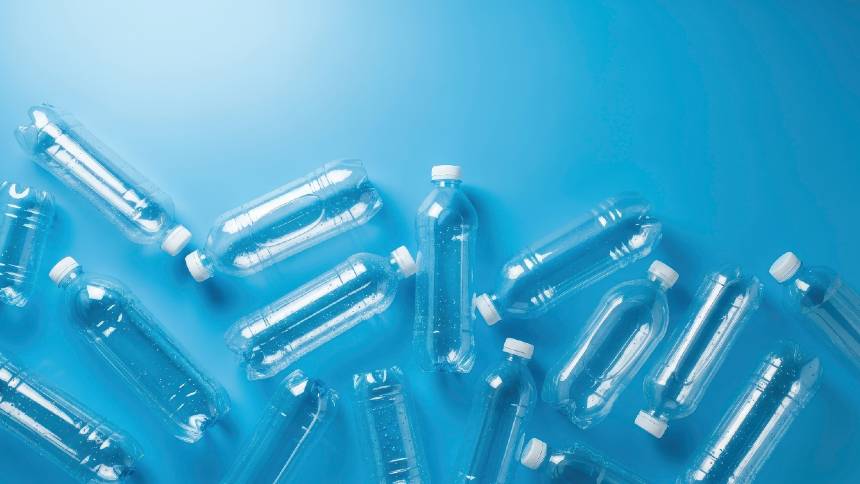
One of the companies in the portfolio of Flying Rivers Capital , a management firm focused on businesses linked to the low-carbon economy and the result of a spin-off, in 2025, from eB Capital , Cirklo is gaining new momentum to advance its thesis on recycling polyethylene terephthalate, the popular PET.
The company has just completed a fundraising round of R$ 260 million through an issuance of green debentures, with a term of five years, coordinated by Itaú BBA and Bradesco BBI.
The operation was carried out within the scope of Ecoinvest, a federal government program with the Inter-American Development Bank (IDB) that combines blended finance operations and currency hedging, reducing capital costs for sustainable projects and risks for foreign investors.
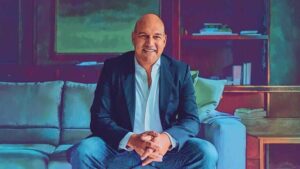
“These resources arrive at a time when we are expanding our capacity, making factory improvements, and investing in raw material sourcing,” Irineu Barbosa Bueno Junior, CEO of Cirklo, told NeoFeed . “We are preparing to meet a large increase in demand.”
These preparations are linked to an increasingly favorable climate for the company's business. In addition to mechanisms like Ecoinvest, other resources are fueling the maturation of so-called green capital in Brazil.
According to the Climate Bonds Initiative, in the first half of 2025, the country reached a cumulative volume of US$30 billion in sustainable bonds, consolidating itself as the largest issuer in this area in Latin America.
This scenario also includes recent developments such as the entry into force of federal decree 12.688/2025. Better known as the Plastic Decree, it defines a mandatory minimum content for the use of recycled plastic in packaging.
As part of the timeline established in this regulation, from October of last year, the initial target for 2026 is 22%. And, with progressive annual increases, the goal is to reach the 50% rate by 2040.
“PET is the material that is prepared to fully comply with the decree, as it can be used in any packaging,” says Bueno Junior. “So, with the expected growth, with or without the decree, and the expansion of this content, our forecast is to reach triple the demand we have today by 2040.”
According to the executive, the Brazilian market already consumes 1 million tons of PET resin annually for packaging. Of this total, between 20% and 30% already originate from recycled materials. He makes a reservation, however.
“There is no silver bullet in this market. So, it’s important not to put all your eggs in one basket with the decree, because that, by itself, won’t improve demand,” says the CEO of Cirklo. “But it is important because it brings predictability, regularity, and does guarantee an increase in demand.”
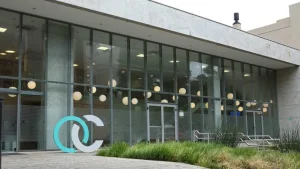
Aware of this combination of factors, Cirklo, created by eB Capital in 2024 from the merger between Green PCR and Global PET, has dedicated a significant portion of 2025 to preparing to meet this anticipated market upturn.
As part of the agenda fulfilled last year, one of the priorities was the integration of the operations of Green PCR and Global PET. Another focus during this period was the expansion of their production capacity.
The company invested in modernizing its factories in São Carlos (SP) and Conde (PB), responsible for all stages of production – from receiving PET scrap to transforming it into resins for packaging in sectors such as food, beverages and hygiene – Cirklo directly serves around 30 clients.
During the year, the company also built a new unit in Ananindeua (PA), in partnership with Solar Coca-Cola, one of the manufacturers of the soft drink in the country, and bought its competitor Clodax, in Maceió (AL).
The two structures incorporated with these movements were intended for an initial stage in transforming the bottles into flakes, and were used as a shortcut for collecting and transporting raw materials.
Leap in production and destination of fundraising.
As a result of these initiatives, the company increased its production capacity of PET resin for packaging from 60,000 tons per year in 2024 to 115,000 tons per year at the end of last year.
With this potential volume already in-house, Bueno Junior believes that Cirklo's current capacity is sufficient to meet the projected demand for the next three years. Therefore, investment in new production units is, at least initially, out of the question.
In this context, a portion of the R$260 million raised will be used for final adjustments to adapt the equipment already installed in these plants. The main purpose of the funds raised, in turn, will be to expand the reach and structure a raw material collection chain.
“Today, we bring materials from Acre, Rondônia, Rio Grande do Sul, from all over the country to our factories,” says the CEO. “We will need more raw materials and, at the same time, we need them to arrive at our factories in a more economically viable way.”
This orientation will translate into new partnerships with cooperatives for collection – today, for example, Cirklo has an agreement with the National Association of Waste Pickers (ANCAT). And in investment in logistics and infrastructure to collect material and consolidate loads in different regions of the country.
“We will invest whatever is necessary to collect at least 130,000 tons of PET bottles per year,” says the executive, who does not reveal Cirklo's revenue, but emphasizes the goal for the coming years: R$ 1 billion in revenue and 30 million bottles recycled per day.