

The decision by the global CEO of the Dutch company Heineken, Dolf van den Brink, to leave his post on May 31st of this year, could directly impact the company's results in Brazil, which is already suffering from the stagnation of the premium beer market. This assessment comes from Citi bank, which considers the moment "delicate" for the brewery.
In Brazil, the company inaugurated a new factory in the Minas Gerais city of Passos at the end of 2025, which should guarantee an increase of up to 500 million liters of the beverage per year, with the possibility of expansion. However, the current state of the national market is poor, which may cause the new global management to put the brakes on further investments.
“The leadership transition at Heineken raises a legitimate question: will the company continue investing in Brazil at the same pace if payback periods start to lengthen and profitability metrics become more difficult to defend?” asks analyst Renata Cabral, who authored the report.
The construction of the Minas Gerais factory alone represented an investment package of approximately R$ 2.5 billion, over two and a half years of construction, using the greenfield model. This amount is part of a larger R$ 6 billion package, invested since 2019, in expansion and modernization initiatives. However, as Citi points out, this may not be enough to guarantee an acceleration in sales.
Data from the Brazilian Association of the Beer Industry (CervBrasil), compiled by NeoFeed , confirms the concern of companies in the sector about the impact of the segment's shrinkage in the country. Figures relating to the third quarter of 2025 indicate that, in the first nine months of the year, the beer market shrank by about 6% in the country.
This translates to a projected volume of 14.7 billion liters of beer by 2025. This quantity represents a revenue of R$ 205 billion. The premium sector, where the company's main brand operates, represents 14% of the sector.
The problem for Heineken, according to the Citi analyst, is that the investment package is occurring precisely at a time when the industry is facing a scenario of very weak volumes. There is also a pricing issue, since Heineken only began to normalize prices in July 2025, after freezing price adjustments from April 2024.
According to Citi's analysis, Ambev, which belongs to the AB InBev group and owns brands such as Brahma, Skol, Antarctica, among others, could benefit from this strategy adopted so far by its Dutch rival. But there are also challenges for the Brazilian multinational.
“For us, this long freeze was already a sign: the competition in the premium segment has narrowed, and Ambev's premium portfolio is probably more competitive than the prevailing narrative suggests. The problem is that volumes are so weak that even the discussion about 'who is winning in the premium segment' seems secondary,” the text says.
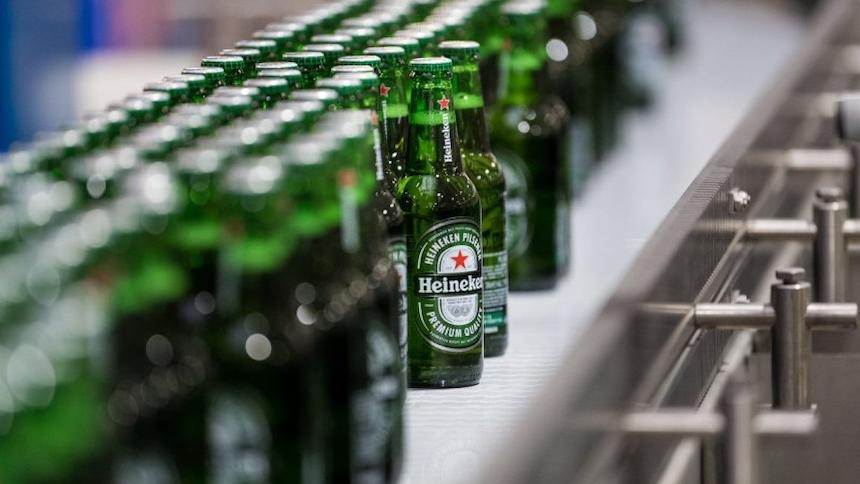
Ambev's own financial report for the third quarter shows this advance in a territory that was historically dominated by the owner of the green glass bottle with a red star in the middle.
"Premium and super-premium brands grew by around 15%, led by Original, the Stella family, and Corona, achieving segment leadership for the first time in ten years, with almost 50% market share, according to our estimates," says the Ambev document.
But, according to Renata Cabral, the company cannot yet celebrate this recovery. “To be clear, this doesn't suddenly make Ambev an easy investment. The Brazilian beer market continues to experience declining volumes, going down a ladder whose last step we don't yet know, and what intrigues us most is the persistence of this weakness. We believe that climate and macroeconomics explain part of the movement, but not all of it,” says the analyst.
On the other hand, a report from Heineken, also from the third quarter of 2025, confirms the market contraction for the company, both in Brazil and in other global markets. Worldwide, the drop in volume reached 2.3%.
“In Brazil, organic net revenue fell by low double digits, with beer shipment volumes contracting by mid-double digits, partly driven by increased inventories ahead of the price adjustment implemented from July 1st. Year-to-date, beer shipment volumes are down by mid-single digits,” says the Dutch company in its own report.
Looking ahead, the bank still sees difficulties for Heineken and its peers in the sector. In addition to explanations such as the changing consumption patterns of younger consumers, Citi believes that some of the money that would have gone towards a bottle of beer is now being used for sports betting.
"In the short term, we continue to expect a weak fourth quarter, and the demand backdrop remains unfavorable," adds the Citi specialist.
Not even the World Cup seems to be a major factor in changing the scenario. “On paper, the configuration may be more constructive: easier comparison bases, a World Cup year, and an election year economy, which tends to seem a little looser, with more money circulating. But we wouldn't get too excited.”
On the Amsterdam Stock Exchange in the Netherlands, Heineken shares have risen 3.53% over the past 12 months. The company is valued at €38.5 billion.