

After resolving the problems it had with the INSS (Brazilian National Social Security Institute), which suspended the granting of new payroll loans to retirees, Agibank moved forward with its plans to go public in the United States.
The digital bank filed its preliminary IPO prospectus with the Securities and Exchange Commission (SEC) on Wednesday, January 14th, with the IPO scheduled to take place on the New York Stock Exchange (NYSE).
The document does not specify how much the digital bank intends to raise. Sources cited by Bloomberg , however, say the target is to raise US$1 billion. In the last investment round, in December 2024, which marked the entry of Lumina Capital , Agibank was valued at approximately US$1.5 billion (R$9.3 billion at the time).
The operation will involve the listing of Class A and B shares. In the document, Agibank informs that Class B shares entitle the holder to 10 votes per unit, while Class A common shares entitle the holder to one vote per share. Class B shares will not be listed or publicly traded, while Class A shares will be traded under the ticker “AGBK”.
According to the prospectus, after the completion of the offering, all Class B common shares will be held by Marciano Testa , founder and controlling shareholder of Agibank.
Currently, Testa's stake in the bank is estimated at around 70%. Agibank's shareholders include Vinci Compass , with just over 19% of the capital, and Lumina, owned by Daniel Goldberg, with approximately 4%.
Agibank had been considering an IPO for some time, starting preparations at the end of last year with the intention of debuting on the market in early 2026. However, at the end of 2024, the INSS (Brazilian National Social Security Institute) announced the indefinite suspension of the bank's acceptance of new payroll loan registrations, a blow to the bank's main revenue stream.
The decision was made after an audit by the Comptroller General of the Union (CGU) identified alleged "irregularities and practices harmful to INSS beneficiaries," such as contracts signed without express consent.
In its prospectus, Agibank reported that the suspension was reversed on January 12, following an agreement with the INSS (Brazilian National Social Security Institute). The bank committed to improving procedures, such as strengthening document verification systems and reviewing past transactions, in addition to paying compensation of R$ 1 million.
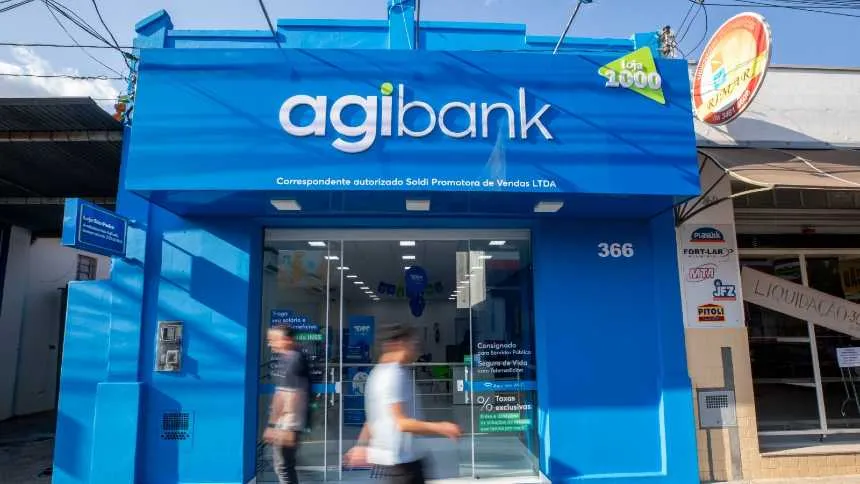
Agibank has announced that it intends to use the IPO proceeds for "general corporate purposes." The bank aims to reach R$100 billion in credit by 2030, a plan that includes expanding its physical presence in the country, reaching 2,500 branches by then, as executives revealed to NeoFeed at the end of 2024.
Agibank's target market consists of approximately 100 million people living in rural areas or on the outskirts of large cities. What they have in common is limited internet access and a need for support in the digital environment.
The bank stated in the prospectus that it may allocate part of the proceeds to acquisitions, noting that it does not currently have any agreements or commitments for any significant acquisitions or investments.
With this request, Agibank joins PicPay , which also filed for an IPO in the United States earlier this month.
Agibank reported a net profit of R$ 875.5 million in the first nine months of the year, a 35.4% increase compared to the same period in 2024. Return on average equity (ROAE) was 40.9% over the last 12 months.
The loan portfolio reached R$ 33.8 billion, a 54.3% increase year-on-year, while net revenue rose 54% to R$ 8.1 billion.
Agibank is being advised by Goldman Sachs , Morgan Stanley , Citi , Bradesco BBI , BTG Pactual , Itaú BBA , Santander , Société Générale, XP Investimentos , and Oppenheimer.