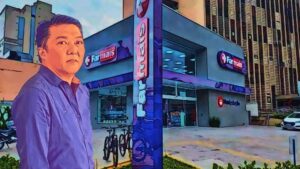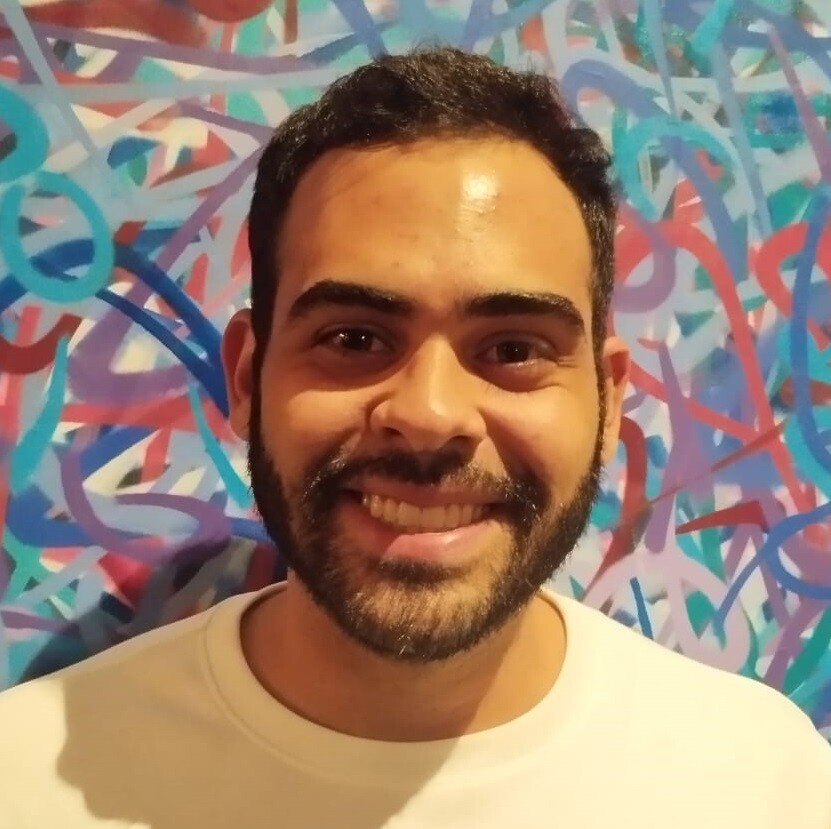


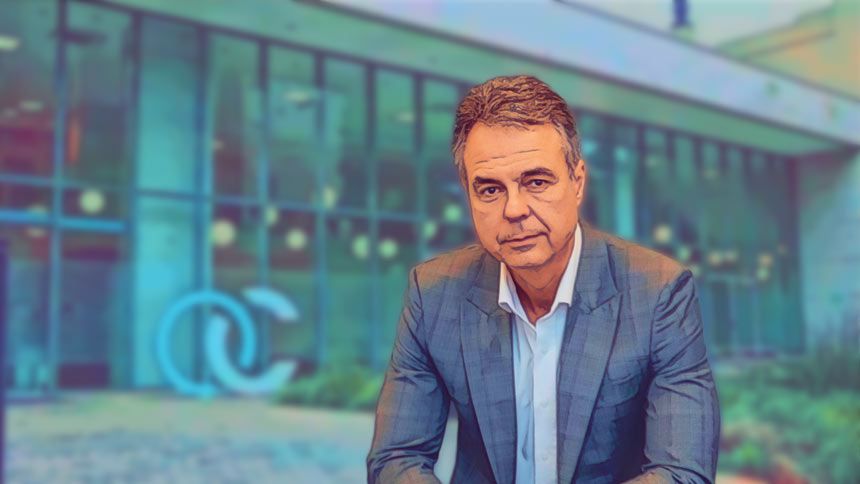
Oncoclínicas announced on the evening of Thursday, March 5th, the selection of Carlos Gil, the company's medical director since 2018, to assume the CEO position, replacing founding partner Bruno Ferrari .
The succession process was anticipated by NeoFeed in September of last year, although it was denied in an interview given by Ferrari himself at the end of that month . The founding partner will remain only on the company's board of directors, chaired by Marcelo Gasparino da Silva.
As CEO, Gil will continue plans to simplify the company's structure, divesting from non-priority areas and using the money to reorganize the company's financial health.
“In recent years, the company ended up focusing its efforts on other businesses. Now, the goal is to refocus on oncology clinics, which are what truly generate cash for the company,” says Gil, in an interview with NeoFeed . “It’s a return to basics , which the company has been communicating since October.”
According to Gil, the goal is to make the company more efficient, increasing revenue generation relative to expenses, without having to resort to expansion plans like in the past. "We have many clinics. But, as the company has focused on other businesses in recent years, perhaps we have optimized those units that are actually the ones that generate cash."
Gil's selection to lead Oncoclínicas came after months of searching for an executive for the position, a process that involved the headhunting services of Spencer Stuart. Several market executives were considered , such as Irlau Machado, former CEO of NotreDame, and Fabio Schvartsman, former CEO of Vale.
Gil's official meeting with the market is expected to take place during the presentation of the fourth-quarter results, scheduled for March 31st. Until then, however, the executive will have to deal with a creditors' meeting scheduled for the penultimate week of the month.
At stake are waiver requests to avoid breaching the debt covenant if the leverage ratio (net debt/EBITDA) exceeds 3.5 times in the 2025 annual balance sheet.
To deal with the company's debt, Gil will have the help of CFO Camille Faria, who went through the restructuring of Oi and Americanas and arrived at Oncoclínicas about four weeks ago.
According to Faria, preliminary conversations with auditors of the financial statements indicated the possibility of the leverage ratio exceeding the covenant limit, and the waiver request would be a way for the company to protect itself from this risk.
“There are instruments that are very concentrated and are in the hands of well-known financial institutions. In that case, it's an easier conversation. I talk to half a dozen people and explain the company's situation,” said Faria.
In the case of CRIs (Real Estate Receivables Certificates), which have a more dispersed base, the CFO states that she is seeking to identify the main holders to address the issue before the shareholders' meeting.
Capital structure and potential transactions on the table.
In the third quarter balance sheet, the company's net debt stood at R$ 4 billion, 4.2 times its EBITDA, while at the end of 2024, this ratio was 2.8 times.
Two factors were decisive in the deterioration of this indicator last year. On the revenue side, Oncoclínicas was affected by the lack of payments from Unimed Ferj, which reached a debt of R$ 790 million with the company. On the cash side, the collapse of Master made the nearly R$ 500 million that the company held in the bank's CDBs practically unrecoverable.
In the event of default, as occurred, the Certificates of Deposit (CDBs) were secured by the shares held by Master , which represented approximately 9% of the company.
According to Faria, the company was unable to execute the guarantee because the shares had been transferred to BRB, in a transaction that the CFO considers "illegitimate." In court, Oncoclínicas obtained an injunction preventing BRB from selling the shares, but has not yet received the assets.
To ensure its financial health, the company received an injection of R$ 1.4 billion from its shareholders in November and converted part of its debt into equity.
The operation, which altered the company's corporate structure, opened the way for Latache to gain a majority on the company's board of directors and complete the desired change in leadership. The asset manager is the second-largest shareholder of Oncoclínicas, with approximately 14.62% of the company, behind only the Josephina fund, linked to Goldman Sachs.
Although the operation has given Oncoclínicas extra breathing room, the CFO's calculations indicate that the company will have to return to the market to balance its debt.
"The size of financial obligations is not necessarily incompatible with the company's cash generation capacity, but perhaps the timing profile of the obligations needs to be adjusted," says Faria.
On the table, he says, are several options, such as a new capital increase, debt restructuring, or even taking out a working capital loan. "We're looking at them. But it's still too early to say what the silver bullet will be."
Regarding divestments, the company has two more of its three hospitals to sell. For the sale of Hospital Vila da Serra, the company already has a binding offer from the Felice Rosso Foundation. The company is now seeking a buyer for Hospital Marcos Moraes, but does not rule out the possibility of converting the space into an oncology clinic.
The asset was slated for sale to NotreDame. However, the transaction fell through after the buyer attempted to change the terms of the deal when it was nearing completion.
On the B3 stock exchange, ONCO3 shares are down 21% by 2026. In the last 12 months, Oncoclínicas' stock has fallen 58.4%. The company's market capitalization is R$ 2.4 billion.