

Donald Trump , the President of the United States, made no attempt to hide one of the country's true interests behind the ouster of Nicolás Maduro in Venezuela last Saturday, January 3rd: the oil of the South American country, which possesses the largest reserves of the commodity in the world.
However, rebuilding the country's oil industry, whose production infrastructure is dilapidated, will be an arduous task and will require heavy investments. And, in this context, there are those who are not willing to contribute to this mission.
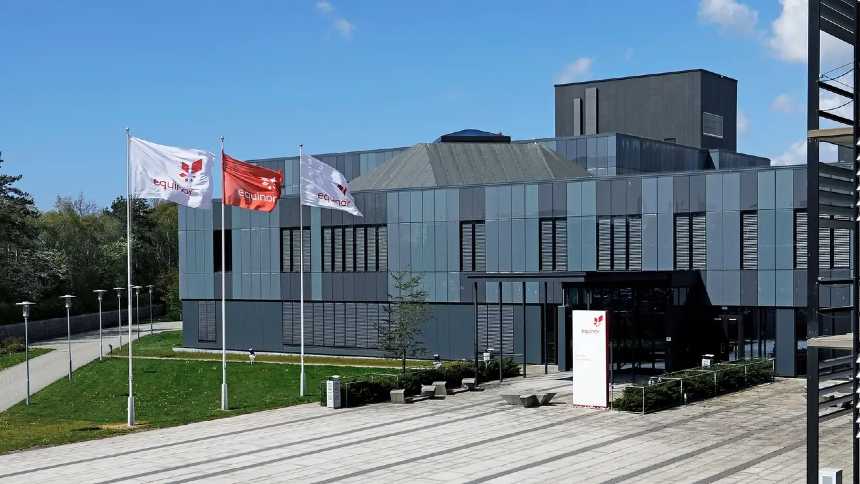
This is the case with Equinor, the Norwegian oil and gas giant, valued at US$57.9 billion. The company's CEO, Anders Opedal, made the company's position on the matter clear during a conference held in Oslo on Wednesday, January 7th.
“At the moment, that’s not on the table,” Opedal said in a brief conversation with Reuters on the sidelines of the event. “We left Venezuela because we wanted to relocate capital.”
Equinor entered Venezuela in the mid-1990s. At the time, the European company invested billions of dollars in the local market and chose the country as one of the strategic points in its operational map.
However, the group decided to leave the Venezuelan market at the beginning of this decade. The exit from the country was formalized in mid-2021, when the company completed the sale of its remaining 9.67% stake in the Petrocedeño project to the state-owned Petróleos de Venezuela (PdVSA).
At the time, Equinor only stated that the transaction was in line with its strategy of concentrating its portfolio in "core international areas and priority geographies" where the company could leverage its competitive advantages.
With the agreement, finalized with Corporación Venezolana del Petróleo (CVP), a subsidiary of PdVSA, the state-owned company became the sole shareholder of the project, given that, at the same time, TotalEnergies also divested its 30.32% stake in the initiative.
Now, according to Reuters , while Equinor rejects any plans to return to Venezuela, Donald Trump plans to meet with oil company executives later this week to discuss alternatives for revitalizing the industry in the country.
Meanwhile, some multinational companies in the sector are pursuing other claims amidst the moves by Trump and his peers aimed at this reconstruction, a process that, obviously, should prioritize American companies.
One example in this scenario is the Italian company Eni and the Spanish company Repsol . With US$6 billion in payments to receive from the Venezuelan government, both companies saw a favorable sign to gain access to these funds following Maduro's fall last weekend.
Both companies emphasized, however, that in initial contacts, official American representatives were indifferent to their requests and that these interlocutors reinforced the perception that the "America First" philosophy, championed by Trump, will also be the prevailing theme in Venezuela.