


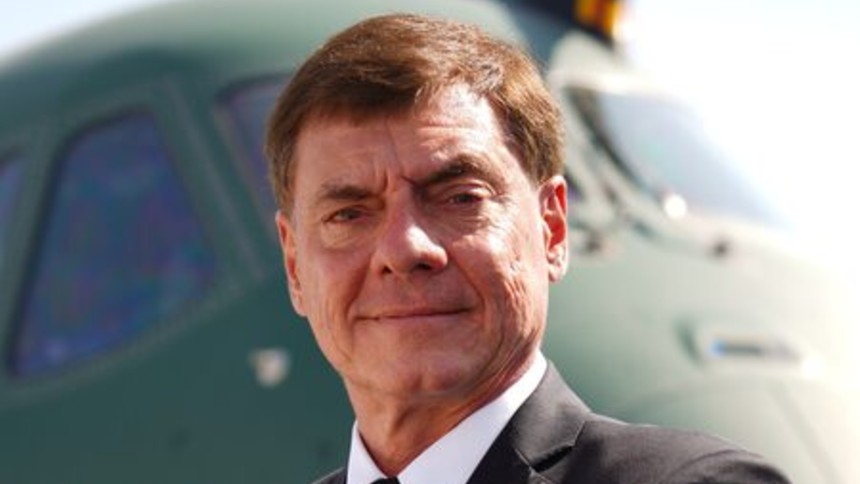
At the helm of Embraer since 2019, Francisco Gomes Neto has lost count of how many times he has traveled to the United States, more specifically Washington, in 2025. The reason? The extensive negotiations regarding the tariff increase imposed by Donald Trump , which brought turbulence to the company.
The impasse was resolved in February of this year when the US Supreme Court struck down the tariffs imposed by Trump. But the CEO's flight hours resurfaced this Saturday, March 28, when he kicked off the 2026 edition of the Brazil Conference , held in Cambridge and Boston.
“Last year, I became Embraer’s Chief Tariff Officer,” Neto joked during the event’s opening panel. “We are now on par with our competitors, and I think that’s well resolved. But there are several processes underway, and we are monitoring them to avoid the risk of a return to tariffs.”
The executive highlighted some of the arguments he put forward to emphasize Embraer's connection with the United States, where the company arrived 46 years ago and maintains more than US$3 billion in assets, in addition to a direct workforce of over 2,500 professionals, a large portion of whom are local.
"Besides those 2,500 people, we support another 10,000 professionals," he stated, referring to the supplier base, given that approximately 40% of the equipment used on the company's aircraft is American.
“We did the math and, in the next five years, in our growth plan, we will buy US$21 billion worth of equipment from the US and export US$13 billion,” he said. “So, in five years, that will be a surplus of US$8 billion.”
He reinforced this figure with other numbers. Today, of Embraer's deliveries, 40% of commercial aircraft and 65% of executive aircraft are destined for the United States. At the same time, there are approximately one thousand aircraft from the manufacturer in operation in the country, which annually transport around 100 million passengers.
Earlier this month, when releasing its fourth-quarter and full-year 2025 results, Embraer reported indicators that reflect the impact of tariffs on its balance sheet. These included US$27 million between October and December, and US$54 million for the year.
Following these tariffs, which came into effect in April 2024, the manufacturer reported having disbursed a total of US$80 million, of which approximately 85% was related to the executive aviation division and the remainder to the services and support unit.
In a more recent itinerary, which also includes the United States, Neto said he does not foresee, at first glance, any impact from the war between the country and Iran on Embraer's results. However, he noted that the company is monitoring some suppliers in the region.
Conversely, the CEO highlighted that this war scenario, not limited to the conflict in the Middle East and the short term, opens up opportunities in the defense business unit. In particular, for the KC-390 military cargo plane, which, since its launch in 2019, has already accumulated around 50 units sold.
“This increase in countries' budgets to strengthen their defense, specifically for the KC-390, is positive,” he stated. “Currently, this is heavily concentrated in Europe and South Korea. But we have great opportunities with countries like India and the USA.”
Neto also took the opportunity to talk about this year's presidential elections. He stressed the need for Embraer to continue receiving government support, regardless of who wins. However, he said he does not foresee major impacts from the macroeconomic scenario for the company.
On a broader level, when questioned about the possibility of Brazil producing companies like Embraer – capable of competing with its global peers – in other sectors, Neto highlighted that the country has a market and good talent. But he added a caveat:
“What’s lacking is continuity,” he stated. “And perhaps, technological ambition from leaders in the public and private sectors, who think in terms of decades and not short cycles.”