


In recent years, the virtual currency bitcoin has experienced a real rollercoaster ride. Since December 2017, when it reached a record high of almost US$20,000, the cryptocurrency has been going up and down like an electrocardiogram.
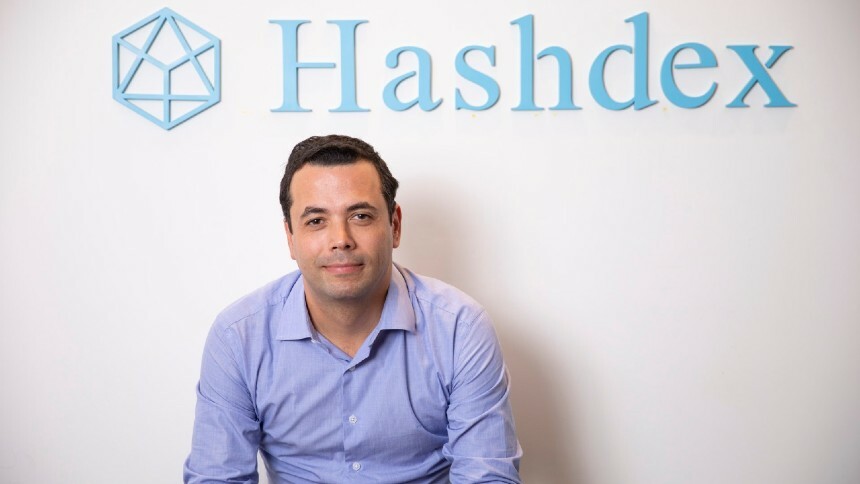
None of this dampened the optimism of Rio de Janeiro entrepreneur Marcelo Sampaio, who founded the asset management firm Hashdex in 2018 with the goal of developing investment funds based on crypto assets.
Sampaio's thesis wasn't easy to convince investors, especially institutional ones, who have always viewed the world of cryptocurrencies with suspicion. Two years later, it seems that Hashdex is beginning to break through that barrier. "What we do is provide access to the financial market to invest in crypto in a simple, secure, and regulated way," Sampaio told NeoFeed .
With Bitcoin reaching a value of US$15,400, its highest level since January 2018, Hashdex is beginning to reap the rewards of its persistence. In August of this year, Hashdex had 5,000 investors across its four funds. By November, that number had already surpassed 11,000 investors.
The value of assets under management at Hashdex also jumped. A year ago, it was R$ 45 million. In November of this year, it had reached R$ 302 million, a jump of almost seven times in the 12-month period.
Hashdex manages four funds in Brazil, which are currently distributed across the country's main investment platforms, from XP to BTG Digital , including Órama and Easynvest , among others.
The first one is Discovery, for general investors, which invests 20% in crypto assets based on the HDAI (Hashdex Digital Assets Index), created by Hashdex and distributed by Nasdaq in the United States since July. This year, the fund has appreciated by 25.36%.
The second fund is Voyager, for professional investors, which invests up to 100% in crypto (HDAI). Its return has already risen by 166.35%. The third, launched in December 2019 and named Explorer, is for qualified investors and invests 40% in crypto assets (HDAI). This fund has risen by 56%.
The asset manager's most recent launch, in October 2020, is a fund that invests 100% in Bitcoin and is intended for qualified investors. This year, the value of Bitcoin, in dollars, has grown by 108%. Since March, when it reached its lowest value this year, the increase is 146.9%.
This year, the value of Bitcoin, in dollars, has grown by 108%. Since March, when it reached its lowest value, the increase is 146.9%.
But what explains this rise in Bitcoin? And, in particular, is it sustainable, given that it is an asset that suffers enormous fluctuations? Mega-investor Warren Buffett, known as the Oracle of Omaha for his shrewd investment moves, has said many times that Bitcoin is nothing more than a Ponzi scheme, as it produces nothing and therefore has no value.
Despite Buffett's pessimistic view, Bitcoin gained a series of significant institutional endorsements in 2020. "The recent participation of companies like Square and PayPal, and the entry of professional investors with large investments, have been the main drivers of the increase," says Safiri Felix, president of the Brazilian Association of Crypto Economy (ABCripto), who estimates cryptocurrency transactions in Brazil at R$100 billion in 2020.
In October of this year, PayPal announced that its customers will be able to buy, sell, and hold digital currencies on its platform. For now, the new feature will be available first in the United States and is expected to reach other regions in early 2021.
"We look forward to working with central banks and regulators around the world to offer our support and contribute significantly to shaping the role that digital currencies will play in the future of global finance and commerce," said Dan Schulman, president of PayPal, at the time.
Fintech company Square, which provides payment solutions, also reported selling $1.6 billion worth of bitcoins during its third fiscal quarter of 2020. Sales in that period represent almost 90% of the sales from all previous quarters combined.
In August of this year, Microstrategy, a technology company valued at $1.7 billion on the Nasdaq, also became the first publicly traded company to allocate part of its cash to bitcoin. Today, the company holds the equivalent of $425 million in the virtual currency.
“We are very confident that Bitcoin is less risky than holding cash, less risky than holding gold,” said Michael Saylor, CEO of Microstrategy, in an interview with Bloomberg .
Another significant endorsement of Bitcoin came from billionaire Paul Tudor Jones, founder of the Tudor Group, which has over $9 billion in assets under management. In May of this year, he allocated a portion of his assets to Bitcoin, without disclosing the exact amount.
Recently, Jones made several statements in favor of digital currency. One of them compared the investment his hedge funds made in bitcoin to investments in companies like Apple and Google in their early stages.
"I believe we are experiencing Bitcoin's first big chance," Jones said in an interview with CNBC's Squawk Box. "It's a long way to go."
The Nasdaq electronic exchange will launch its own cryptocurrency index, which follows the formula developed for the Hashdex Digital Assets Index.
In December of this year, Bitcoin will receive another major boost. The Nasdaq electronic exchange will launch its own cryptocurrency index, which follows the formula developed for the Hashdex Digital Assets Index, where Bitcoin currently represents 75% of the index's weight.
The Nasdaq Crypto Index, which will be a kind of S&P 500 for cryptocurrencies, follows a series of rules. To be part of it, the virtual currency needs to have a floating price, be traded on a qualified exchange, be supported by a professional custodian, have an average daily volume of US$4 million, and a minimum market representation of 0.25%.
With this, Hashdex will launch an ETF (Exchange Traded Fund, funds that replicate indices and are traded on the stock exchange, like stocks) that will replicate the Nasdaq index. The Hashdex Nasdaq Crypto Index will be the first of its kind in the world, according to the asset manager, and will be listed on the Bermuda Stock Exchange (BSX).
Hashdex was founded by Sampaio and Bruno Caratori. Sampaio has worked at Oracle and Microsoft. Caratori was a risk manager at Gávea, the asset management firm of Armínio Fraga, former president of the Central Bank, during Fernando Henrique Cardoso's administration.
The firm received R$ 20 million in two funding rounds. The investment came from funds such as Graph Ventures, Social Capital, and Outlier Ventures, all from Silicon Valley. In Brazil, Canary, Igah (a merger of e.bricks ventures and Joá Investimentos), and the angel investor fund of the Estudar Foundation invested in the company. Sampaio does not rule out a new investment round in 2021.