


Cambridge (USA) - In 2012, Cesar Carvalho dropped out of his MBA program at Harvard Business School in Boston. That same year, back in Brazil, he was one of the founders of Gympass , which was created with the concept of providing individual day passes or monthly packages with unlimited day passes to gyms directly to users.
Time passed, Gympass expanded its scope to a wellness platform, changed its focus – from B2C to B2B – and also its name. Renamed Wellhub , the startup also gained strength. Today, the company operates in 18 countries and serves 40,000 corporate clients.
“We have operations in each of the countries where we are present,” said Carvalho, in a conversation with journalists that NeoFeed attended during the 2026 edition of the Brazil Conference . “But, today, I divide my time between the United States and artificial intelligence.”
On this last point, one of the company's most recent steps was the launch of a kind of "AI Coach," still in beta version, which helps users by suggesting personalized plans in areas such as fitness, therapy, and sleep.
In the other half of his agenda, Carvalho said that Wellhub is not resting on its laurels in scaling up in the United States – the last country the startup organically entered, precisely in 2019. And where he moved that same year, becoming its global CEO.
Today, the American operation is already the company's second largest market, behind only Brazil. And, according to the CEO, it is on track to occupy the top spot on that podium, largely due to a more mature scenario in terms of demand.
“Here, the job isn’t to educate the market, explain the importance of well-being, and convince companies to get started,” he stated. “The job is to show that Wellhub’s solution is much more efficient than others they already have. So, the message is easier.”
From discourse to practice, he says that these conversions take time, given that the contracts are long-term. "But I'm already seeing the same patterns here that we saw in Brazil in 2013, 2014, and 2015, when we were expanding the business."
He dismisses, however, the idea that a natural next step in this journey would be an initial public offering (IPO), as has already been speculated in the market. He does, however, emphasize that when and if that happens, the chosen path will likely involve listing on one of the American stock exchanges.
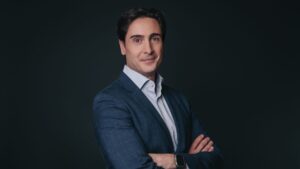
Cesar Carvalho, Co-founder and CEO of Wellhub
“The IPO is not a milestone and there are no concrete dates. We need to continue growing,” he said. “When a shareholder needs an exit or the company has a capital use that it cannot finance, it will make sense. But I don't see it as a destination, but rather as a possible path.”
Since its inception, the company has raised over US$600 million from investors such as Softbank and General Atlantic. In its most recent funding round, in August 2023 and led by the Swedish firm EQT, the company was valued at US$2.4 billion.
Meanwhile, Carvalho highlighted that, in addition to the American market, another priority is integrating Urban Sports Club, a European provider of corporate benefits programs acquired by Wellhub in September 2025, in a US$600 million deal.
With the acquisition, the company added five new countries in Europe to its operational map. And, prior to this move, it had already invested in other M&As. The list includes names such as Trainiac in the United States, as well as Fitprime, Andjoy, and 7Card, also in Europe.
From this perspective, Carvalho also took the time to emphasize that more Brazilian companies should think with this global mindset and that many of them are wasting the opportunity to broaden their horizons.
“I think we have a right to win, firstly, because the digital products we consume in Brazil are the same ones used in most of Latin America, the US, and Europe,” he said. “In other words, all our product intuition is aligned with all other geographies.”
Along with the scale of the domestic market itself, he also noted that the skills and talents of Brazilians are increasingly aligned with the capabilities required in the world. "Besides being good, we are better trained in dealing with uncertainties and instabilities," he concluded.