

Between 2012 and 2013, the news that a giant of Brazilian industry was about to go public stirred the market. It was Votorantim Cimentos, a traditional company of the Ermírio de Moraes family, the crown jewel of the Votorantim holding company, which was preparing to list its shares on the stock exchange.
But then came the protests that shook the country, the macroeconomic environment began to indicate that it would not be favorable, and the company ended up withdrawing its IPO registration, leading other companies to follow its example.
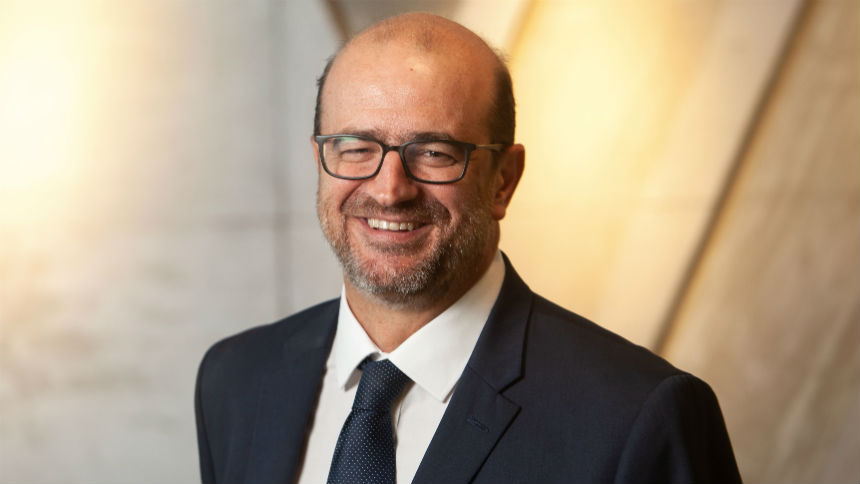
Seven years after the failed attempt, Votorantim Cimentos continues to evaluate an initial public offering (IPO), and its leader, global CEO Marcelo Castelli, is working to prepare the company for it.
“We are preparing the company for an IPO. But not now. In the group's view, it has to be at a time of value creation and it has to have a business purpose,” Castelli says in an interview with NeoFeed .
Several possibilities are on the table. "We are discussing whether we would go public in the US or in Brazil. Or whether we would go public with the Brazilian operation here and the American franchise in the US," he says. Whatever the decision, the IPO of this industry giant would generate billions of reais.
According to 2018 data, the most recent available, Votorantim Cimentos is the sixth largest cement producer in the world, with a production of 31.1 million tons and a production capacity of 53.4 million tons of cement.
The company, which has net revenue of R$ 12.6 billion, also has 264 industrial units, employs 11,900 people, and operates in Brazil, Argentina, Uruguay, Bolivia, Canada, the United States, Spain, Luxembourg, Turkey, Morocco, and Tunisia.
Votorantim Cimentos' preparation for a possible IPO involves a plan designed by Castelli to support other businesses beyond cement and to focus on sustainability. "We are looking for adjacent areas around cement," says Castelli.
New fronts
One of the business units that has been analyzed in detail is agriculture. Votorantim Cimentos already operates in this segment with the brands Calcário Itaú and Cal Fértil, which account for approximately 10% of the R$ 6.6 billion in revenue generated by the company in Brazil. These brands sell agricultural limestone to correct acidity and fertilize the soil.
“We have made great progress in this sector. This business is growing at agribusiness rates, 20% per year. It is the unit with the greatest growth potential. It has everything to leverage and gain representativeness,” says Castelli. And this is already happening.
Of the company's main businesses, cement, which remains its core business, comes in first place, followed by mortar, and in third place, agriculture, which recently surpassed sales of sand and gravel. Due to this significant presence, Votorantim Cimentos has been preparing a comprehensive branding study that could redefine its operations in the agricultural sector.
R$400 million will be invested in Verdera over the next three years.
The idea is to expand the unit, as happened with the waste co-processing area. Last year, this unit was unified under the Verdera brand. This is a crucial business for the company in its ambitious goal of neutralizing the CO2 emitted in its operation.
Castelli even states that R$ 400 million will be invested in Verdera over the next three years. Sustainability has become an obsession for the company. First, because it is a concern for society as a whole. Second, because, obviously, major players in the financial market have started to analyze this aspect before deciding to allocate resources.
Since 2012, Larry Fink , the global CEO of BlackRock, with $7 trillion under management, has been warning executives about sustainability . “Investors worldwide are looking for sustainability. ESG (Environmental, Social and Governance) goals are becoming increasingly prevalent,” says Castelli. He adds, “The message is: 'if you weren't paying attention to this, get on board or you'll disappear quickly.'”
Of Votorantim Cimentos' total carbon emissions, two-thirds come from the operational process and one-third from the fuel used in cement manufacturing. This is where Verdera comes in, using waste materials such as wood chips, açaí seeds, sawdust, paper, used tires, and other materials as fuel to heat its kilns. "This already represents 35% of our fuel," says Castelli.
“Investors worldwide are looking for sustainability. The message is: 'if you weren't paying attention to this, get now or you'll disappear quickly',” says Castelli.
“Verdera has become an environmental solution product for the market,” says Castelli. Many industries that need to dispose of waste end up seeking out the company. To give an idea of what this represents, in 2018, 854,000 tons of tires and waste ended up in the company's co-processing units. This meant 521,000 tons of CO2 were neutralized.
Crisis in the sector
The growth in other businesses accelerated considerably after the recent crisis that the cement sector went through, perhaps the biggest in the country's history. Between the 1960s and 1970s, at the height of the Economic Miracle, the cement industry grew from a capacity of 9 million tons to 27 million tons.
Another period like this would only be seen in the 2000s, when it went from 35 million tons in 2004 to 71 million tons in 2014. Production capacity also jumped, going from 60 million tons to 90 million tons during that period.
The economic crisis that hit Brazil, however, caused the industry to collapse. Between 2015 and 2018, the drop was 27%, reaching 52.9 million tons produced. Adding to the problem: production capacity had increased to 100 million tons.
“The sector was left with 47% idle capacity,” says Paulo Camillo Penna, president of the National Cement Industry Union (SNIC) and the Brazilian Portland Cement Association (ABCP). Votorantim Cimentos was no different and had to adapt to the new scenario.
The cement sector in Brazil has 47% of its production capacity idle.
The company ceased operations in Chile, Peru, China, and India, sold an operation in Florida, in the United States, and closed factories in Brazil, including those in Ribeirão Grande and Cubatão, both in São Paulo. Of the 15,200 employees in 2014, fewer than 12,000 remain. The adjustment was necessary to keep the accounts balanced.
In 2015, the company's debt represented 4.5 times its cash generation as measured by EBITDA. In 2016, it rose to 4.97 times, and in 2017 it reached 5.12 times. In 2018, with the adjustments made, it reduced to 3.6 times. In January 2019, the holding company also injected R$ 2 billion into the company to pay off debts, which further reduced leverage. In the third quarter of 2019, the most recent data available, it stood at 3.2 times.
Now the sector in Brazil is beginning to show signs of recovery. In 2019, it grew 3.5%, and in 2020, the expectation is to grow another 3.6%. "There's a change in mood, but it's not one of enthusiasm," says Penna. The expectation is that the industry will grow driven by the return of infrastructure investments due to auctions and concessions that will be spearheaded by the federal government. "Demand should increase by 15% in the infrastructure sector," states Penna.
Castelli agrees with this analysis. “In the second half of 2020 and throughout 2021, concessions will boost the market,” he says. “A lot of money will flow into the country. Brazil is improving and will unlock the economy. We've hit rock bottom so hard that we have everything we need to emerge from this stronger.”
"We've hit rock bottom so badly that we have everything we need to come out of this much better," Castelli says about the Brazilian economy.
Votorantim Cimentos is well-capitalized for this new phase. It recently approved investments of R$ 2 billion to modernize its operations. Part of this money came from the sale of Fibria, a pulp and paper company in which the Votorantim holding company was one of the main investors, to Suzano.
Castelli, by the way, was president of Fibria and will complete one year at the helm of Votorantim Cimentos in February, after replacing Walter Dissinger. During this period, he had to learn to deal with a completely different sector. Pulp is a B2B business and cement is B2C. "It's retail, economics in its purest form," says Castelli.
In Brazil, for example, Votorantim Cimentos' sales are divided as follows: 70% bagged cement and the remainder between industry/concrete, infrastructure, and the real estate market. "There are 147,000 construction stores. It's retail through and through. We have a database of 56,000 stores and around 30,000 active clients," says Castelli.
That's precisely why Votorantim Cimentos has been working to get closer and closer to retailers and has even created a loyalty program called "Together We Are More" .
Another effort to connect with construction technology companies has been made through the Open Innovation VC Connect platform. "The loss in the construction supply chain is 30% of the materials," says Castelli. "We want to create more productive systems and mitigate losses."
International equation
Mitigating losses and reducing risks is also a challenge in the company's financial area. Currently, approximately 50% of Votorantim Cimentos' revenue comes from Brazil, another 35% from operations in North America, and the remainder from other countries.
Castelli says he intends to move forward with acquisitions and mergers, especially in North America. "We are attentive to acquisition opportunities. Not only in the cement sector, but also in mortar and related areas."
The idea is to balance the company's portfolio and protect itself from risks and volatility in the various markets in which it operates. In other words, it's worthwhile to have a good portion of its results tied to strong currencies like the dollar and euro to prevent the company from suffering from crises in countries with greater volatility. "It's difficult to arrive at such an arrangement, and we are studying it," says Castelli.
Follow NeoFeed on social media. We're on Facebook , LinkedIn , Twitter , and Instagram . Watch our videos on our YouTube channel and subscribe to our newsletter to receive daily news.