

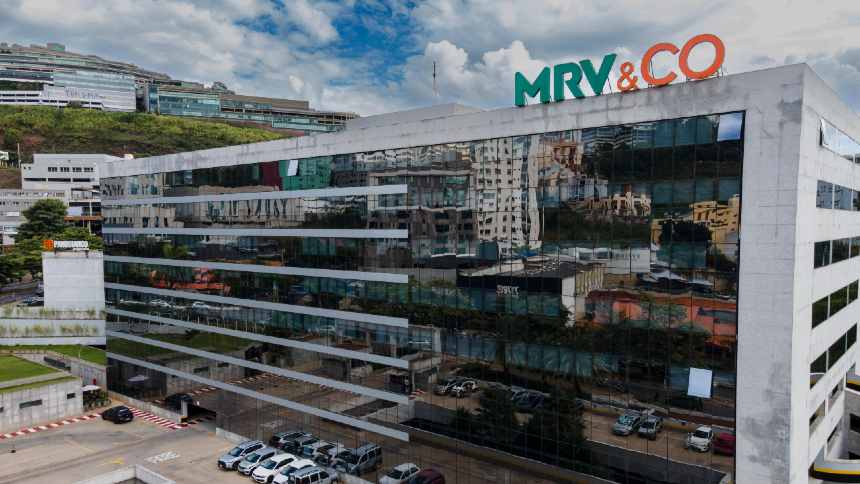
After four years of adjustments, MRV&Co sees 2026 as a year with the groundwork laid to accelerate operations in Brazil, benefiting from measures that have ensured greater profitability, while seeking to reduce the weight of its multifamily unit in the United States – even with signs of recovery in the American market.
"We've had a significant margin recovery in recent years, moving from very low levels in 2022 to a 31% accounting margin and 35% in new sales," said Rafael Menin , CEO of MRV&Co, on Tuesday, March 10, at a meeting with investors. "And what's next? Can we do more? We are convinced that we can."
In this new cycle that is beginning, the increase in sales over supply (VSO) will be quite prominent. The goal is to accelerate this indicator, which shows the percentage of units sold in relation to the total available. After achieving a net VSO of 24% in the fourth quarter, MRV estimates that the average quarterly VSO in 2026 could reach 28%.
The assessment is that the scenario is positive for increasing sales. The changes proposed by the federal government's Minha Casa, Minha Vida program regarding income brackets and price ceilings increase public access to MRV's portfolio – approximately 95% of the company's projects are focused on this housing program.
According to the company's calculations, in the initial group of the program, which has high demand and a lower tax burden, the Gross Sales Value (GSV) would increase from R$ 2.2 billion to R$ 3.6 billion, allowing for accelerated launches this year. This scenario is accompanied by a housing deficit of approximately 5.9 million units, which keeps the demand for real estate stable.
"We are in the best moment in the real estate market for the 'Minha Casa, Minha Vida' program," said Thiago Ely, executive director of sales and marketing at MRV. "The changes in 2026 greatly benefit MRV; they are very relevant to us, to the point of saying they are more important to us than to some of our competitors."
Executives sought to emphasize that the increase in VSO (Value of Sales Outstanding) will be accompanied by increased profitability, given the adjustments made in the commercial, engineering, and real estate development areas.
Among the adjustments is a new way of building the land bank, with greater use of land swaps, as well as making construction more efficient. It also includes ensuring that properties are sold above inflation and operating in a few cities, reducing the number from 130 to 80 last year.
"This synchronization that we are establishing, of buying better land at a lower cost through bartering, selling faster, with a much more accelerated sales and transfer cycle, transferring the same quantity that will be produced, will bring a balance to the cash flow," said Ely.
The cash flow issue was a problem for MRV last year, with a mismatch between units produced and sold of around 5,000 units, even though it wasn't a financial expense. This situation caused the company to miss its 2025 guidance – instead of generating R$500 million to R$700 million, it consumed almost R$60 million.
According to Ricardo Paixão, CFO of MRV, the situation should improve this year with the prospect of accelerated sales, which should also continue to help with leverage, with the ratio between net debt and annualized EBITDA closing 2025 at 0.8 times.
"We are starting 2026 without needing to raise any capital over the next two years, with R$ 300 million of corporate debt maturing in the next two years, which will be paid off with cash generation," he stated.
The decision regarding Resia
In the case of Resia , a detractor of MRV's results in recent times, the order is to reduce risks. This means that the company will no longer develop new projects, at least while it remains within the MRV structure.
"This doesn't mean Resia is going to end," Menin stated. "We like Resia, we are studying alternatives. This company will continue, within a new corporate model. At some point, we will no longer have Resia assets on MRV's balance sheet."
By the end of this year, MRV plans to sell a total of US$800 million in Resia assets, including developments and land, and the company has already raised US$167 million.
Menin emphasized that the idea is not to rush into selling, given the risk of destroying value. The proposal is to gain value from the assets through rentals, proving their quality, in order to obtain prices considered appropriate. "I want to have the option of selling the assets at the best possible pace," he stated.
At around 3:13 PM, MRV shares were up 3.03%, at R$ 8.83. In 12 months, the shares have accumulated a 14.4% increase, bringing the market value to R$ 4.9 billion.