

Iguá Saneamento closed 2025 with record revenue of R$ 2.7 billion, representing a 42.5% increase compared to 2024, with the prospect of doubling it in the next four years. This is the result of its strategy focused on investments in three of its ten assets – concessions in one of the blocks in Rio de Janeiro, in 74 municipalities in Sergipe, and in the city of Cuiabá (MT).
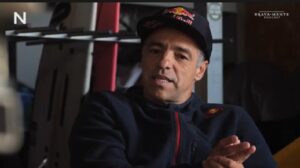
The financial and operational indicators for the fourth quarter of 2025 and the consolidated results for the year were released on Wednesday evening, March 25th, by Iguá's president, René Silva, and the company's financial and investor relations director, João Lopes, in a conversation with journalists.
Adjusted EBITDA totaled R$ 363.9 million in the fourth quarter, a 73.7% increase compared to the same period of the previous year, with an EBITDA margin of 45.2%. For the year to date, the indicator totaled R$ 1.16 billion, with a margin of 42.7%.
Despite the positive figures, the two executives made it clear that the company does not intend to participate in the Copasa auction – the Minas Gerais state sanitation company, which is expected to attract the interest of the main players in the sector – preferring to prioritize investments in current operations, especially in the Sergipe concession, which began in May 2025. Regarding participation in other auctions, still under study, the condition is that they bring synergy with current operations.
Silva attributes the positive indicators to the operation of Iguá Rio, in the western zone of Rio de Janeiro, and to the consolidation of full operations in Sergipe. Together, they account for 73% of revenue. Added to the Cuiabá concession – initiated in 2017 and which today delivers practically 100% water coverage and about 92% sewage coverage – the three operations account for 90% of the company's revenue.
“The consistent improvement in results reflects the disciplined execution of our strategy and the permanent focus on operational efficiency,” says the president of Iguá, highlighting the strong support from long-term shareholders, who have already injected more than R$ 5 billion into the company. Shareholders include the Canadian funds CPP (with a 66.5% stake) and AIMCo (24%), as well as BNDESPar (9.5%).
Currently, Iguá has 10 assets, including 7 concessions and 3 PPPs, serving approximately 6 million people in 121 municipalities across 6 states.
This configuration is the result of a strategic shift, as the company had 18 operations in 2019 before carrying out 9 divestments and acquiring the assets in Rio and Sergipe. Three other assets in the interior of São Paulo – Andradina, Castilho and Mirassol – are in the process of being sold to Sabesp.
The focus on the three operations that generate the most revenue was evident throughout 2025. Iguá operates block 2 of the Rio de Janeiro concession, serving approximately 1.2 million people in the capital and also operating in the municipalities of Miguel Pereira and Paty do Alferes.
In the city of Rio, the area encompasses the entire Barra da Tijuca and Jacarepaguá region, with 21 neighborhoods, featuring an above-average socioeconomic profile and high coverage rates. The accumulated investment since the start of the concession is R$ 1 billion.
The inauguration of the revitalized Barra Wastewater Treatment Plant (ETI Barra) in December, with R$ 170 million in investments, was an important milestone.
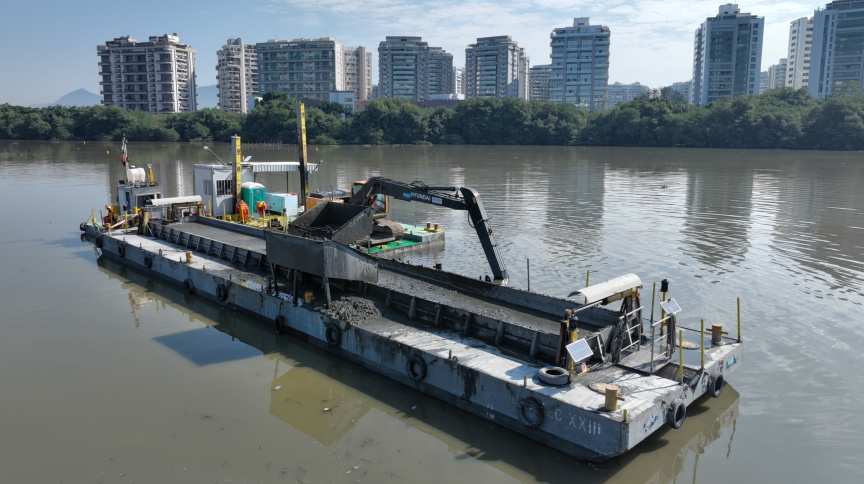
“The 'Together for the Life of the Lagoons' project includes dredging the lagoon complex and installing dry weather collectors, which increased the oxygenation of the lagoons from 5% to 14% and allowed the return of species,” says Silva, referring to the work to clean up the lagoons in Barra da Tijuca.
In Sergipe, Iguá took over the concession having to deal with a historical problem - water shortages, with customers going up to 15 days without supply. The company brought forward investments in water (pipelines and reservoirs), totaling R$ 195.1 million, and created the "Summer Plan" to solve the supply problem.
The master plan to map the network and compare it with what was foreseen in the tender is being developed. The initial coverage was over 90% for water (with intermittency) and about 30% for sewage.
"Sergipe's revenue should grow strongly, approaching that of Rio, which currently represents 45% of the total, but initially it should not surpass it," says Lopes, who highlights the company's relatively young portfolio, with an average remaining contract term of 30 years, indicating high growth potential.
Appetite for auctions
When questioned about Iguá's appetite for the extensive 2026 sanitation auction calendar, with seven tenders, the two executives did not show great enthusiasm for expanding the company's portfolio.
Part of the caution stems from Iguá's debt, although they assure that it is not a cause for concern. The total debt is R$ 12 billion, concentrated in Rio de Janeiro due to the high concession fee.
“The debt is mostly long-term (20-29 years), with a comfortable amortization flow,” assures Lopes, adding that leverage has fallen to 10.4, and the benchmark debt coverage ratio is 1.2 times.
According to the director of investor relations, the company does not intend to participate in the Copasa auction for two reasons. "First, because of the concession in Sergipe, which we just took over, it's a large operation in terms of investment," he says. "Furthermore, the synergy between Copasa and our other operations doesn't seem so obvious; more traditional auctions, with full concessions, might make more sense."
After emphasizing the need for synergy between potential new assets and the current operation, the president of Iguá ended up hinting at the company's likely interest in the auction schedule.
“What would be of interest are large cities, with more than 200,000 inhabitants, that also have a geographical synergy with our operations,” says Silva – which allows us to imagine the Alagoas auction as a possible target.
Unlike other industry giants, such as Aegea , which is signaling a possible IPO, CFO Lopes says that Iguá has considered itself "ready" for an IPO since 2019/2020 and is listed in category A, but without shares in circulation – all shares are held by the three shareholders.
“An IPO is not an immediate necessity, as the projects are funded, but it is desirable to access capital and provide liquidity to shareholders, depending on a favorable 'market window',” says the executive.