


Barcelona - The barrier to the advancement of digitalization in Brazil is not coverage. The bigger problem is accessibility. The federal government and Congress need to immediately address the high tax cost of devices, which hinders the expansion of 5G technology.
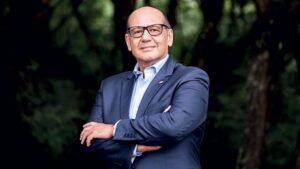
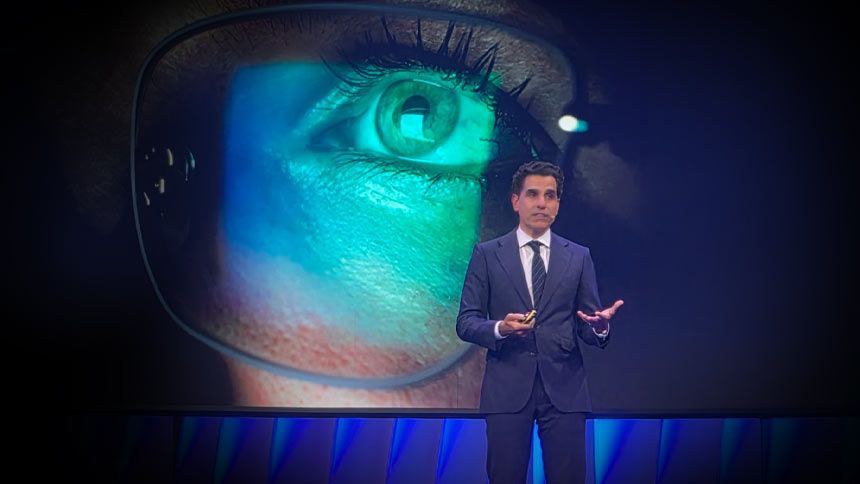
The direct message was delivered by Vivo's CEO, Christian Gebara, during a presentation to business leaders, parliamentarians, and members of the Brazilian government at the Mobile World Congress (MWC) in Barcelona, Spain.
“This is the triad that the country should invest in digitalization: infrastructure, access to devices and services, and digital literacy. A convergence of public policy and private sector effort is necessary. Companies are doing their part,” says Christian Gebara, CEO of Vivo, in an interview with NeoFeed , shortly after his presentation.
“There is goodwill from the government, but we need to hurry. Brazil has an interesting possibility for progress, but it is somehow blocked,” he explains.
In this sense, Gebara sees the high tax burden on 5G devices as a real problem for the advancement of the technology in the country. He also cites the example of paying the Contribution for the Development of the National Film Industry (Condecine), even without being a content producer. In practice, this burdens the consumer at the end of the chain.
“If we don’t remove the tax burden on the device, how can a person enjoy the advantages of 5G, even if they have coverage? As long as the price of devices is high, the accessibility of this type of service will be limited. In Brazil, there is no shortage of 5G. There is a shortage of 5G devices. And that’s because they are expensive,” he states.
While advancing in these discussions, the company, which recorded net revenue of R$ 59.6 billion (up 6.7%) and net profit of R$ 6.17 billion (up 11.2%) in 2025, has been making progress in the segment of new B2B and B2C digital services. Today, this share already represents 12.1% of revenue. Last year, it was 10.1%.
According to him, Vivo Pay, the fintech service, alone generated close to R$ 500 million in revenue in 2025. The health platform generated R$ 100 million. And in the distribution of streaming services, Vivo has already reached R$ 900 million.
According to the CEO, the market now sees the company as a complete technology ecosystem and not just as a mobile phone operator, which has been positively influencing the performance of its shares on the B3 stock exchange.
“In 2026, the Ibovespa will rise 16%, and Vivo's stock will have already appreciated by 29%. We have reached the peak of the company's capitalization. This comes from the market's perception of Vivo as a company that is growing in mobile, fiber, but also in new services,” he states.
Vivo's market value is R$ 136 billion. The company is controlled by the Spanish company Telefónica.
Below are the main excerpts from the interview:
In your panel at MWC, you urged the government to finally address the structural problems hindering the development of digitalization in Brazil. What are these barriers?
When we discuss digitalization, the prevailing view is that the problem is coverage. This is one of the cornerstones of a country's digitalization, but in Brazil's case, it's not the biggest problem. If we look at 4G mobile coverage, we reach 98% of the population. 5G currently reaches 70%. Vivo alone reaches 67.7% coverage. In the fiber market, Vivo reaches 31 million households, with 7.8 million customers and 19% of the market. This shows that the biggest problem is not service availability, but accessibility. There is a large number of people who don't use mobile services, either because they lack the purchasing power to buy a device or service, or because they lack sufficient digital literacy to use the internet effectively.
Does the tax burden currently affect the sector's growth?
Yes. Today there are still many sector-specific taxes that haven't been discussed in the tax reform. We pay four percentage points on our services, which has no justification. For example, we pay the Contribution for the Development of the National Film Industry (Condecine), even though we are not content producers. That's R$4 charged per line. And Vivo alone has more than 100 million mobile phone accesses. Annually, more than R$1.12 billion is collected from all operators, which should be paid by content creators. These are taxes that burden companies, but ultimately burden the consumer. Today, with all the service taxes we pay, it averages 29%. The average in developed countries is 11.8%.
And does this affect the population's access to 5G technology?
That's why you can't say that data in Brazil is expensive. It's actually quite cheap, but it becomes expensive because of taxes. The same thing happens with smartphones. Even though Vivo has almost 70% 5G coverage, only 27% of the user base has a 5G phone. That's because the cheapest phone in Brazil costs no less than R$1,000. And it costs that much because of the high taxes. If we don't remove the tax burden on the device, how can someone enjoy the advantages of 5G, even with coverage? We only resell the devices. We sell a service. This shows that as long as the price of devices remains high, the accessibility of this type of service will be limited. In Brazil, there's no shortage of 5G. There's a shortage of 5G devices. And that's because they're expensive.
But there are many people who don't even know how to use the device or access the internet.
That's another problem. There's a lack of digital literacy. People need to know how to use the devices. Brazil lacks this because it's not part of our basic education system. Vivo invests in training teachers and students. So, this is the triad that the country should invest in digitalization: infrastructure, access to devices and services, and digital literacy. Coverage is part of our obligation, and Vivo invests R$ 9.2 billion per year in Brazil. And taxes are a very important discussion. That's why I say there needs to be a convergence of public policy with private sector effort. Companies do their part, but it's difficult to get a return on capital. The capital expenditure as a percentage of revenue is very high in Brazil.
"Tax is a very important discussion. Companies do their part, but it's difficult to get a return on capital. The capital expenditure as a percentage of revenue is very high in Brazil."
So what does the government need to do to change this scenario?
This is an issue involving the federal government and the legislative branch. We have been discussing various topics. The country, which has basic needs such as access to education and healthcare, has a great opportunity to maintain digitalization as an engine for inclusion. Pix (Brazil's instant payment system) is an example of financial inclusion through connectivity. And that is transformative. The same should happen in other areas. If there is greater awareness and focus on digitalization, we could make a leap in productivity and inclusion. China and Korea are examples of countries that have a strong connectivity infrastructure behind their knowledge and development.
And why doesn't this message reach the public authorities?
The message gets through. The problem is that there's significant fragmentation in decision-making. Furthermore, the speed at which technology is developing is faster than our decision-making and structuring capabilities. There's goodwill, but we need to move quickly. Brazil has an interesting potential for progress, but it's somehow blocked. And we're working together with the executive and legislative branches to make this happen faster.
Could the advancement of digitalization in Brazil be faster?
If we were taxed less, it would be possible to achieve a much greater return. And it would generate more investment. Vivo has never stopped investing, even during difficult economic times. The greater the return we bring to this investment, the more our shareholder [the Spanish company Telefónica] would invest in Brazil.
You pointed out the lack of control over electricity poles. How much does this affect telephone companies?
We pay over R$ 3 billion for the cost of power lines, and the poles are very disorganized. There is a need for this organization, and this is the responsibility of the electricity distribution companies, who own the power lines. They receive a lot for this and should eliminate cables from those who don't pay and use them illegally. Everyone has to pay. I advocate for symmetry, not asymmetry. Those who don't pay charge less to the customer and also affect the work of those who do pay. We need to expand the fiber optic network, and it relies heavily on poles. We've reached 31 million households, and I want to reach 45 million. But this needs to be resolved so we can have controlled costs. The Chamber is working on this issue.
While these discussions are taking place, Vivo has been advancing in new digital services. What have been the main drivers of this?
Vivo has been a partner in new businesses, acting as a service enabler. Our fintech service, Vivo Pay, offers loans, installment payments via Pix, and we've now launched a credit system to finance smartphone purchases. This generated almost R$ 500 million in revenue for me last year. In healthcare, we created a platform called Vale-saúde, which connects my clients with discounts at clinics, doctors, and pharmacies. This generated R$ 100 million for me in 2025. We are the largest entertainment distribution platform, based on OTTs (streaming services). I have 4.4 million customers who purchase these services through Vivo, which already generate R$ 900 million annually. All these businesses, including B2B and B2C, already represent 12.1% of Vivo's total revenue [which, in 2025, was R$ 59.6 billion].
"Increasingly, customers will want to purchase the largest possible number of services from a single company."
And what tools does the company have today to do this?
Today we have 60 million customers, 1,800 stores, 5,000 B2B sales representatives, and an app with 28 million unique users. I am a powerhouse of customer relationship management. And from this relationship, I can sell more services than just connectivity. Increasingly, customers will want to buy the largest possible range of services from a single company.
In your opinion, is Vivo now seen as a technological ecosystem and no longer just as a mobile phone operator?
Yes, according to the market. Last year, Vivo's shares appreciated by more than 50%, while the Ibovespa rose 34%. By 2026, the Ibovespa will rise 16%, and Vivo's stock will have already appreciated by 29%. We have reached the peak of the company's capitalization. This comes from the market's view of Vivo as a company that is growing in mobile, fiber, but also in new services.
Last week, Vivo began replacing Sabesp's water meters with a digital model as part of an IoT project. Is this an example of progress in the B2B model?
4.4 million water meters will be replaced. An innovative solution that will also have an environmental impact, preventing water loss. The water meters will also provide information, via artificial intelligence (AI), to understand where there is excessive consumption due to leaks and opportunities for improvement. It is a great example of how IoT technology, connected to 5G, can generate savings for the consumer and for Sabesp.
Where else can this model be applied?
In agriculture, industry, autonomous cars, and retail, 5G will bring many more opportunities.
With a 19% share of the fiber market and a fragmented segment, what is Vivo's avenue for growth in this service?
I'm building my own network, but if I find a company with consolidation potential to buy, it would be a way to accelerate this growth. For that to happen, the company can't have too much overlap with my network, similar technical quality, and a reasonable price. So far, we haven't been able to buy. If one comes along, it's an option.
The journalist traveled to Barcelona at the invitation of Vivo.