

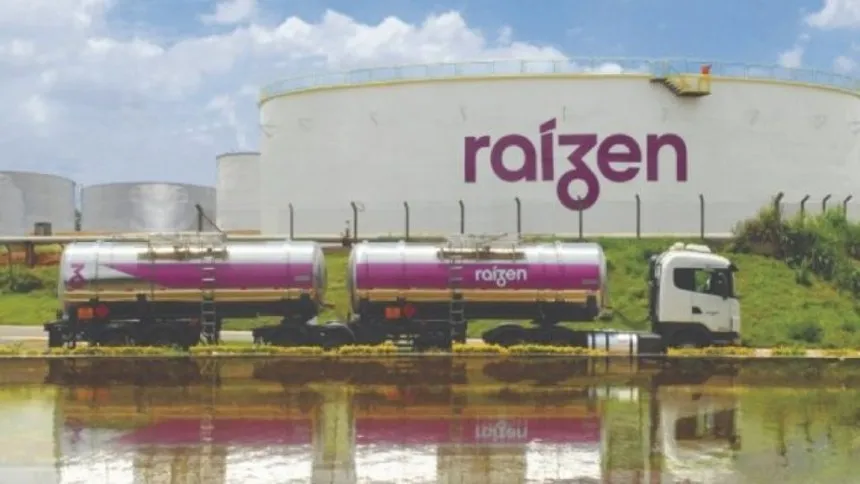
The "tipping point" has arrived for Raízen. The company has filed for out-of-court restructuring to renegotiate debts of R$ 65 billion with financial creditors.
Despite the order being the largest ever recorded in the country's corporate history, the move did not surprise the market. For many, Raízen was already marked as a write-off in their portfolios.
Analysts and managers interviewed by NeoFeed see the request as the high point of the disagreements between Shell and Cosan on how to rescue the joint venture , which became completely entangled after a series of investments that resulted in debt.
"It doesn't surprise me; it was the only way to go," says a manager closely following the negotiations, who asked not to be identified. "Nobody wants to put a lot of money into the company."
The disagreements between Raízen's partners became glaringly obvious last week when Shell rejected a proposal from Cosan and announced its intention to raise R$ 3.5 billion on its own.
In the difficult negotiations between Cosan, Shell, and creditors over the past few months, several proposals have been put on the table. The latest involved a capital injection of over R$10 billion, which would include checks from BTG Pactual , Perfin , Cosan, and Rubens Ometto via Aguassanta, his family office, as well as money from Shell and other investors.
The proposal involved splitting Raízen into two companies, separating the sugar and ethanol company from the distribution assets (gas stations), which was rejected by Shell.
Shell's proposal, made public by Cristiano Pinto da Costa, CEO of Shell in Brazil, on March 3, involves an investment of R$ 3.5 billion - Aguassanta would contribute R$ 500 million.
But according to creditors, none of these proposals would be enough to save Raízen. In letters to Shell and Cosan, banks and Raízen debt holders estimate that a capital injection of up to R$ 25 billion will be necessary.
Amid these issues, Raízen had already raised the possibility of filing for extrajudicial reorganization on March 4th, in a relevant market announcement, in an attempt to force negotiations. But the scenario is still complex, as demonstrated yesterday by Cosan's CEO, Marcelo Martins, who said that the company is no longer directly involved in the negotiations.
With the request for extrajudicial recovery submitted, the question is which path to follow. Although the company has managed to garner the support of creditors representing 47% of the total to be renegotiated – to put the recovery into practice, it needs the support of creditors accounting for 50% plus one of the debts – the devil is in the details regarding deadlines, debt payment conditions, and the size of the haircut to be applied.
"Now comes the hard part: getting everyone to the table and reaching an agreement," says another manager, who also asked not to be identified.
What emerges as a consensus is the need for Raízen to downsize , after embarking on a strong investment cycle that began after its IPO in 2021, when it raised almost R$ 7 billion.
According to calculations by Flávio Conde, head of variable income at Levante Investimentos, Raízen has invested a total of R$ 46.8 billion since its IPO, with a large portion of the resources being allocated to new plants to produce second-generation ethanol, or E2G.
Raízen's bet was based on the assessment that this ethanol, produced from biomass, would command a premium price because it was less polluting, emitting 80% less carbon than gasoline. However, this did not materialize, especially at a time when gasoline prices were competitive, generating little appeal in the market.
“E2G releases less carbon into the atmosphere, but so what? That's why consumers will be willing to pay more,” Conde stated. “They accelerated investments, with a small portion financed by cash generation and a large portion by debt. They weren't able to increase revenue and cash flow sufficiently, but the debt kept increasing every quarter.”
He further highlighted the company's loss of focus on other initiatives that did not yield results, such as the Oxxo convenience store chain, in partnership with Femsa. "There was no need to waste time setting up Oxxo, which doesn't make money. There was no need for it," he stated.
Raízen is conducting a divestment process, having sold off power plants and energy assets, in addition to ending its partnership with Femsa in Oxxo. One of the most anticipated processes is the sale of its operations in Argentina, which could raise US$1 billion.
In the earnings call for the third quarter of the 2025/26 crop year, on February 13, Raízen's management indicated that it expects the financial restructuring, asset sales, and review of operations to cut financial leverage from 5 times to between 2.0 and 2.5 times.
In this timeframe, "the accounts balance," according to CEO Nelson Gomes. Now all that remains is to finalize an agreement.
At around 11:01 AM, Raízen's shares were down 1.92%, at R$ 0.51. Over the past 12 months, the shares have accumulated a drop of 70.7%, bringing the market value to R$ 679.5 million.