

After three years of "getting its house in order," advancing in the digitalization and reorganization of its logistics processes, Lojas Renner understands that the time has come to reap the rewards of these investments.
The focus is on returning to growth, according to the five-year plan released to investors this Monday, December 8th. The proposal foresees expanding operations, based on the assessment that the adjustments have left the company prepared to conquer the market and increase profitability.
“The previous cycle didn’t have such high profitability; it was a cycle of investment and transformation,” said Fabio Faccio , CEO of Renner, in a conversation with journalists. “But this cycle has given us a platform that is much more ready to scale sales and profitability.”
With the goal of combining expansion and value creation, the company aims to increase its return on invested capital (ROIC) to approximately 20% by 2030, up from 12.4% in 2024, with annual net revenue growth between 9% and 13%.
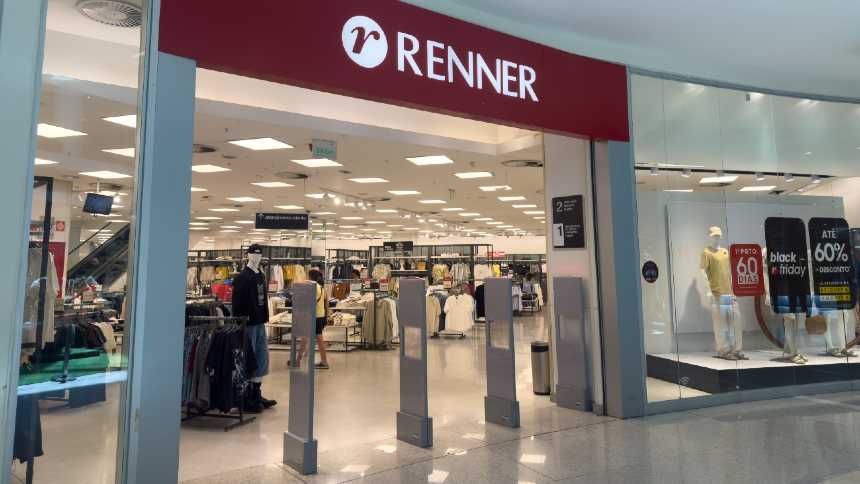
One of the key strategies is to accelerate store openings, after inaugurating an average of 10 to 15 units in recent years. The company ended the third quarter with 694 stores in the country, considering Renner, Youcom , Camicado , and Ashua.
The plan foresees opening 140 to 170 Renner stores by 2030, increasing the total from 432 to between 572 and 602. This represents an opening rate of approximately 28 to 34 stores during that period.
Unlike from 2010 to 2019, when Renner sought to consolidate large markets, a large portion of the new stores will be installed in cities with up to 200,000 inhabitants, where it has no presence and the competition is with regional brands.
According to Daniel Santos , CFO of Renner, these cities, whose specific list was not disclosed, represent an addressable market of R$ 20 billion, and Renner aims to capture a 10% market share . "We see qualified demand, from a customer profile that Renner serves," he said.
In these locations, the company will operate with smaller stores, between 1,100 and 1,200 square meters, below the current average of 1,600 square meters. Santos stated that he already has around 90 units in this format, with high gross margins, lower costs, and gains from the new supply model. "This model captures several features related to Renner stores at an appropriate construction cost," said Santos.
The expansion also includes Youcom, a youth brand, which is expected to grow from 142 to between 260 and 290 stores by 2030. The new units will have larger floor plans – from an average of 250 square meters, the new ones will be around 450 square meters. For Camicado, the plan is for strategic openings and renovations. Ashua, however, did not have detailed plans.
Faccio highlighted that opening stores does not harm the digital channel, which is currently highly connected, allowing for the acceleration of the omnichannel strategy. "When we open a store in a new city, digital sales in that area increase by 10% to 20%," he said.
Even with the resumption of expansion, Renner estimates that the ratio between capex and net revenue will be between 6% and 7.5% of net revenue, below the 9% of 2020 to 2023.
Executives highlighted that the difference stems from investments that are lower than necessary to strengthen digital and logistical infrastructure. They also mentioned that the company has been generating robust cash flow, with free cash flow growing at 9% per year since 2014, reaching R$ 1.5 billion in the third quarter.
The expectation is that the combination of increased sales and gains from investments in operational efficiency should allow expenses to remain under control. Renner's plan foresees a reduction in the percentage of operating expenses relative to revenue of 2.5 to 3.5 percentage points compared to the 38.7% seen this year.
According to executives, the adjustments made in recent years allow Renner to focus on growth without losing margin. “Our growth in recent years has been more driven by profitability than sales. In ten years, the square meters reserved for sales grew by 5%, sales increased by 11%, and we grew net profit and cash generation by almost the same proportion,” stated Faccio. “We can accelerate expansion because we have the 'breathing room' to invest.”
Renner also wants to revamp its image, moving beyond being seen solely as a clothing retailer and establishing itself as a fashion brand, investing in exclusive collections and collaborations.
The company plans to distribute between 50% and 80% of its profits to shareholders, down from 120% in 2025, when reserves were distributed. Amid changes in dividend taxation , Santos stated that he will continue to prioritize interest on equity (JCP) in remuneration.
Another instrument will be the repurchase of shares. The board approved a program to acquire up to 75 million shares, equivalent to 7.6%, totaling approximately R$ 1.2 billion.
At around 11:09 AM, Renner's shares were up 2.59%, at R$ 14.24. Year-to-date, the shares have accumulated a gain of 18.7%, bringing the market value to R$ 15.1 billion.