

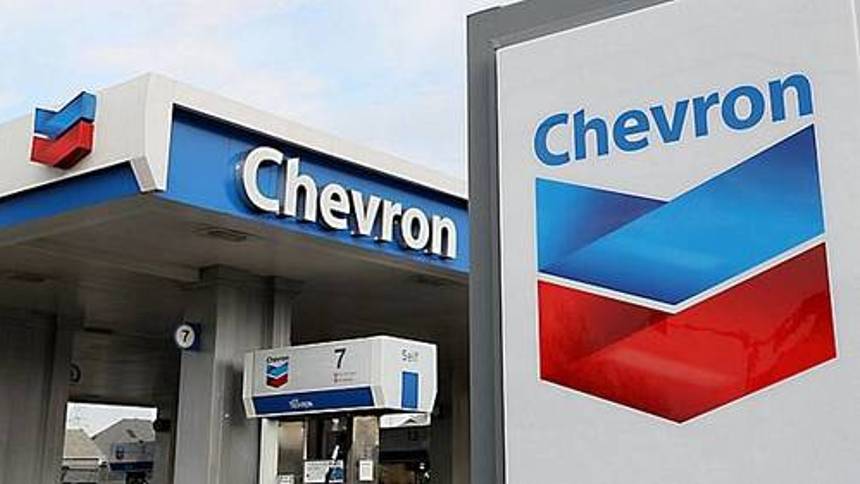
The American oil company Chevron – the only international giant in the sector exploring for oil in Venezuela – has joined forces with the private equity firm Quantum Capital Group to make an offer for the international assets of the Russian oil company Lukoil, which have been under sanctions imposed by the US Treasury Department since October 2025.
The proposal, revealed on Wednesday, January 7th, by the British newspaper Financial Times , comes to light on the same day that the American government announced the seizure of a Venezuelan oil tanker sailing under a Russian flag in international waters of the Atlantic Ocean, which generated protests from the Moscow government.
The potential deal involving Chevron and the Texas-based private equity fund covers Lukoil's entire portfolio of international assets, including oil and gas production, refining facilities, and more than 2,000 service stations in Europe, Asia, and the Middle East.
If the deal goes through, Chevron and Quantum plan to split the assets between themselves, valued at US$22 billion by Lukoil. In addition to Chevron's stake, the private equity fund plans to acquire the assets in collaboration with Artemis Energy, a London-based portfolio company.
Quantum declined to confirm the deal, as did Chevron. "As a matter of company policy, we do not comment on third-party statements or business matters," a spokesperson for the American oil company told the FT .
Sources cited by the British newspaper, however, confirmed that Quantum, founded by Texas oil magnate Wil VanLoh, had already contacted officials in Donald Trump 's government about the proposal and argued that it would consolidate American ownership of strategically important energy assets.
The sale of Lukoil's international assets requires authorization from the US government because, following the October sanctions, any transaction involving the company—including the sale of subsidiaries outside of Russia—is legally blocked and can only occur with a specific license issued by the Treasury Department.
Without this authorization, any buyer or intermediary would be violating US financial sanctions, even if the transaction takes place outside of US territory.
The auction process began in November when the Swiss commodities trading company Gunvor abandoned a deal with Lukoil to acquire the assets, after the Trump administration stated it would block the transaction, labeling Gunvor a "Kremlin puppet."
Lukoil's non-Russian assets subsequently attracted offers from the private equity fund Carlyle and the Abu Dhabi-based conglomerate International Holding Company, but there was no confirmation that the negotiations had progressed.
Time is on the side of Chevron's joint bid with Quantum, as the Treasury Department has granted an extension for interested companies to negotiate with Lukoil until January 17 – any deal would need approval from US regulators, giving President Donald Trump effective veto power.
A senior U.S. government official welcomed Quantum-Chevron's proposal. "We are seeking a divestiture that puts ownership of these assets in the hands of an American owner and operator for an indefinite period," the source said, as quoted by the Financial Times . "We don't want a buy-and-sell situation, so this is an attractive option."
For Chevron, the acquisition of Lukoil's assets fits into its diversification strategy. The American oil company has maintained a presence in Venezuela for decades – which holds the world's largest oil reserves.
Currently, Chevron's operations in the country are limited by special US licenses. The company produces approximately 200,000 barrels per day through various joint ventures with the Venezuelan state-owned oil company PDVSA. Part of this production is exported to American refineries on the Gulf Coast.
Tension with Russia
The fact that Trump admitted that the American military operation in Venezuela aimed to gain control of the South American country's oil production reinforced the White House's intention to curb the clandestine international market for fossil fuels.
Even under American sanctions, Venezuela exported oil to China, as did Russia – which sells its production, below the international price, to India and other countries, in addition to China.
The seizure by the US of the tanker Marinera, which was sailing under a Russian flag, opens a new front of diplomatic tension, now between the American government and that of Vladimir Putin. Russia issued a statement accusing the United States of violating maritime law – the seizure occurred in the North Atlantic, in international waters.
"According to the 1982 United Nations Convention on the Law of the Sea, freedom of navigation applies on the high seas, and no State has the right to use force against vessels duly registered in the jurisdictions of other States," the statement said.
The vessel, formerly known as Bella 1, had initially been intercepted by the US near the Venezuelan coast in late December, but managed to escape the siege. The ship, which was empty, was then escorted by a Russian submarine.
To avoid friction with Russia, US Secretary of Defense Pete Hegseth stated after the seizure that the blockade of Venezuelan oil tankers "remains in effect worldwide."